Houston Metro faces pushback after trains lose signal priority

Add Axios as your preferred source to
see more of our stories on Google.
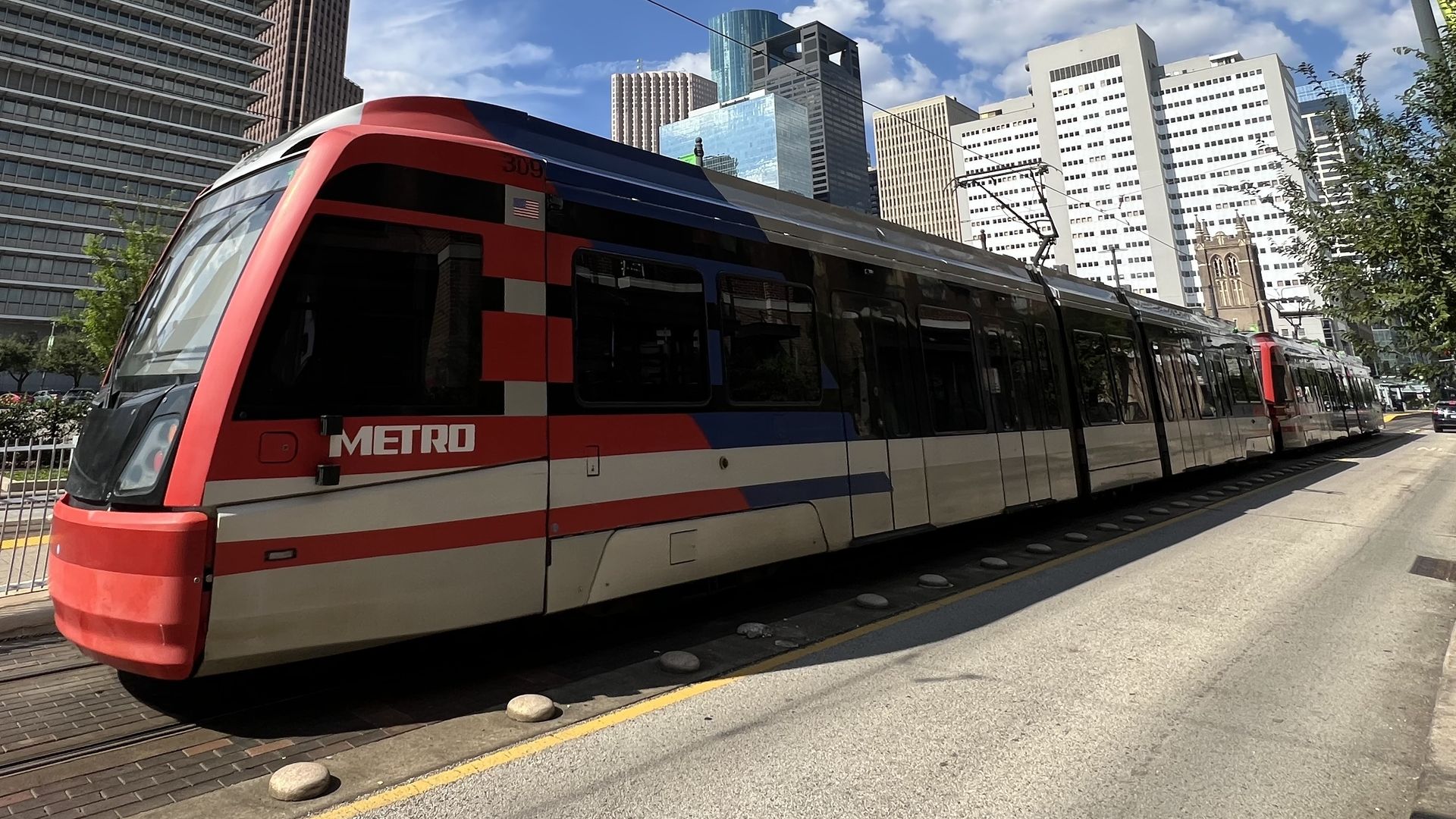
A Metro Red Line train navigates through downtown Houston on Monday. Photo: Jay R. Jordan/Axios
Houston Metro officials say they're working toward a solution to light rail delays caused by new traffic signal configurations.
Why it matters: The changes ended priority for the Red Line through intersections in downtown and Midtown, a significant shift in approach for the transit agency.
Catch up quick: Since the system was launched in 2004, most of Metro's on-street light rail trains have benefited from traffic signal preemption — to keep trains on schedule and encourage ridership.
- That means that when a train approached an intersection with a red light, the light turned green for the train, allowing it to travel through unencumbered.
Driving the news: Trains now stop at red lights and wait for them to cycle — causing commuter delays and even train traffic jams at times.
- Metro did not say when the changes happened, but transit advocates tell Axios they noticed the new signal priorities around Sept. 20.
The intrigue: In a statement to Axios, Metro said the changes were made in conjunction with Houston Public Works to "enhance overall mobility" for drivers, bus riders and pedestrians.
- Metro said the transit authority and the city are working toward making a good impression with visitors to Houston for the 2026 FIFA World Cup and other big events next year in the Bayou City.
- "Our priority is to ensure a balanced approach that strengthens mobility for all, whether onboard Metro or traveling alongside it," Metro spokesperson Anna Carpenter said in the statement.
Yes, but: The changes are lengthening commute times for light rail riders.
What they're saying: "Metro can't expect to grow ridership by making service slower and less reliable," Peter Eccles, director of policy and planning at transit advocacy group LINK Houston, tells Axios.
Between the lines: The changes come as Mayor John Whitmire has reversed some transportation policies of his predecessor, Sylvester Turner, who sought to create better options for people who don't have access to a car to get around town.
- Metro is a separate agency, but its chair, Elizabeth Gonzalez Brock, was appointed by Whitmire and works closely with his office on transportation policy.
- Whitmire's office referred questions about the adjustments to Metro.
The other side: Carpenter did not answer follow-up questions regarding Metro's priorities but said the agency is "nearing a balanced solution that is equitable for all commuters who share our roads."
What's next: Advocates plan to address Houston City Council about the delays at its Oct. 7 meeting.