"Mo" Season 2 beautifully returns to its homeland

Add Axios as your preferred source to
see more of our stories on Google.
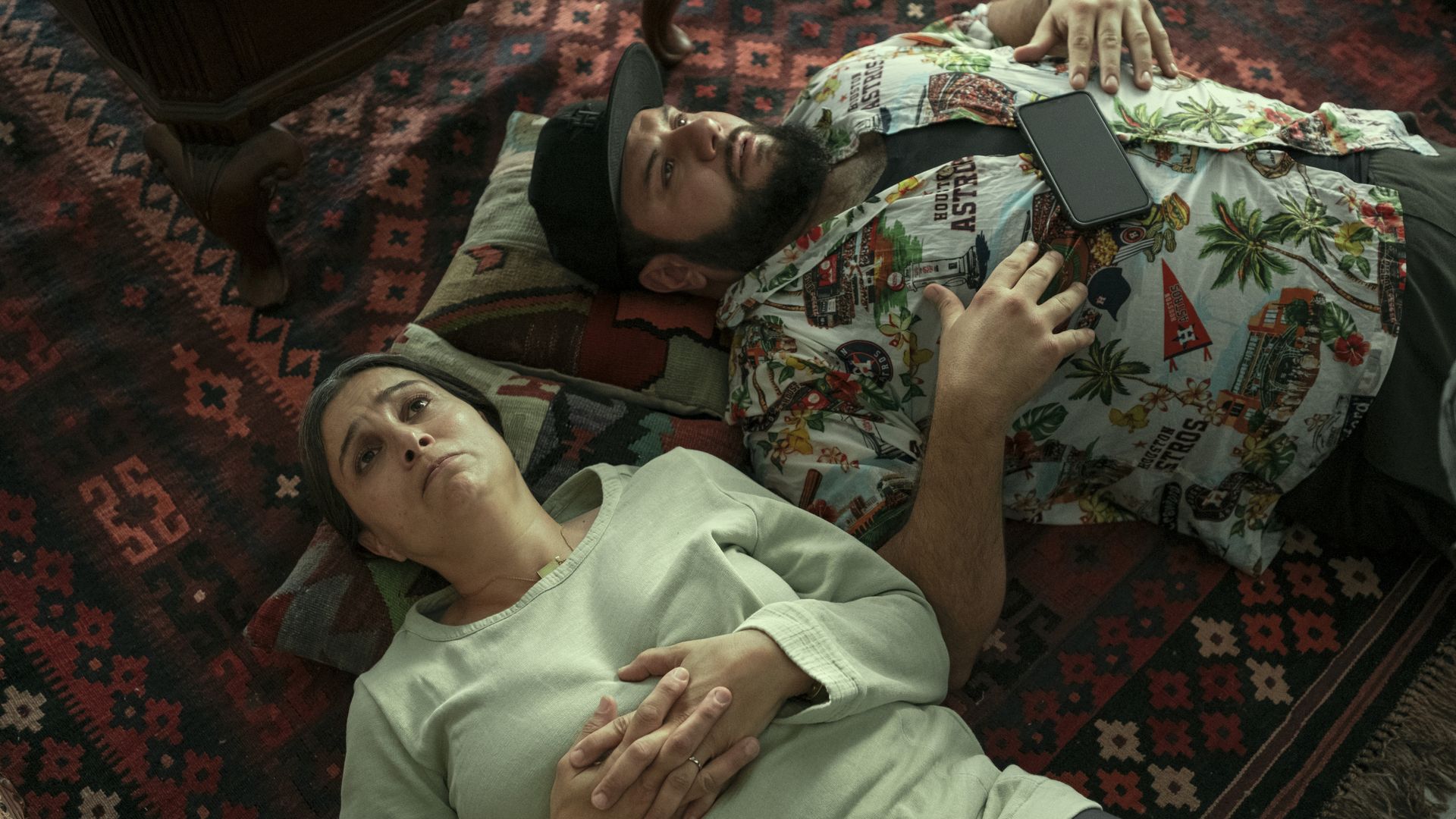
Actor Farah Bsaiso lies next to her character's son, Mo, portrayed by Mohammed Amer. Photo: Eddy Chen, courtesy of Netflix.
If the first season of "Mo" was a love letter to his home, Alief and Houston, Season Two is a love letter to his family and his homeland, Palestine.
Why it matters: Created by and starring Houston comedian Mohammad Amer, the Netflix dramedy follows a Palestinian refugee navigating the immigration process in southwest Houston with heart and humor.
- It's the first Palestinian-led series in American television and it proudly showcases Houston, where it was partially filmed.
The big picture: Released Thursday, the new season — the show's final — picks up six months after Mo accidentally crosses into Mexico. He finds himself detained by the Border Patrol — until he desperately finagles his way out in true Mo fashion.
- Mo's green card process drags on as he and his family dream of returning to Palestine.
Behind the scenes: Writing for Season Two began on Oct. 1, 2023 — just days before the Israel-Hamas war began. The new season is set before that.
- Amer says the writers considered incorporating the war but decided against it, partly because so much could have changed by the time the show aired.
- It also felt like a "trap because you weren't talking to the characters anymore. We weren't showing the story anymore. And it became about that event … [with] no historical context," he said at an early screening Q&A.
Yes, but: While the show avoids directly addressing the war, it weaves in cultural and historical references — like the Nakba and the keys, the watermelon imagery — while exploring the weight of watching the news of back home.
- It also builds on the first season's portrayal of the sacredness of olive oil and the debate over hummus, using humor to deepen conversations about heritage.
Shafaq's thought bubble: I was already a fan of Season One — especially with its loving depiction of Alief, the neighborhood I grew up in.
- Season Two executes the story beautifully and takes it to a different ballpark — it's unflinching and filled with so much raw heart, love and laughter.
- And the show still has the same deep love for Alief — right down to a scene at the same bowling alley I used to go to with my dad on Fridays after school.