Iowa pushes for more pasture as beef prices spike

Add Axios as your preferred source to
see more of our stories on Google.
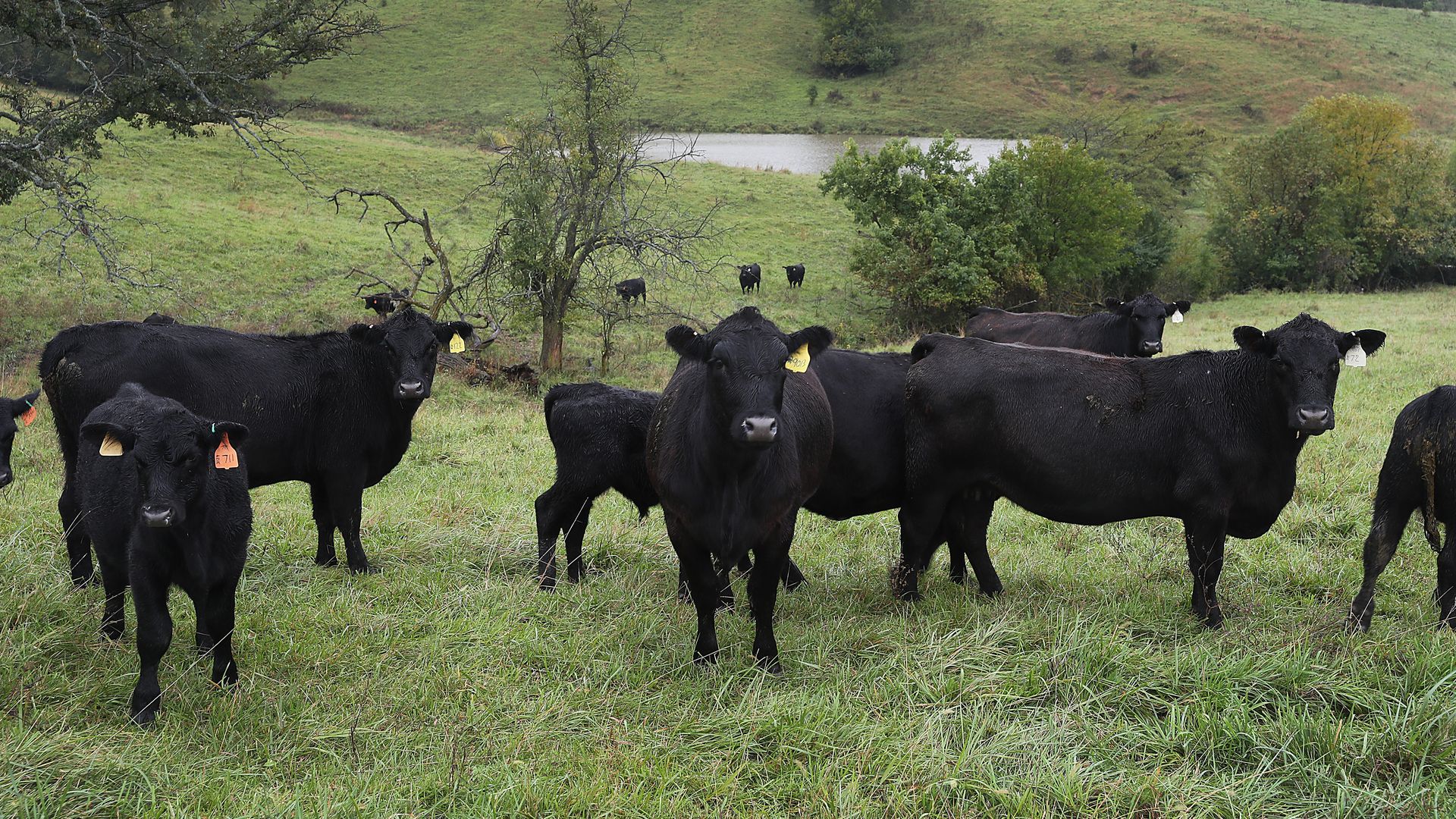
Cows in Cumming, Iowa, in 2019. Photo: Joe Raedle/Getty Images
Iowa cattle producers are urging Congress to allow more cattle to graze on conservation land, arguing that doing so could help the nation's herd size recover from a 75-year low.
Why it matters: The changes could benefit farmers and, over time, help ease supply pressures that are contributing to near-record-high beef prices.
Driving the news: The Iowa Cattlemen's Association launched efforts last month to create a new working lands option tied to expiring Conservation Reserve Program (CRP) contracts.
- The goal is to incentivize landowners to keep acres in grass and allow managed cattle grazing rather than plowing them back into row crops, CEO Bryan Whaley tells Axios.
Catch up quick: CRP has for decades paid landowners to take environmentally sensitive cropland out of production and plant long-term cover, such as native grasses or trees, to improve water quality, control soil erosion and enhance wildlife habitat.
- Iowa is among the states that benefit most from the program, receiving hundreds of millions of dollars in annual payments.
Friction point: It can also take potential grazing land out of production for 10- to 15-year contracts.
- Iowa cattle producers face limited access to grass and grazing land, which Whaley said is one factor constraining the state's cow herd.
The big picture: Iowa is not alone.
- Ranchers in Colorado, North Dakota and Texas are also facing grazing pressure from development, drought, rising land costs or competition over public and conservation lands.
Stunning stat: More than 1.6 million acres in Iowa were enrolled in the CRP as of January — approaching the state's total pastureland acreage reported in the 2022 Census of Agriculture.
By the numbers: U.S. cattle inventory totaled 86.2 million in January, the lowest since 1951.
- Iowa Cattlemen's is requesting more flexibility as roughly 570,000 acres of contracts expire or are renewed this year and next.
Reality check: Major CRP changes are likely to be a heavy lift since any new working lands program would likely require USDA rule changes, farm bill language or both, Whaley said.
What we're watching: Whether CRP updates can make their way into the broader farm bill debate, which remains mired in disputes over nutrition, conservation and commodity programs.