DSM faces declining air quality while most U.S. cities improve

Add Axios as your preferred source to
see more of our stories on Google.
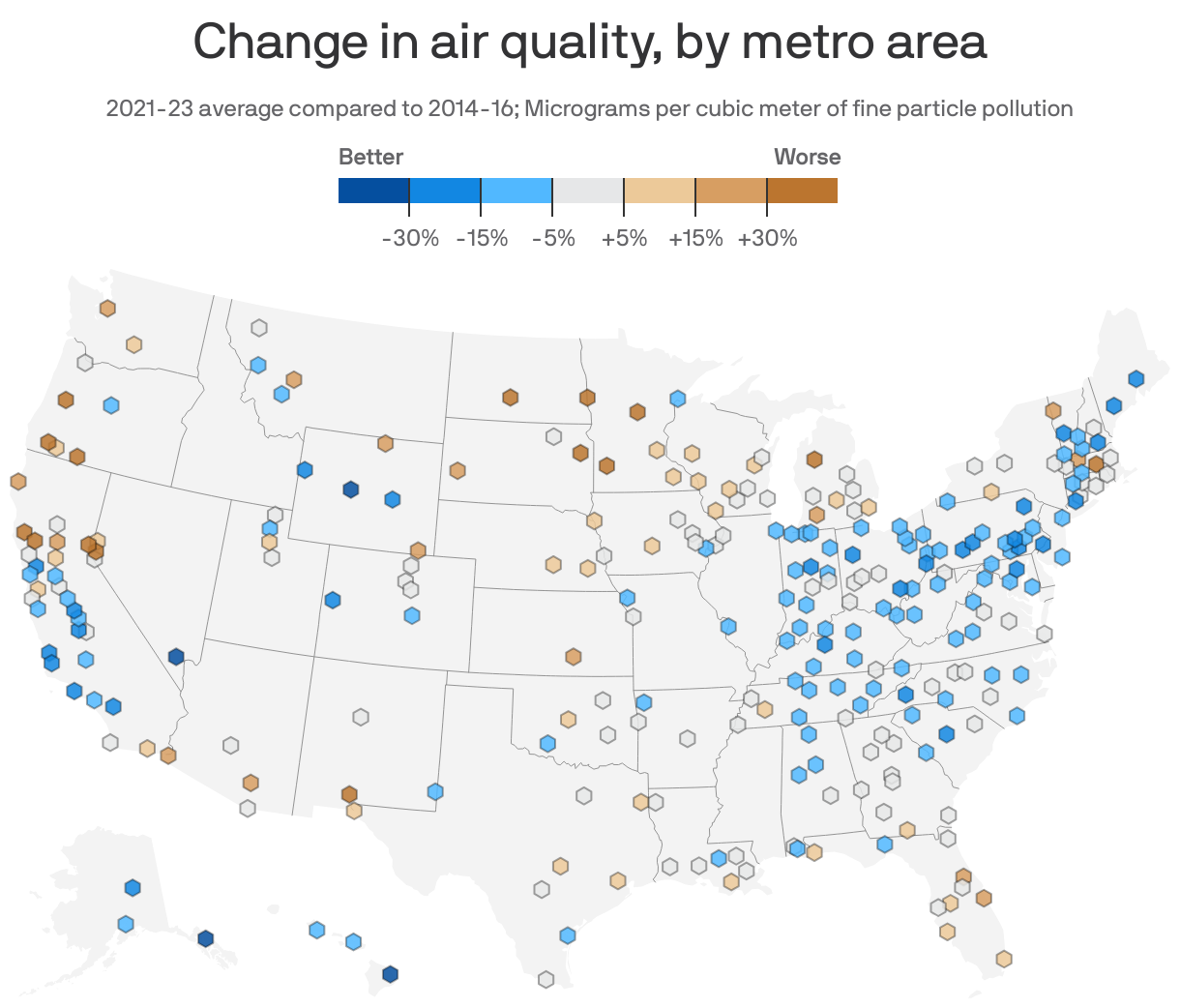
Des Moines' air quality is deteriorating, with fine particle pollution rising more than 7% over the last decade, according to year-over-year EPA data.
Why it matters: A growing body of research shows that polluted air is connected to poor reproductive outcomes, increased dementia risk, and more asthma attacks and other respiratory health effects.
Zoom in: Most of Iowa's metro areas showed improvements ranging from 2.3% to 5.1% in reduced fine particles, including Cedar Rapids, Clinton, Davenport, Muscatine and Waterloo.
- Sioux City saw the largest increase, almost 15%.
- Iowa City's increased 1.2%
The big picture: Nationally, 62% of metro areas improved their air quality, particularly those in central California and east of the Mississippi.
- Increases were predominantly in the Upper Midwest and northern California.
Context: Extreme heat, wildfires and drought are degrading air quality nationwide and have left nearly half of Americans exposed to potentially dangerous levels of air pollution, according to a report released last month by the American Lung Association (ALA).
- The 2023 wildfire season, including those in Canada, led to residents of DSM being exposed to significantly higher levels of fine particle pollution.
Between the lines: Fine particulate matter is a strong indicator of pollution, but it doesn't capture everything. Conditions can be worse than what your weather app shows.
- If you smell smoke, even when the Air Quality Index is green, experts recommend limiting your time outdoors.
What we're watching: There is concern that recent layoffs at the EPA will limit air pollution monitoring, Kristina Hamilton, Iowa Advocacy Director for the ALA, told WOI-TV last month.
- Congress also voted last week to roll back a regulation of the Clean Air Act that is connected to the amount of toxic air pollutants emitted by industrial facilities.