Des Moines faced worse air pollution in 2023

Add Axios as your preferred source to
see more of our stories on Google.
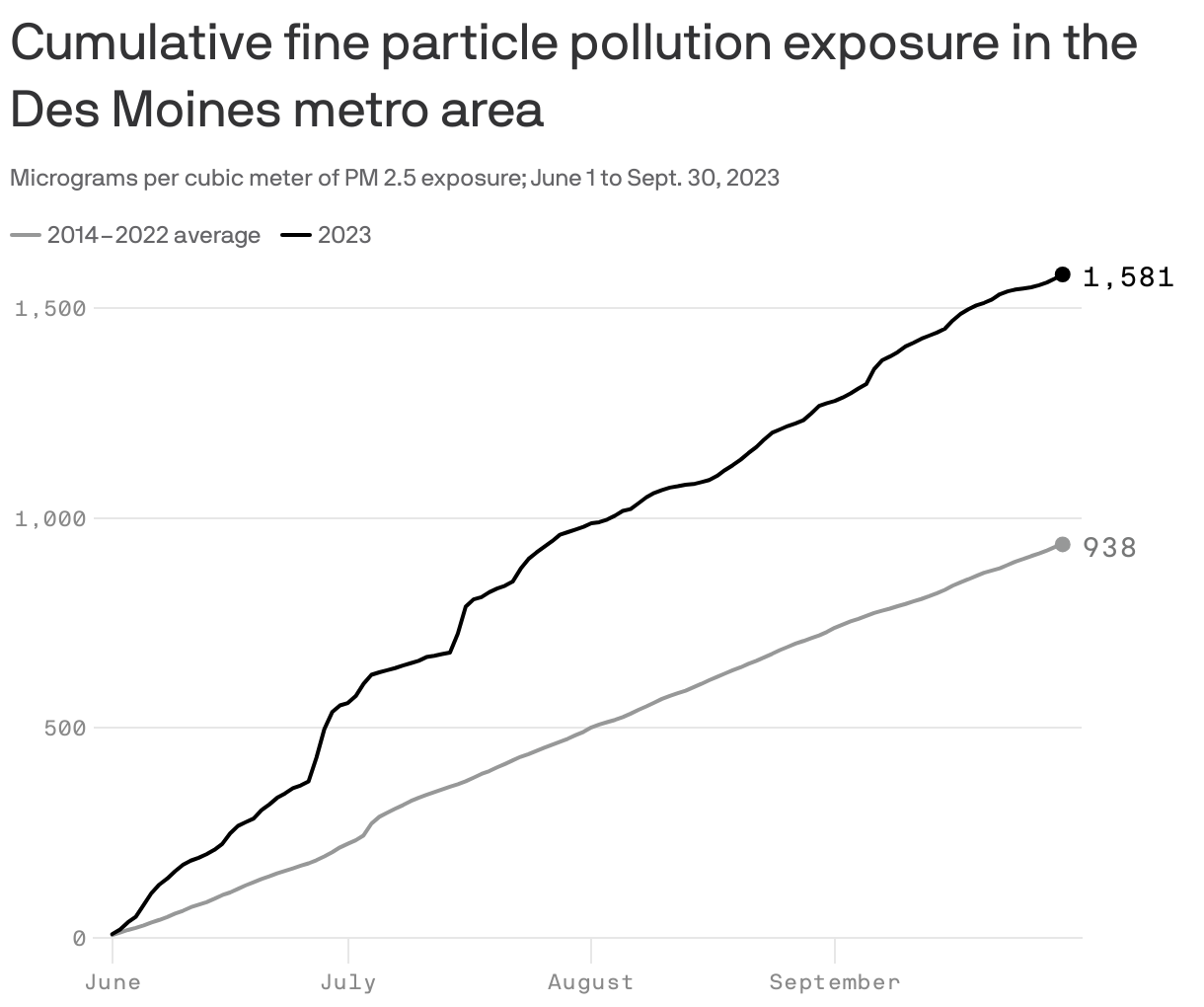
The 2023 wildfire season more than doubled the previous record for fire-related air pollution in the U.S., Axios' Will Chase, Erin Davis and Kavya Beheraj report.
Driving the news: In Des Moines, residents were exposed to about 69% more fine particle pollution last summer than the 2014-2022 average, according to data from AirNow.
- Metro residents' average air quality index in 2023 was 1.5 times higher than the same period in 2022.
- The worst day was June 28, 2023.
Why it matters: Exposure to fine-particle pollution (PM2.5) from wildfire smoke irritates the throat and eyes, causes breathing problems and contributes to long-term mortality by exacerbating heart disease and respiratory illness.
- Plus: Wildfire smoke reduces visibility, damages crops and is estimated to cost the U.S. $144 billion annually in lost labor alone, per the US Global Change Research Program.
The big picture: The average American was exposed to 66% more air pollution in 2023 than the previous record year, driven by the worst wildfires in Canada's history.
Zoom out: Wildfire smoke has become a fact of life in the American West, but 2023 saw record-breaking smoke exposure on the East Coast and mid-Atlantic.
- Worsening wildfire smoke since 2016 has erased or reversed decades of air quality improvements from pollution reduction efforts in 30 states, according to a Climate Central analysis.


The bottom line: Human-caused climate change has lengthened fire seasons, increased the likelihood of fires and strengthened their intensity — all of which add up to more smoke in the future.
The latest reports from the Intergovernmental Panel on Climate Change project that future warming will cause even more frequent fire weather conditions.