The Midwest is flyover country — even for UFO sightings

Add Axios as your preferred source to
see more of our stories on Google.
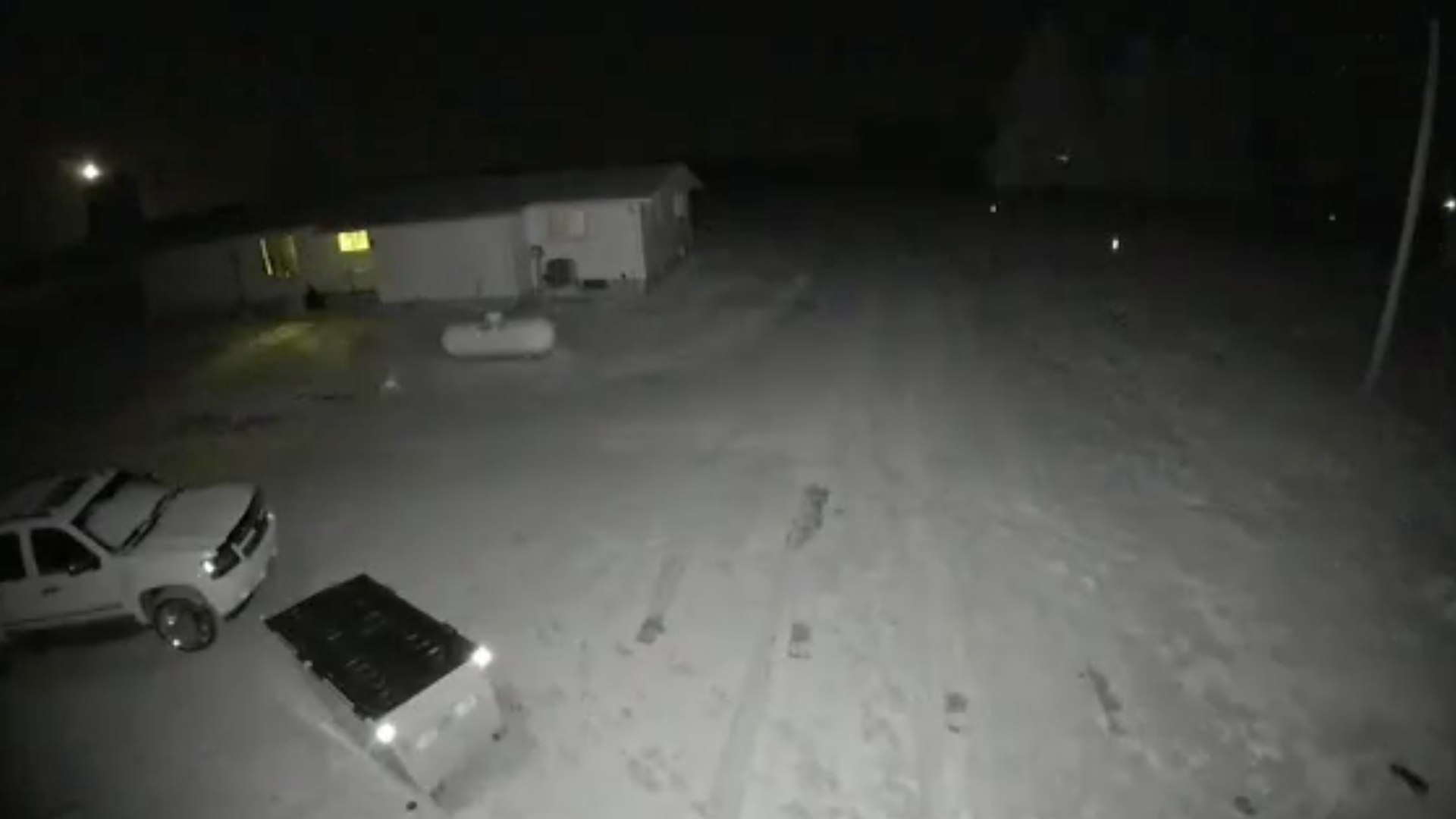
A strange orb light pictured in a surveillance camera at the top left in Maysville this year. Photo: Courtesy of Enigma Labs
The Midwest is used to hearing flyover jokes, but when it comes to unidentified flying objects in the sky, we really seem to be missing out.
Driving the news: Enigma Labs is a startup that developed an app where users can upload videos of odd sightings in the sky to share with others.
- While the West and Southwest are hotbeds of strange activity, the Midwest has some of the fewest reports per capita, Alejandro Rojas, a UFO researcher, tells Axios.
How it works: An AI program on Enigma Labs app generates a score to help determine whether an uploaded user video captures something truly unidentifiable or just a plane, satellite or other known object.
- Because the government typically doesn't have enough data to study these anomalies, the app's goal is to crowdsource as much information as possible, Rojas says.
Zoom in: Since the app started in 2023, Iowa users have submitted 118 sightings.
- One example that intrigued Rojas was a cell phone video from Sioux City showing white orbs in the sky after the user heard an airplane and looked up.
- While such orbs are typically helium balloons, this orb appeared stationary, despite tree branches blowing in the wind in the background, Rojas says.
Catch up quick: Most people know the term "UFO," but the current term coined by the government is "UAP," an unidentified aerial phenomenon.
- With popular media like "The X-Files," the general public started associating "UFOs" with aliens, but Rojas says experts prefer a neutral approach, recognizing that these objects are simply unidentified — not necessarily extraterrestrial.
Between the lines: Iowa and other Midwestern states may report fewer UAPs due to fewer sunny days and colder temperatures that keep people indoors, Rojas says.
- Other parts of the country also have more military activity, which could be prompting more aerial sightings.
What we're watching: The majority of the time, objects are in fact explainable. Misidentifications have increased lately because Space X rockets have been adding satellites, he says.
- But he's heartened that both NASA and Congress are taking UAP sightings more seriously in recent years and sharing their own reports.
The big picture: It doesn't matter whether or not you believe in extraterrestrial beings, Rojas argues.
- What's important is documenting unidentifiable objects in the sky and researching what they could be — not just to satisfy curiosity, but also for airspace security, he says.