Iowa grocers end bottle redemption as new bottle bill rules start

Add Axios as your preferred source to
see more of our stories on Google.
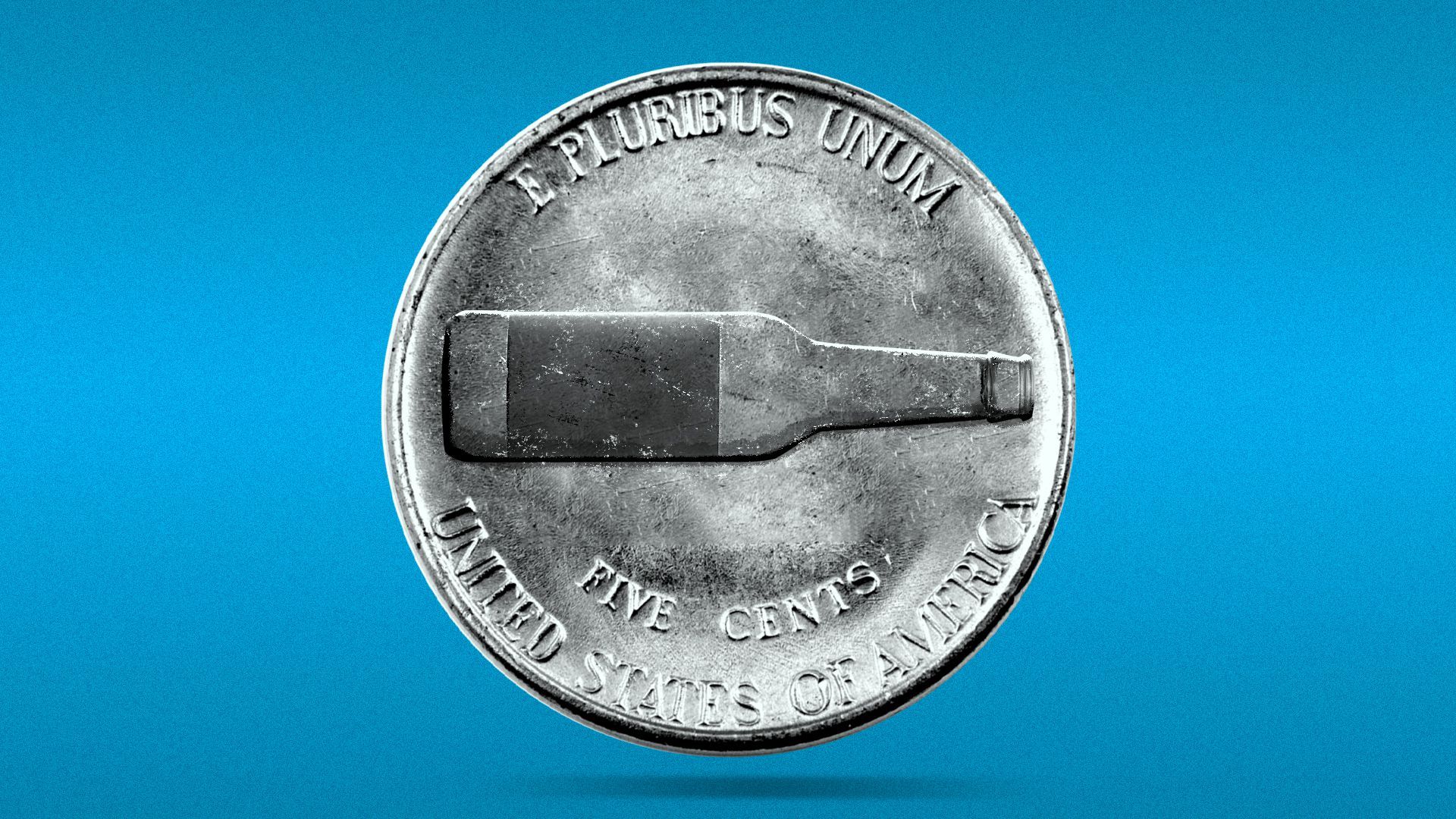
Illustration: Brendan Lynch/Axios
Iowa's new bottle bill rules took effect on Jan. 1 and changes are slowly rolling out in the state's can redemption industry.
Driving the news: Lawmakers overhauled the state's collection process last year, which required stores to collect empty cans and bottles and return customer deposits on them.
- The new law allows grocery stores to retire their collection programs if a redemption center is within a 10- to 15- mile radius.
- Handling fees paid by beverage distributors to redemption centers also increased from 1 to 3 cents per container.
What's happening: Some grocers, like Whole Foods in West Des Moines and Hy-Vee off Ankeny Boulevard, ended their redemption programs at the beginning of the year.
- Other major retailers Price Chopper are still accepting returns for the most part, but it's up in the air how long that will last.
Zoom in: The Iowa Department of Natural Resources is giving redemption centers until Jan. 31 to be approved under the new rules.
- So far, the department has approved 56 centers.
- Three have been approved in Polk County: The Metro Waste Authority sites in Des Moines and Grimes, and K & B Redemption Center in Des Moines.
What they're saying: The increased profit incentive for redemption centers will encourage more private entities to get involved and come up with new ways of recycling, said David Adelman, a lobbyist for the Iowa Wholesale Beer Distributors Association.
- He pointed to Droppett, a Des Moines-based redemption site where people can leave their cans without waiting in line. It hasn't been approved yet by the Iowa DNR.
The other side: Grocery stores and shops are the most convenient way for people to return their recyclables, but more of them will likely stop accepting bottles, said Pam Mackey-Taylor of the Iowa chapter of the Sierra Club.
- If a redemption center is 15 miles away, more Iowans won't likely return their cans and the nickel charge is "basically stolen from them," she said.