How Columbus is making composting easier

Add Axios as your preferred source to
see more of our stories on Google.
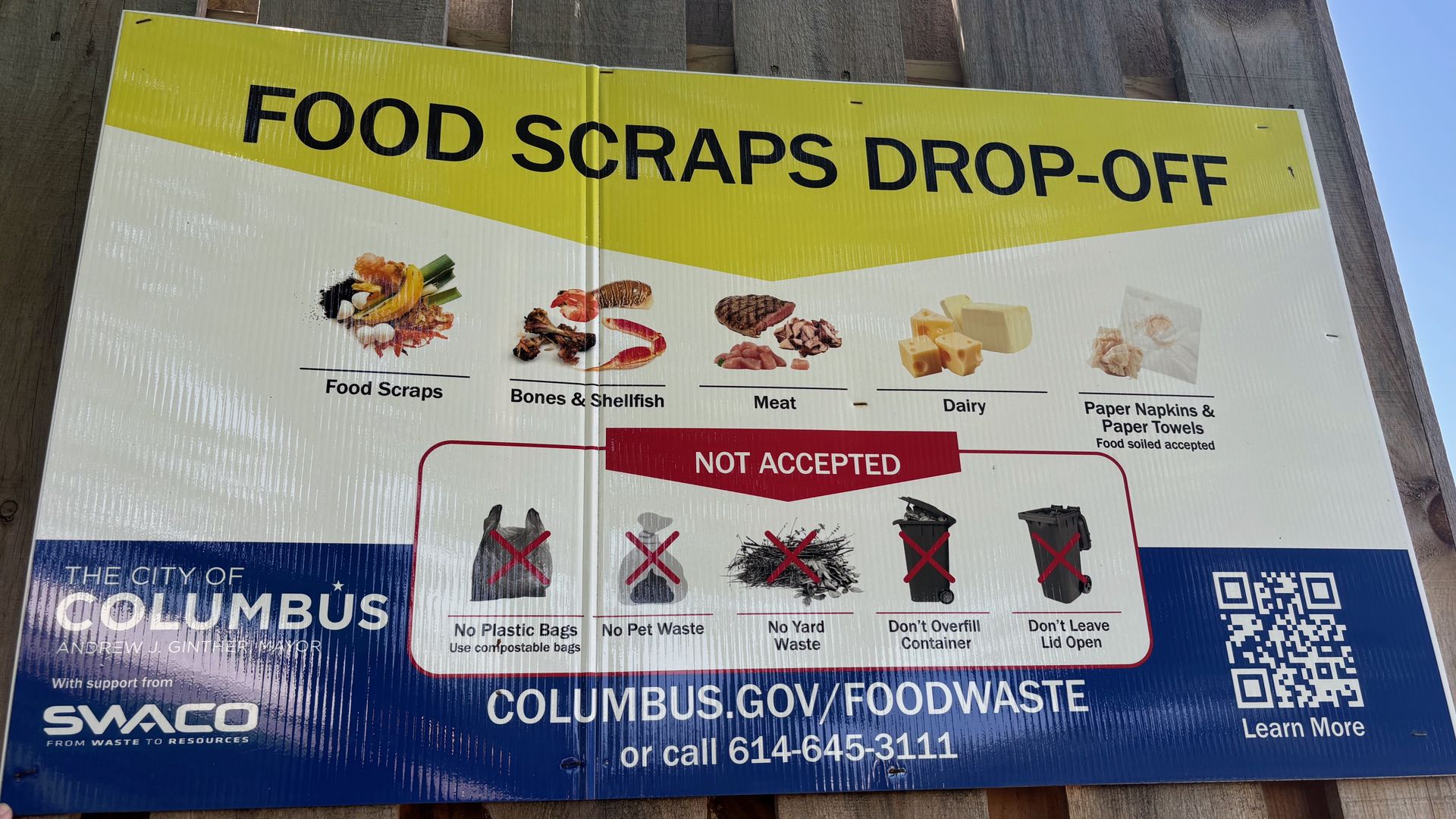
A sign marking one of nine new food scrap drop-off sites at Columbus parks and refuse stations. Photo: Alissa Widman Neese/Axios
Columbus residents have composted about 400,000 pounds of food waste since the city started rolling out free public drop-off sites three years ago.
Why it matters: Food is the most common divertible material dumped in the Franklin County Sanitary Landfill, at a rate of nearly 1 million pounds daily.
- Making composting more accessible will help reduce food waste and the harmful greenhouse gases it emits.
How it works: Composting speeds up the natural process of organic matter breaking down into nutrient-rich fertilizer.
- In Columbus, food scraps collected at the sites are sent to an industrial-scale facility that opened in April in partnership with the Solid Waste Authority of Central Ohio.
- The massive high-tech machinery is a first for the region, and it accepts most foods.
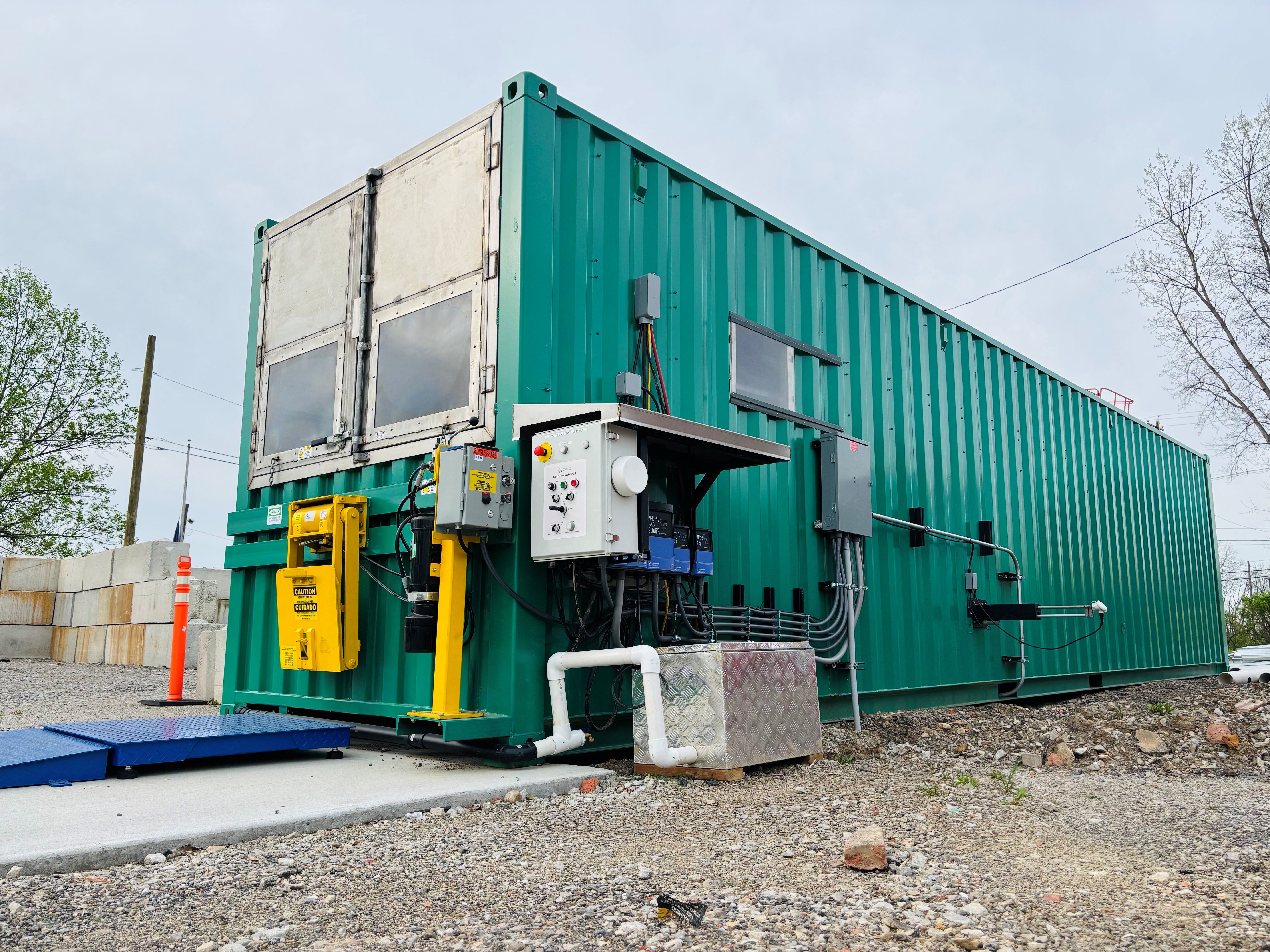
Fun fact: Fertilizer is donated to community gardens across Franklin County, Columbus Department of Public Service spokesperson Debbie Briner tells Axios.
Stop by: Columbus currently has nine drop-off sites and hopes to add more, Briner says.
- They're also in most suburbs, offering an easy alternative for residents who don't want to maintain a bin or pile at home.
A first-timer's composting experience
🙋♀️ I fit that description. But I recently tried a composting-curious trial run and am happy to report that it went well.
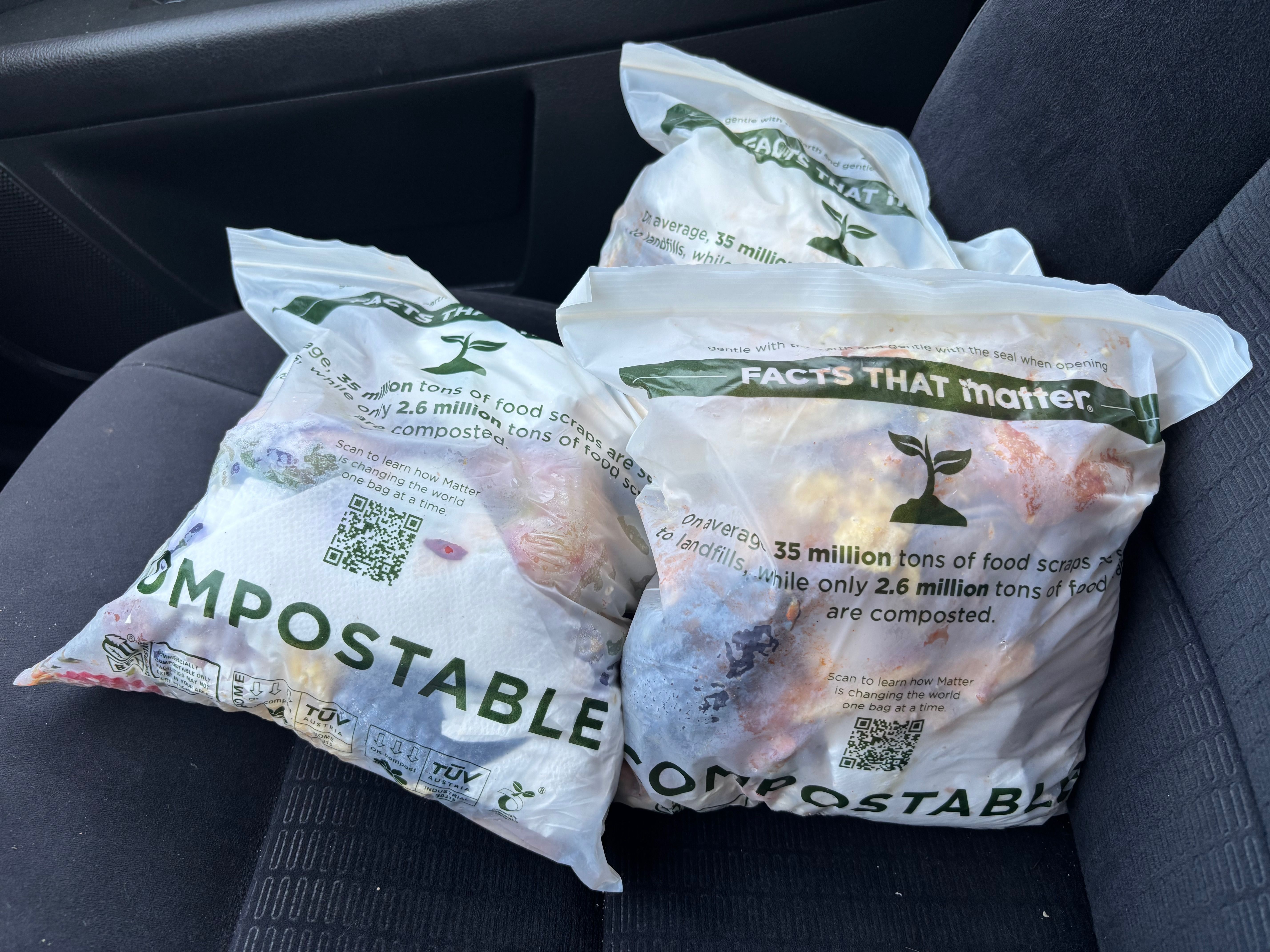
- I collected three gallon-size compostable bags of scraps over two weeks, neatly storing them in my freezer until I dropped them off at Carriage Place Park.
What I learned:
👃 The collection bins didn't smell, even on the hottest day of the summer. Phew!
👶 Kids create a lot of compost. Between unfinished vegetables and spoiled groceries from stomach bugs, our family's scraps piled up faster than I expected.
🍓 It's not all bad. Strawberry stems, banana peels and eggshells are wastes you can't avoid.
😬 I use way too many paper towels. They're compostable, but pulling out the bag every time I soiled one has me considering reusable alternatives.
🚗 Make trips worth it. Car emissions harm the environment, too, so stockpile bags and find a route that isn't too out of the way.
♻️ I can do this! Just shifting my mindset and creating the habit was a big first step.
Our readers' composting tips
Many of our readers are already composting pros — thanks for sending in tips to help newbies get started.
What you're saying:
🛍️ Lisa W. also keeps compost-friendly bags in the fridge to drop off.
😅 Melanie M. warns if you don't use them quickly, they'll start to break down. (But hey, at least that means they work!)
🏠 Jen N. H. pays for curbside bucket pickup with the Compost Exchange.
- "I know it can be seriously yucky, but we have diverted so much from our regular garbage and that makes me feel so much better about our footprint!"
💰 Christy W. bought a backyard bin using a local rebate program.
- "It takes a couple weeks to get into the composting routine, but once you get into the flow, you'll ask yourself, 'Why didn't I start doing this years ago?'"
🧻 Cheryl S. says "you'll have more scraps than you think." She puts paper towels at the bottom of a lined bucket to catch smelly liquids.
🏃 Bill W. keeps a smaller container inside his trash can, both sealed. He uses a waterproof tote to transport his bag of scraps for a quick "dump and run."
🗓️ Tom W. recommends emptying buckets weekly to prevent smells.
- "It's amazing how much longer the garbage liners last when they're not filled with compost."