A firsthand look at Columbus' 2026 homeless count

Add Axios as your preferred source to
see more of our stories on Google.
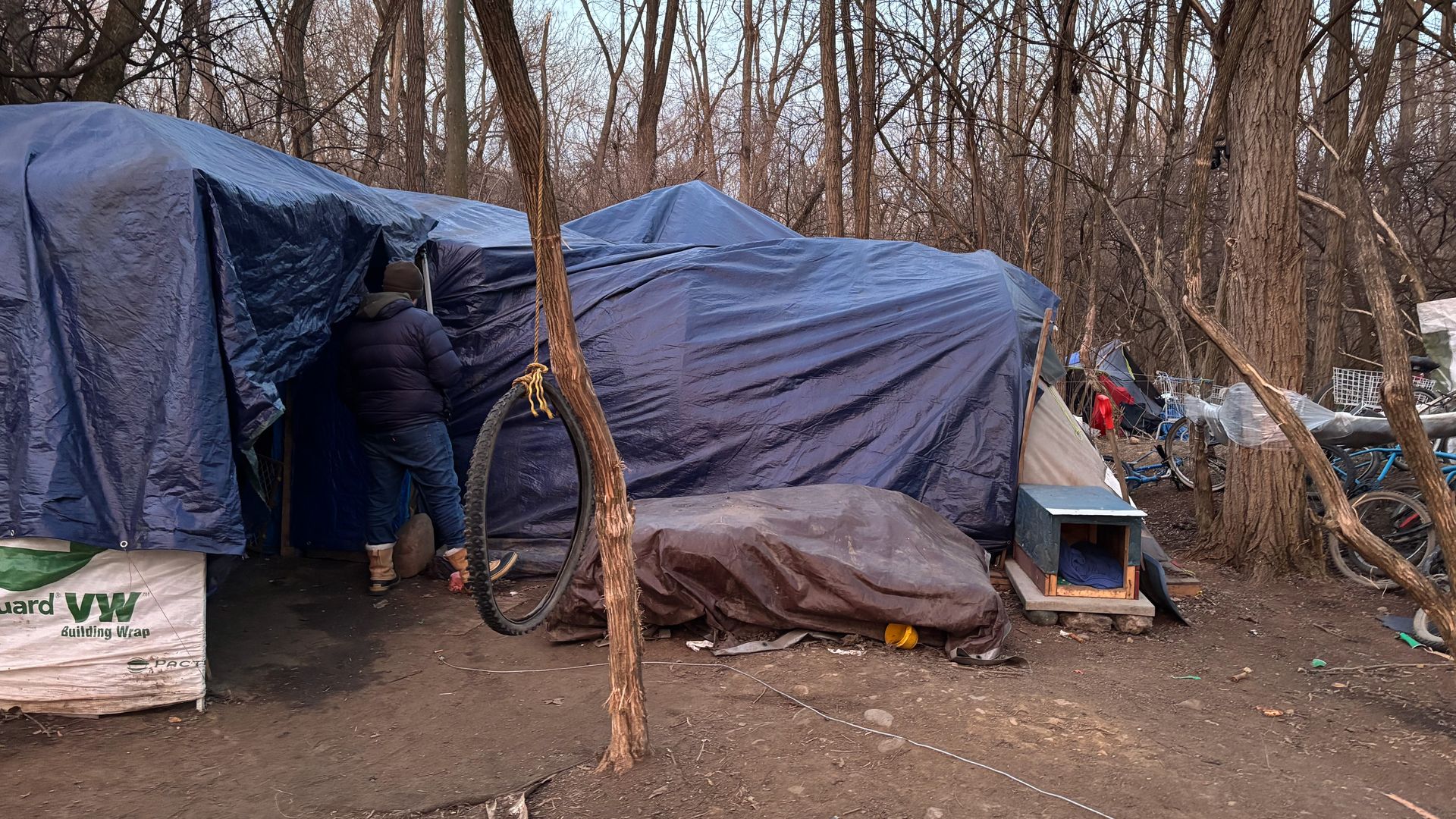
A volunteer interviews a person experiencing homelessness in their tent during Central Ohio's annual point-in-time count last week. Photos: Alissa Widman Neese/Axios
More than 300 volunteers fanned out across the city before dawn, their flashlights scanning the dark, frigid woods for tents and plastic tarps.
Why it matters: The Columbus area's homeless population is at a record high — and so is the number of people ensuring they're accounted for each January.
- Axios walked alongside these volunteers last week to observe their outreach and better understand the scope of the crisis.
How it works: The annual point-in-time count is a requirement tied to the local Community Shelter Board's federal funding.
- It's also a time to make connections and direct people to help, says Asia Fortner, the Mount Carmel lead outreach specialist who guided our small group.
- Volunteers offered those we met Kroger gift cards, COTA passes and information on local warming centers, in addition to conducting an optional survey of demographic questions.
Between the lines: The census happens during frigid winter mornings because people are less mobile and most at risk.
- Advocates suggest sites with a history of activity. Even so, some people may be missed.
Case in point: As we trudged through the muddy South Side brush, I was certain the quiet area we were exploring had been abandoned.
- Luckily, the group didn't turn back.
- A volunteer spotted some cats slinking around and then found a tent surrounded by belongings and debris.
"Outreach," Fortner called out. "Is anybody home?"
- A woman in her 30s emerged. She answered the survey, then introduced us to her cats — and the rest of the group.
What we found: As the sun rose, it was easier to spot another tent. Then another. And another.
- The folks we talked to estimated as many as 20 to 50 people lived in the encampment, some for years.
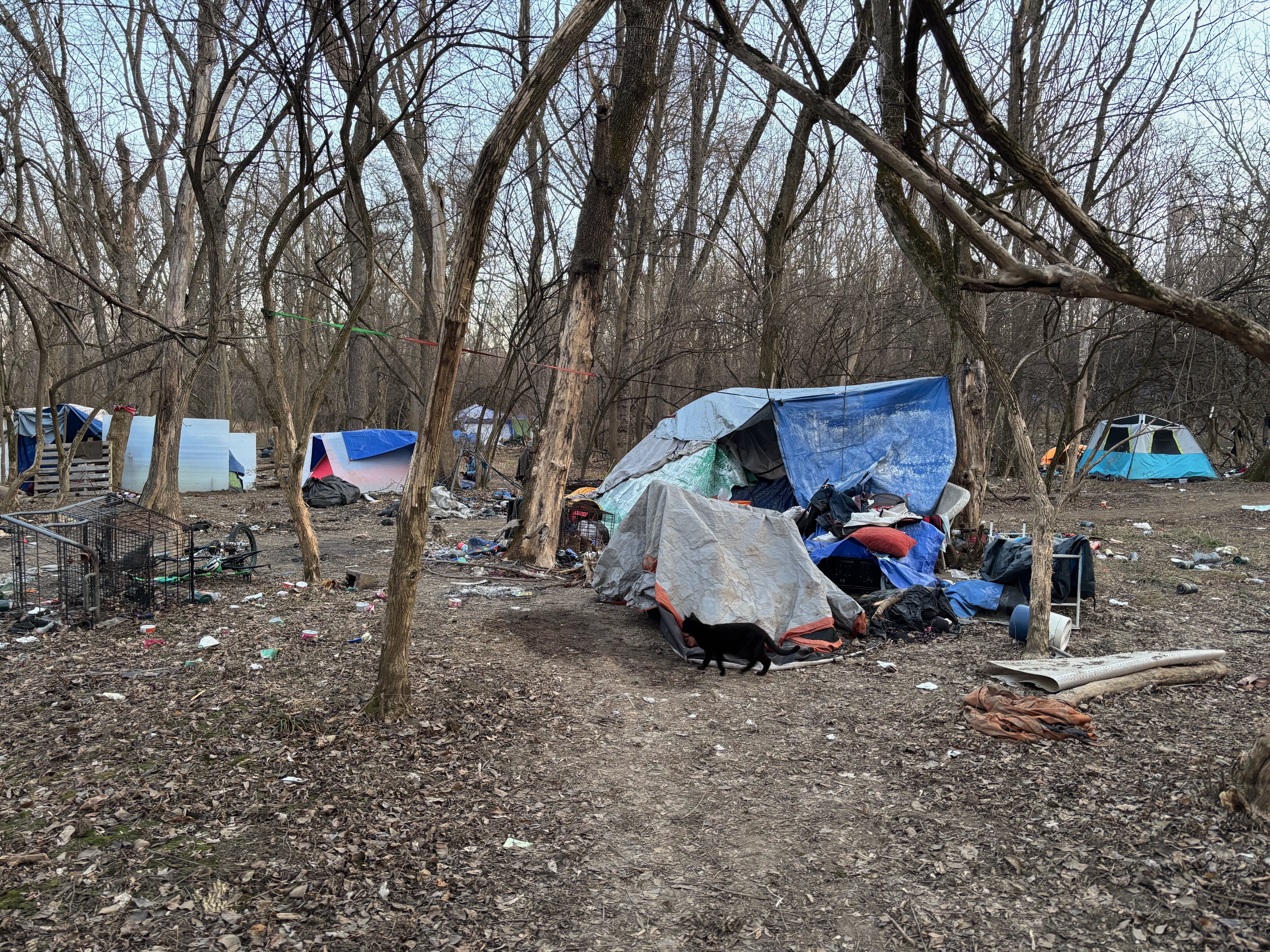
Zoom in: As a volunteer with numb, chilly fingers struggled to type survey answers on a phone, one woman from the encampment offered her hand warmers.
- "I'm lighting a fire so y'all can stay warm," she insisted, igniting a pile of branches.
What they're saying: "We all have jobs," a man explained. "Everyone looks out for one another."
- Others referenced past encampment sweeps, saying they feared being displaced.
- Despite Winter Storm Fern approaching, most planned to stay put, relying on propane tanks and blankets to keep warm.
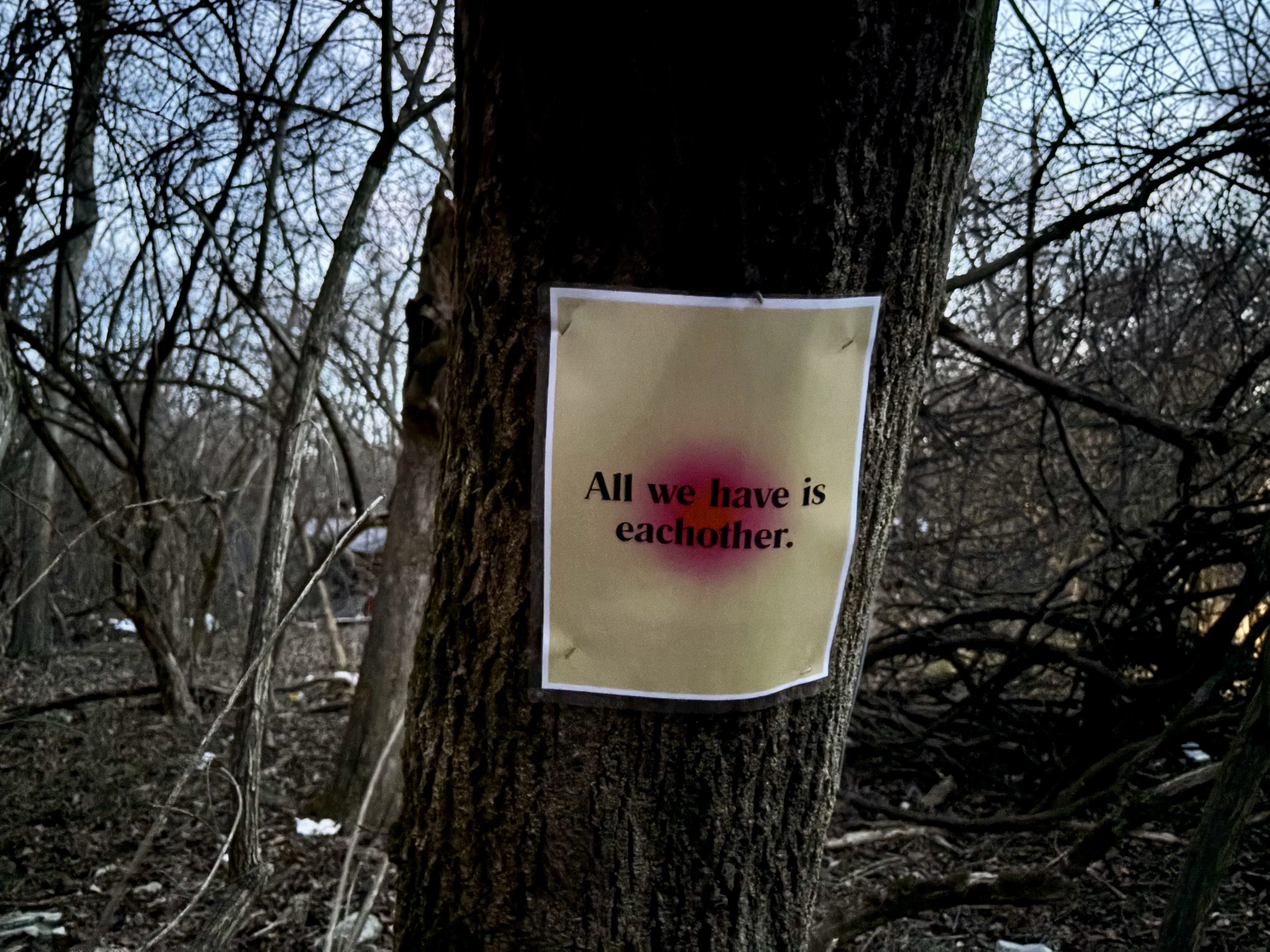
💭 Alissa's thought bubble: While in the woods, I saw a sign tacked to a tree that said "All we have is each other."
- It lifted my spirits, if only for a moment, as I grappled with the seriousness of the situation our city is facing.
Where the point-in-time count data goes
The survey data collected last Thursday will be tallied and released in an annual report this spring.
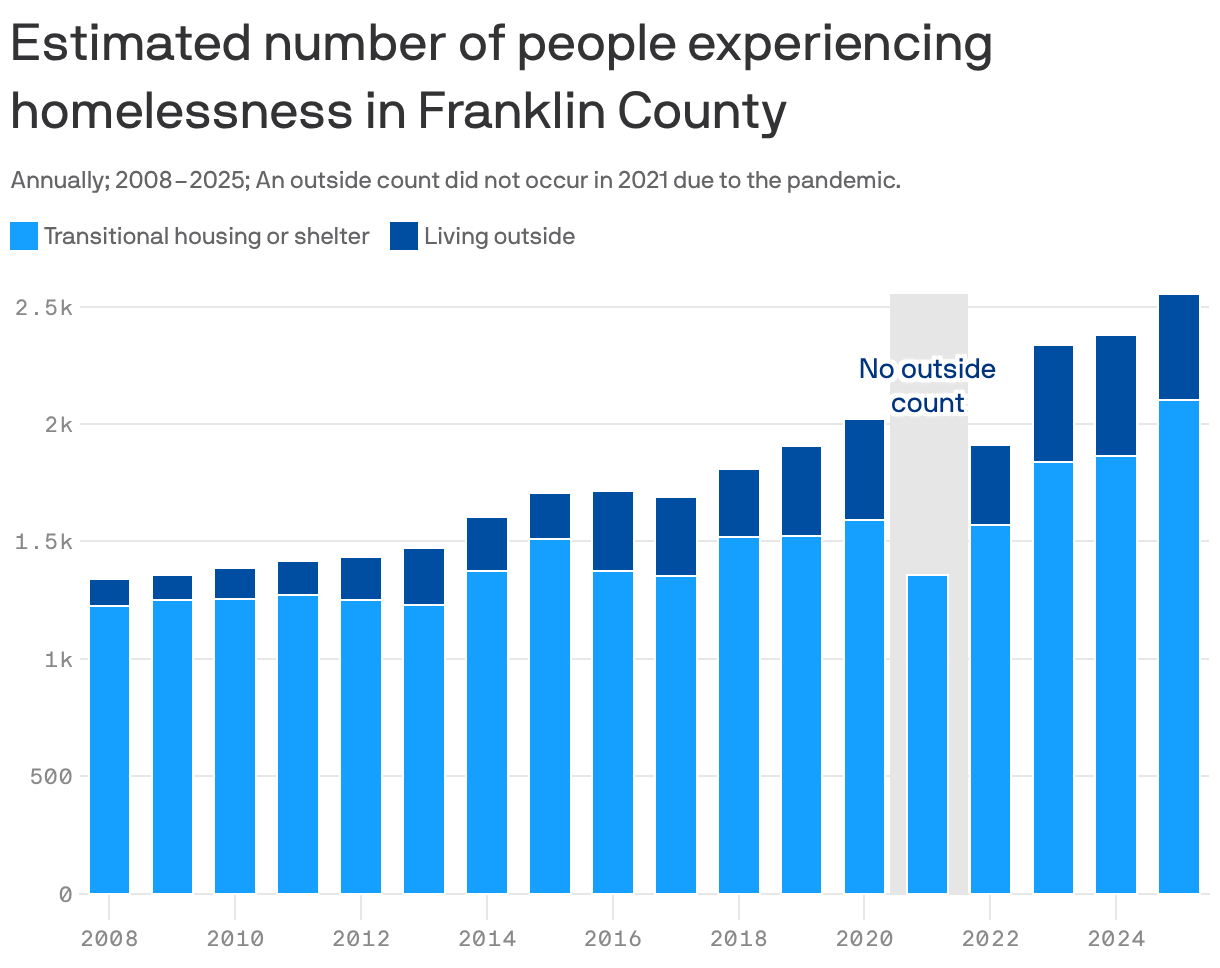
By the numbers: Last year's survey tracked a record 2,556 homeless individuals, a 26% increase since 2020.
- Of them, 455 lived outside and 2,101 were in shelters or transitional housing.
The big picture: The local surge mirrors a nationwide trend, with people of color disproportionately affected.
Context: Homelessness isn't caused by any one thing. It's usually the result of personal crises compounded by broader problems.
- Across the U.S., experts cite a lack of affordable housing and stagnant incomes as primary factors, along with health issues, unemployment and systemic inequality.
Threat level: Shelters and other safety nets are stretched thin amid rising demand.
- A study using 2023 point-in-time count data found Franklin County had a "shelter gap" of about 1,000 people.
What local leaders are saying
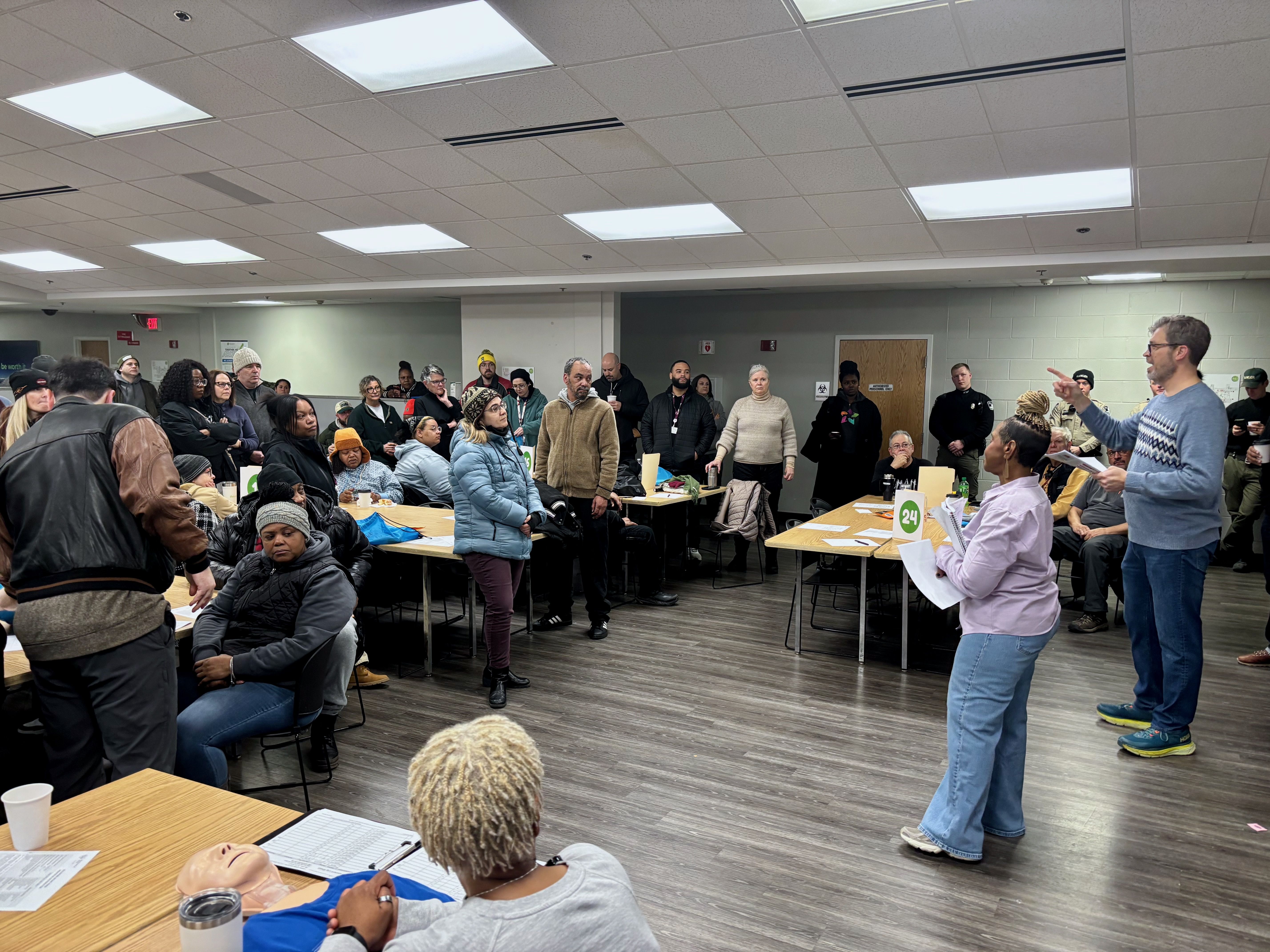
The nonprofit Community Shelter Board continues to adjust its approach as the local need rises, chief system effectiveness officer Steven Skovensky tells Axios.
Catch up quick: In addition to organizing the annual count, the shelter board coordinates strategy, collaboration and resources to support people without housing and those at risk.
One example: This is its third year with a "winter warming center" strategy in place.
- Instead of adding beds to traditional congregate homeless shelters, new accommodations like a former North Side hotel allow people to bring pets, possessions and partners and offer a bit more privacy.
- The model's early results are promising, and the goal is to eventually extend it year-round to better keep up with demand, Skovensky tells Axios.
Follow the money: Columbus City Council has upped its annual funding toward the board in recent years, while local voters have supported bonds to add more affordable housing.
- New programs launched in 2025 include a specialized outreach team and an eviction-prevention-focused resilient housing initiative.
Yes, but: The city has also faced criticism for encampment sweeps, which advocates say don't fix root causes — and complaints from residents that officials aren't doing enough to address related noise, trash and crime.
What they're saying: Hannah Jones, deputy director of the city's new Division of Housing Stability, tells Axios the removal of active camps is always preceded by repeated outreach.
- Typically, it only happens due to public health or safety concerns, she says.
Columbus remediated 22 camps in 2025, eight listed as "active," per data the city provided.
How you can help
💰 Donate to groups like the Community Shelter Board, the Mid-Ohio Food Collective, the Affordable Housing Alliance of Central Ohio, or other shelter and outreach efforts.
🤝 Volunteer with one of the Community Shelter Board's 16 partner organizations or during a point-in-time count.
📱 Follow the alliance's help page for monthly tips on how to advocate, donate, volunteer and engage.
👉 Learn about local warming centers and hotlines so you can direct people if they need help.
🚿 Go deeper: Read our story about Tent City Showers, a new nonprofit bringing showers, haircuts and hot dogs to local people experiencing homelessness.