Ohio minimum wage gets inflation boost, some want higher

Add Axios as your preferred source to
see more of our stories on Google.


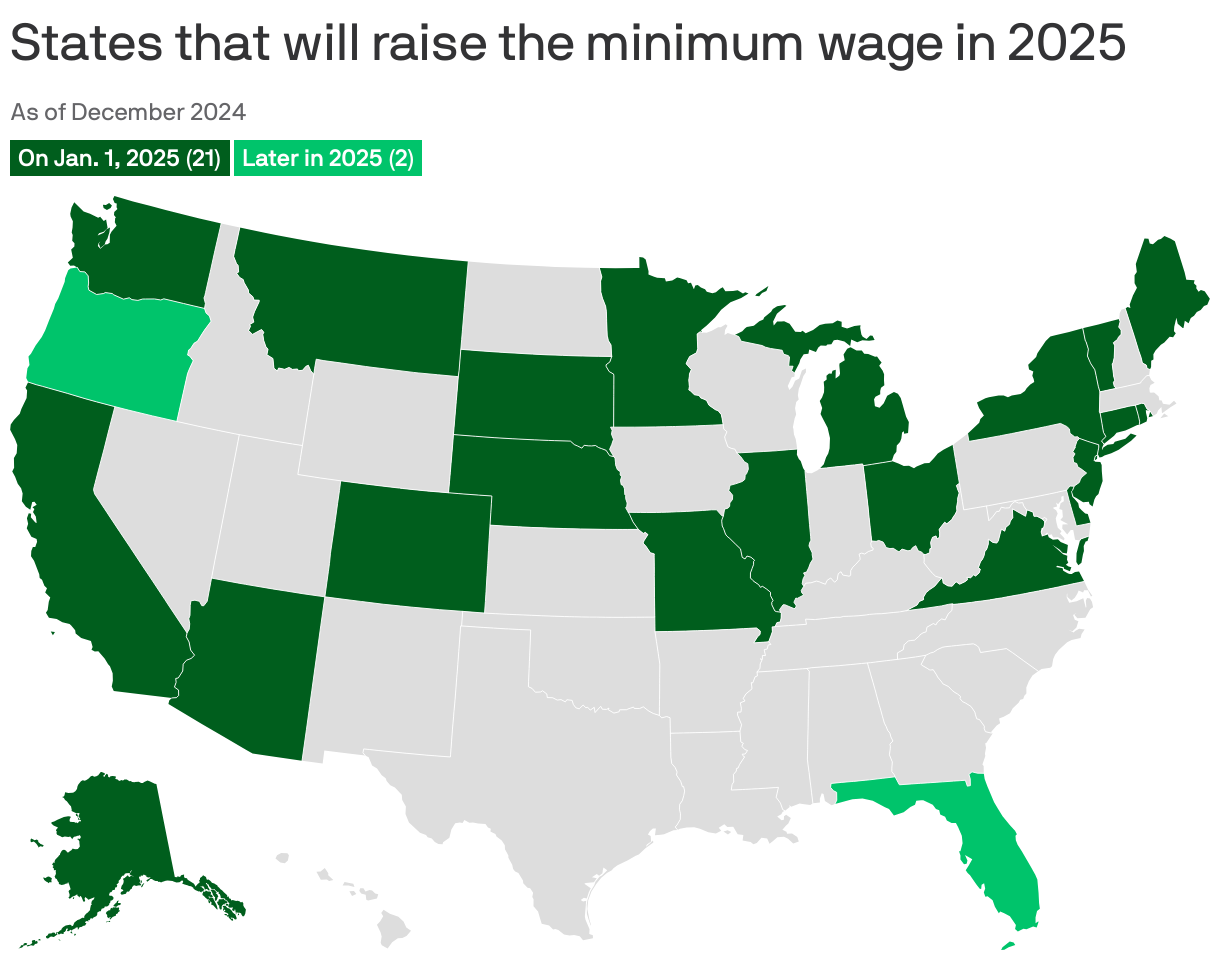
Ohio's minimum wage increased marginally to begin 2025, but remains well below the cost of living in our region.
Why it matters: It's likely to be a hot topic in 2025, with a push to put an increase to a statewide vote ramping up again.
State of play: Each year, the state minimum wage increases by the rate of inflation — this time from $10.45 per hour to $10.70 for non-tipped employees.
- Tipped employee minimum wage increased from $5.25 per hour to $5.35.
By the numbers: The 25-cent increase may keep pace with inflation, but someone holding a full-time job with that wage would still fall far short of cost-of-living estimates from the City of Columbus.
- The city estimates a minimum cost of living of $2,507 per month in Central Ohio.
- A full-time worker making $10.70 would earn just over $1,700 every four weeks.
The big picture: The federal minimum wage is just $7.25 per hour, though states can opt for a higher one.
- Of 30 states that have done so, all are higher than Ohio's rate except Michigan ($10.56), Montana ($10.55) and West Virginia ($8.75).
What's next: The national organization One Fair Wage has worked to increase minimum wage rates across the country, and its Ohio chapter sought to place a constitutional amendment guaranteeing a $15 minimum wage on the November 2024 ballot.
- Those efforts fell short, but the group says it's trying to reach the November 2025 ballot.
What's inside: The proposed amendment would eliminate Ohio's tipped wage, paying all workers a minimum of $15 per hour.
Reality check: Ballot access requires a steep threshold of more than 400,000 signatures from at least 44 of 88 Ohio counties.
What they're saying: Policy Matters Ohio, a progressive think tank, supports increasing Ohio's minimum wage.
- The research group found that a $15 minimum would benefit nearly 1 million workers, adding an average $2,128 per year to their pockets totaling more than $2 billion annually.
- "Because lower-paid workers and families spend much of their income just buying the basics, this injection of wages would ripple out, helping to stimulate local economies," the group writes. "The policy would improve race and gender equity, reduce poverty, and improve health."
The other side: The Ohio Chamber of Commerce opposes an increased minimum wage.
- Legislative attempts by local Democrats like Sens. Kent Smith and Hearcel Craig and House Rep. Dontavius Jarrells have all failed to progress in the Republican-led Statehouse.