It's Homelessness Awareness Month — here's how to help


Add Axios as your preferred source to
see more of our stories on Google.
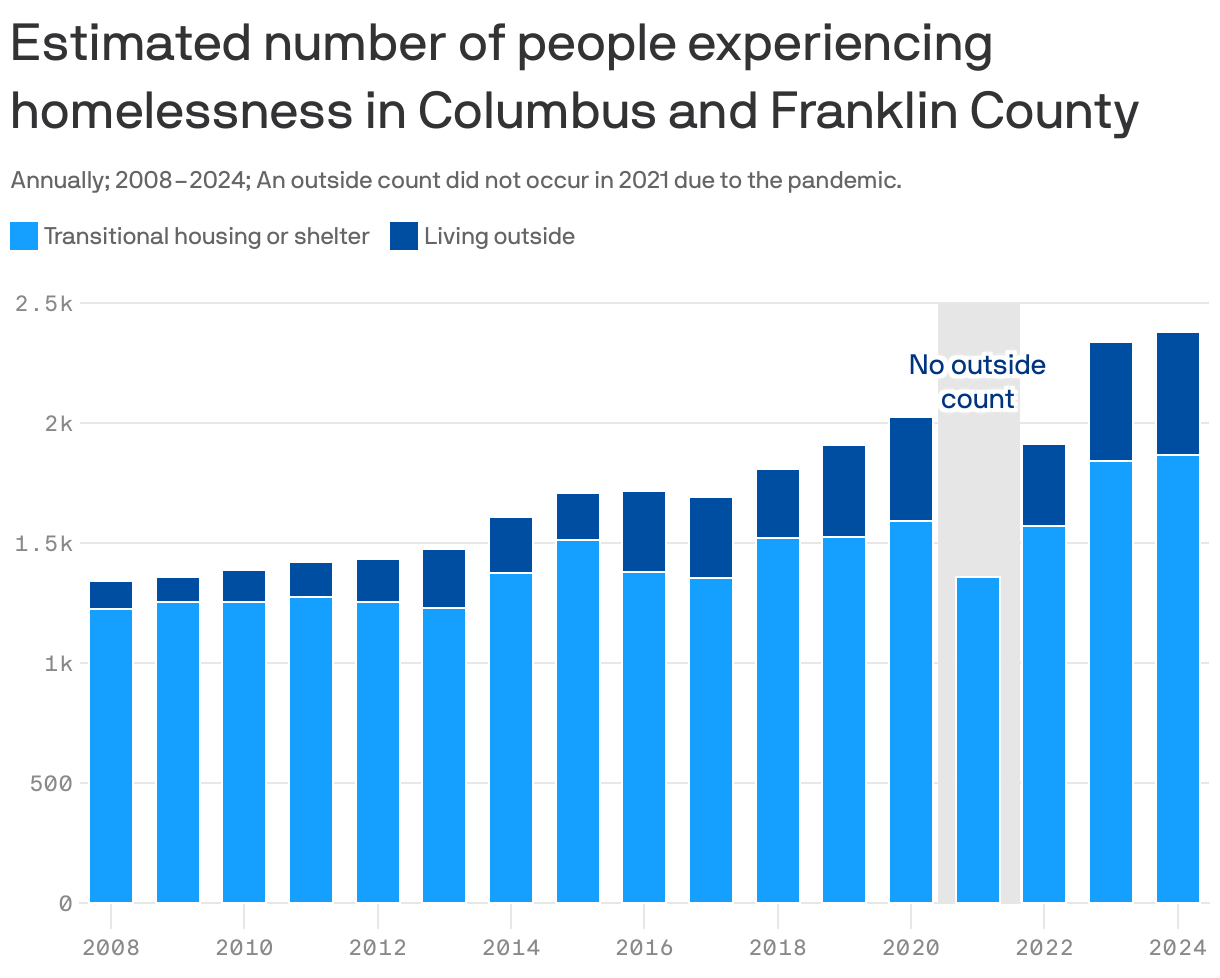
Franklin County's homeless population is at a record high, increasing by 24% over the past two years amid an affordable housing crisis.
Threat level: New housing takes time to develop and the trend is projected to keep worsening as our region's population booms.
- A recent report forecasts a 68% spike in unsheltered homelessness by 2028 without "substantial intervention."
By the numbers: There were 2,380 people experiencing homelessness in Columbus and Franklin County in January.
- The local Community Shelter Board conducts annual point-in-time counts in coordination with the federal government.
- Black residents are disproportionately impacted — representing 53% of those counted, despite making up only 26% of the local population.
Caveat: Such counts may not illustrate the full scope of the problem if people are missed.
Stunning stats: The lack of affordable housing in our region is a primary factor. Median gross rent increased from $887 to $1,186 between 2017-2022, per census data.
- Rental vacancy rates fell to below 4% in that timeframe.
- As of this spring, only 26 housing units were available per 100 extremely low-income households, per the National Low Income Housing Coalition.
Context: All these figures are graver than national trends, the report notes.
What they're saying: "If we go much further, we won't be able to reel it back in … we're at that tipping point," Community Shelter Board chief programs officer Steve Skovensky tells Axios.
- "It's critical we make some adjustments in the next 1-3 years."
Zoom in: Researchers say more independent housing options are needed beyond shelters to address anticipated demand.
- They also recommend more preventative support, such as deposit and moving cost assistance.
- Help for single adults, who represented 95% of people living outside this year, is currently less available compared to families.
Flashback: Columbus voters approved bond issues to support affordable housing in 2019 and 2022.
- The city also updated its zoning code this year to encourage more development.
What we're watching: Local leaders announced Tuesday the creation of a Regional Housing Coalition to increase the speed and scale of new housing projects.
How to help
There are a variety of ways to support initiatives helping Central Ohioans at risk of homelessness.
💰 Donate to organizations like the Community Shelter Board, which coordinates strategy, collaboration and resources to support unhoused people and those at risk.
- The Mid-Ohio Food Collective, which stocks local food pantries, can leverage donated funds to buy goods in bulk.
❤️ Volunteer with organizations that provide help, from housing to health care and everything in between.
Zoom in: The Anthem Welcome Center at 1006 N. High St. is accepting winter gear donations from 9am-2:30pm Tuesdays and Thursdays.
- The space offers on-site health care and housing assistance to those facing homelessness.
- It's operated as a partnership between the Short North Alliance, Southeast Healthcare and Anthem Blue Cross Blue Shield.
By the numbers: The center assisted about 1,200 people last year and has already surpassed 2,400 this year, Short North Alliance executive director Betsy Pandora tells Axios.
What they're saying: Pandora says "the need is great" in the densely populated neighborhood and she hopes the project will spur people to help in other ways.
- "What needs to happen is a broader understanding of the circumstances that individuals find themselves in, which is highly complex."
- "The work of supporting people through these moments — whether through the crisis of losing your home, battling addiction or a mental health challenge — requires an interconnected set of interventions."