The story of Bronzeville, a hub of local Black history

Add Axios as your preferred source to
see more of our stories on Google.
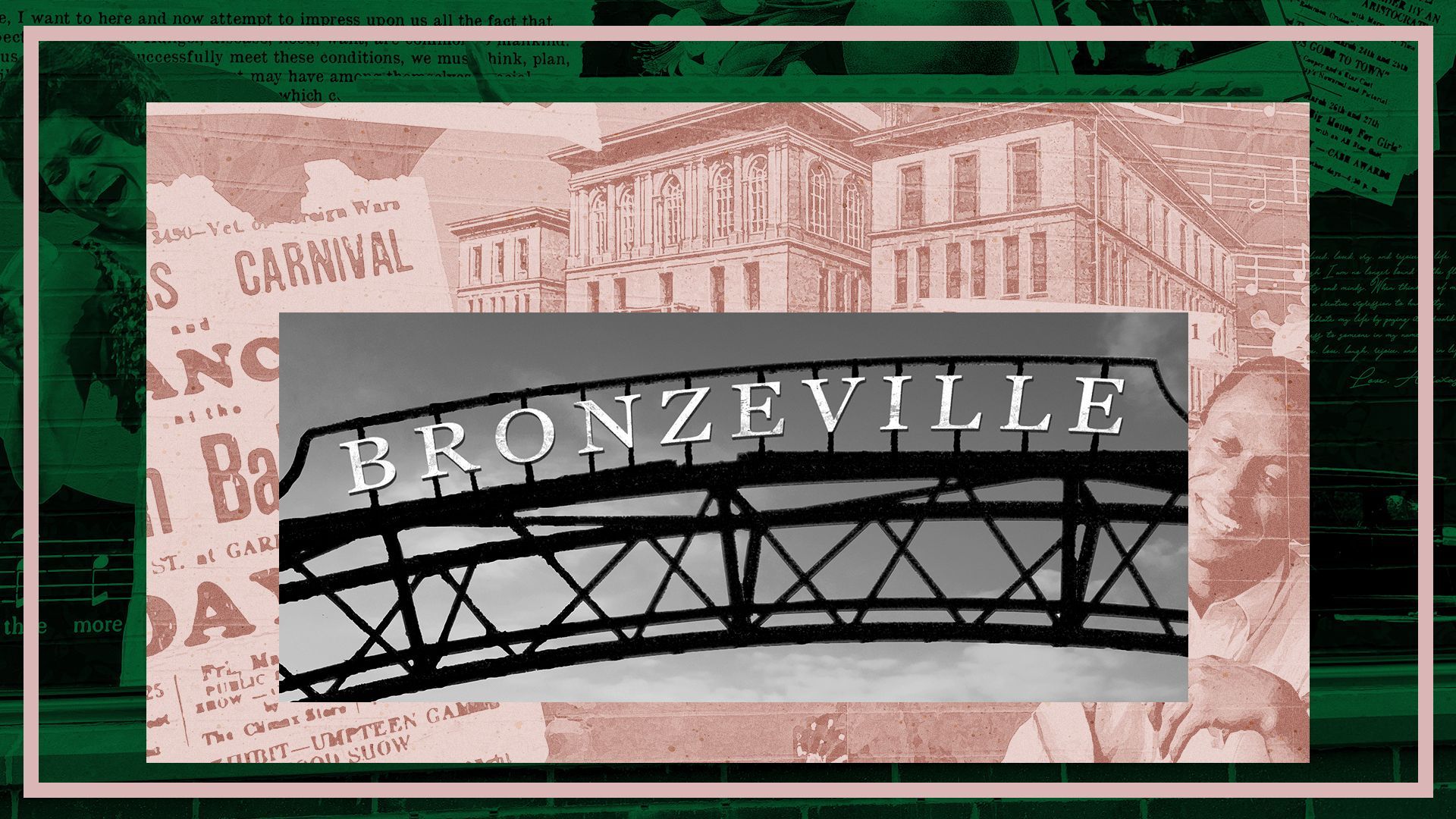
Photo illustration: Brendan Lynch/Axios. Photos: Alissa Widman Neese/Axios
When Willis Brown moved into Bronzeville in the '80s, he saw a "rough area" surrounding his new home. But his mother saw potential.
- "She said, 'Any time you can see downtown from your front porch, it's a million-dollar view in any city. You can't move from here, it's only going to develop,'" he recalls.
Why it matters: Brown didn't just stay — he took that task to heart. Today, the Bronzeville Neighborhood Association president is helping revitalize a historic hub of local Black culture.
Catch up quick: The enclave a mile east of downtown housed 70,000 people at its 1940s peak, after the Great Migration.
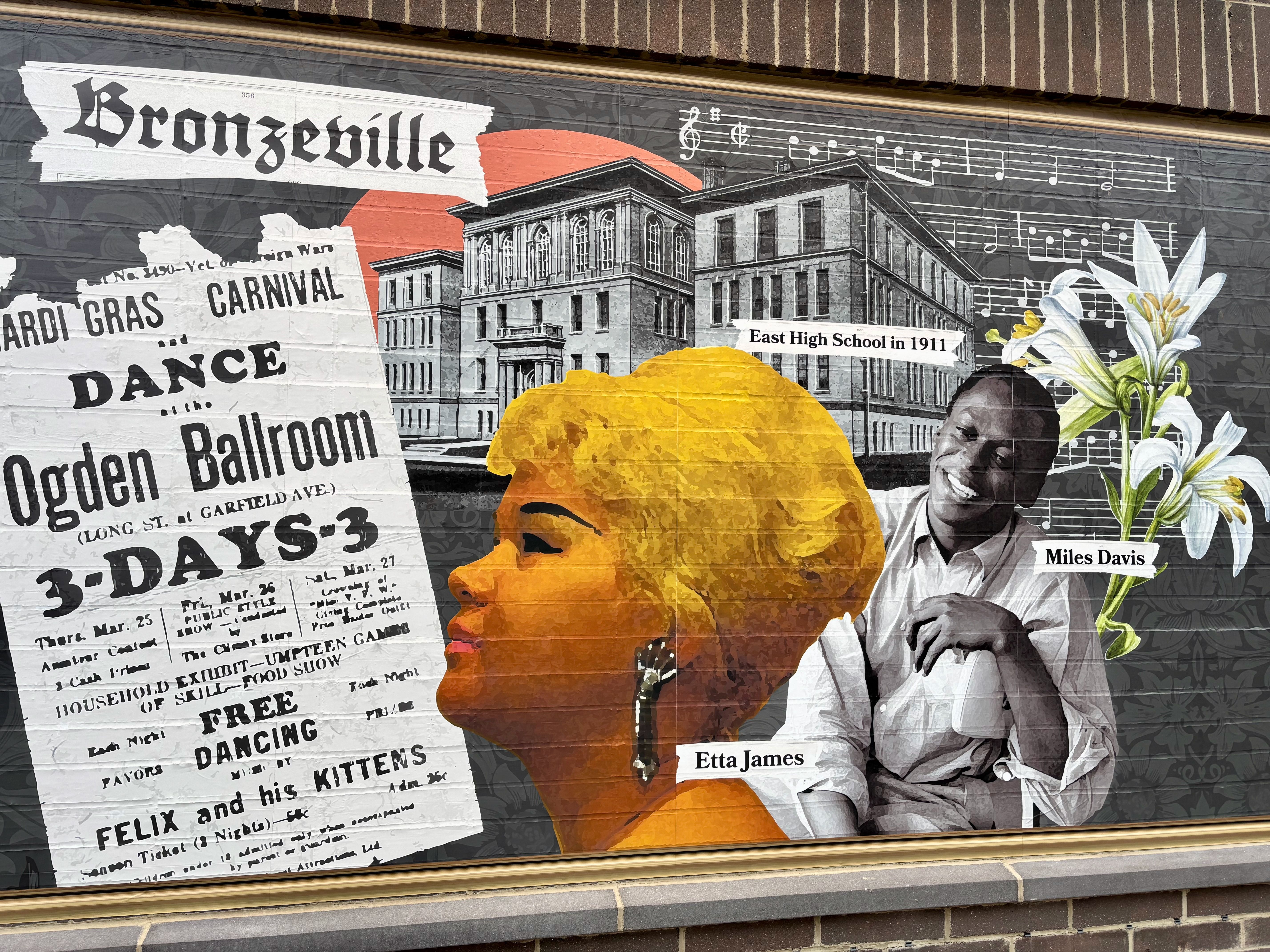
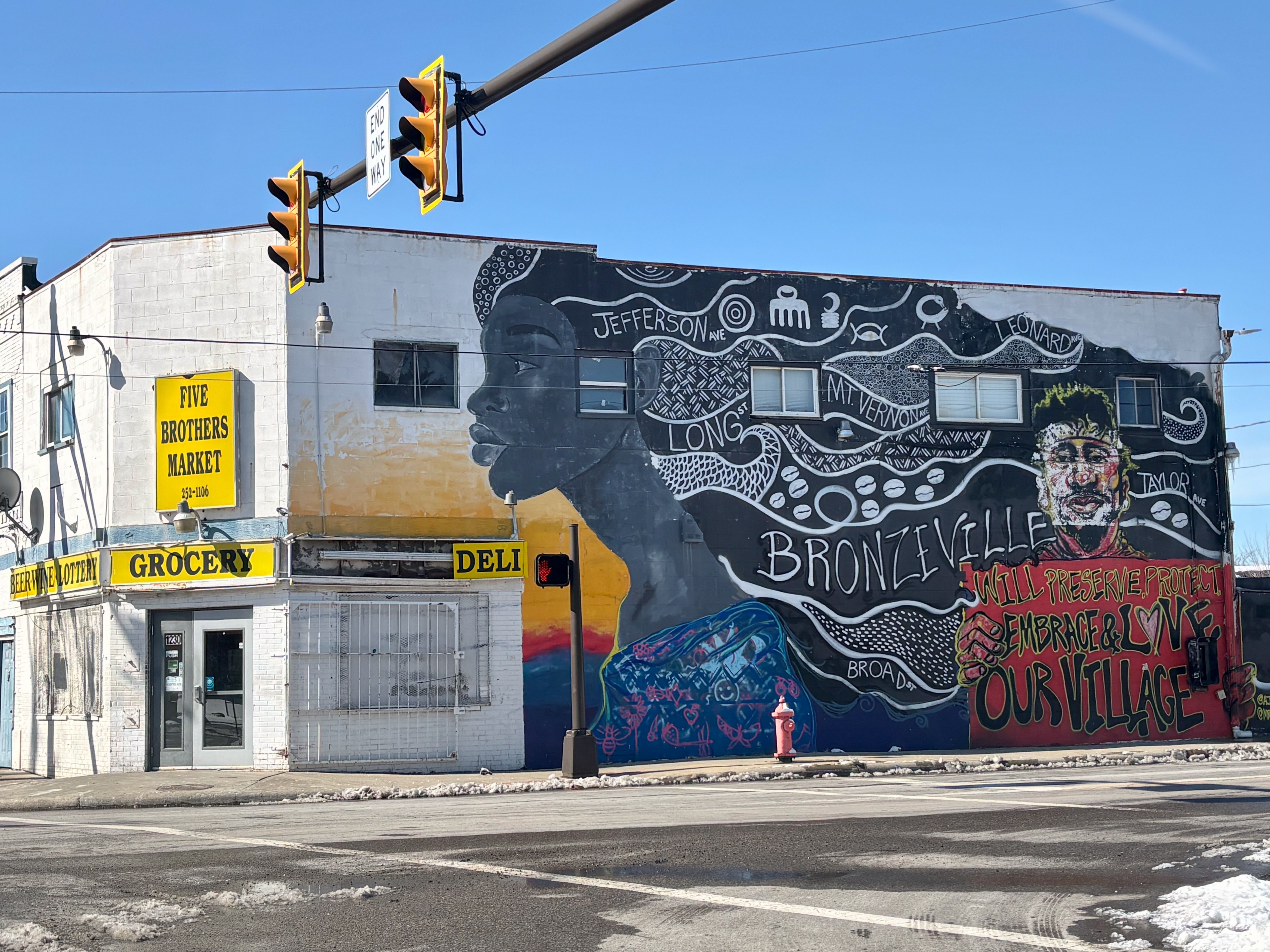
- While Black residents were excluded from other parts of Central Ohio, they built their own bustling neighborhood along East Long Street.
- The "city within a city" had prospering businesses, a hospital, a mayor, and four theaters, which hosted jazz legends like Duke Ellington and Ella Fitzgerald.
The big picture: Local residents dubbed the area Bronzeville after Chicago's Black neighborhood of the same name, Brown tells Axios. It celebrated the community's varied skin tones and countered derisive names from outsiders.
- It's also symbolic, because "bronze is a stronger metal than all its parts," he notes.
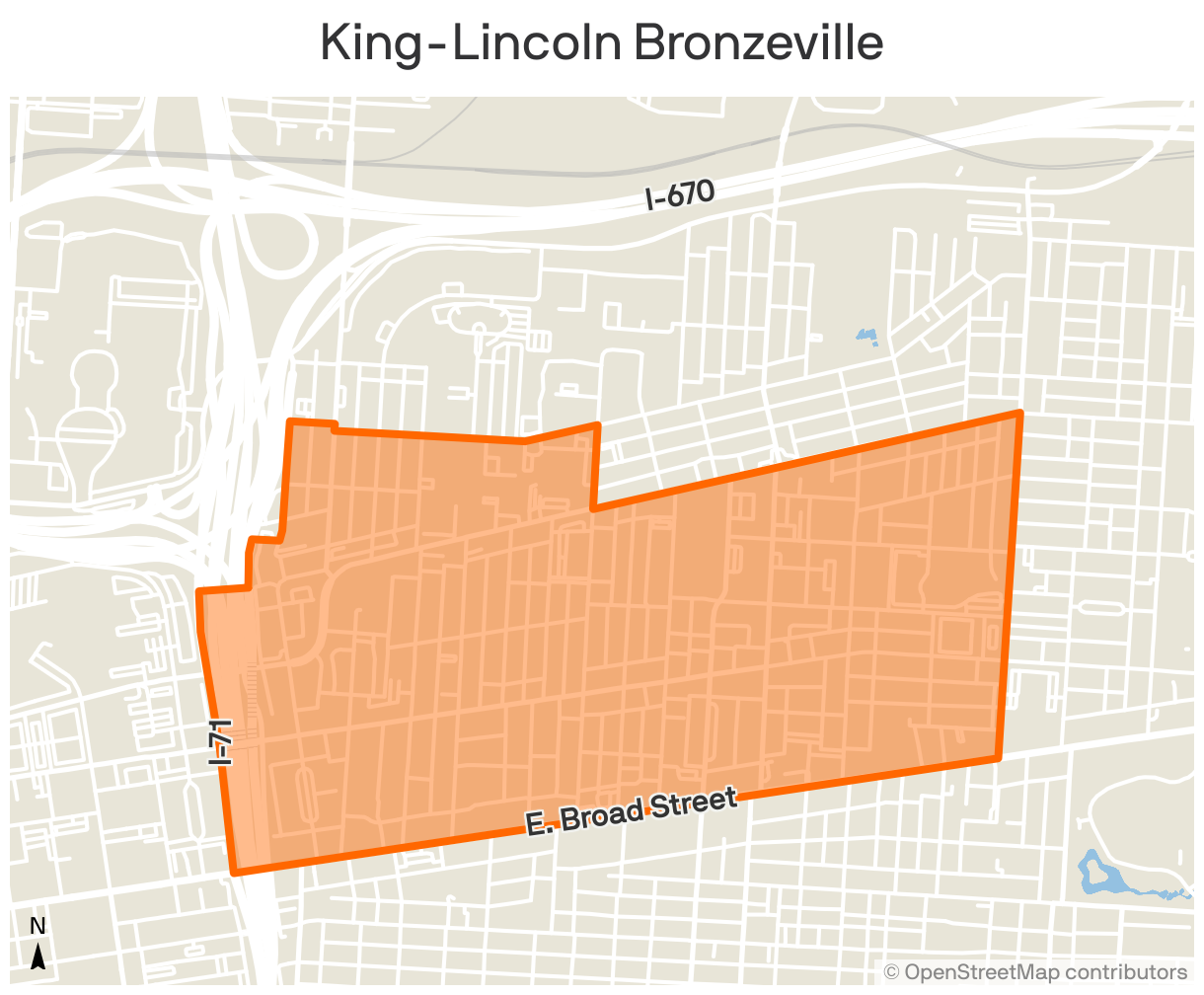
Yes, but: By the '60s, highway construction decimated both places. In Columbus, I-71 sliced through Bronzeville and cut it off from downtown.
- Desegregation also played a role — wealthy residents started taking their business elsewhere. The area struggled with poverty and crime, and the city leveled homes in the name of "urban renewal."
- "Those who had no means to go anywhere stayed, and those who loved here stayed," Brown says.
Between the lines: There were hints of a brighter future in the years that followed. Ohio State University was one of the first to reinvest, opening a community extension center while establishing a Black studies department in 1972. It still serves the community today.
- More anchors eventually rose up, including the King Arts Complex, the Columbus Urban League and a revived Lincoln Theatre.
What they're saying: "If you're Black in Columbus and have been here for more than one generation — somehow, someway, you likely have connections to this community, whether living here, working here, praying here, or playing here," says Monica Stigler, the OSU center's director, who lived in Bronzeville for some of her childhood.
- "This community has been really vital to the culture and the heart of our collective experience for many years," she tells Axios, noting the pride of longtime residents. "Imagining forward, 'What is the future of our community?' has been a very active process."
Friction point: In the early 2000s, Columbus city leaders targeted Bronzeville for investment and gave it a new name, the King-Lincoln District.
- Some Bronzevillians thought the name erased the neighborhood's rich history, so Brown successfully got "Bronzeville" added back.
Today, King-Lincoln Bronzeville houses 10,000 or so residents, and signs of redevelopment are everywhere. Brown welcomes that, as long as it's "sustainable and appropriate," he says.
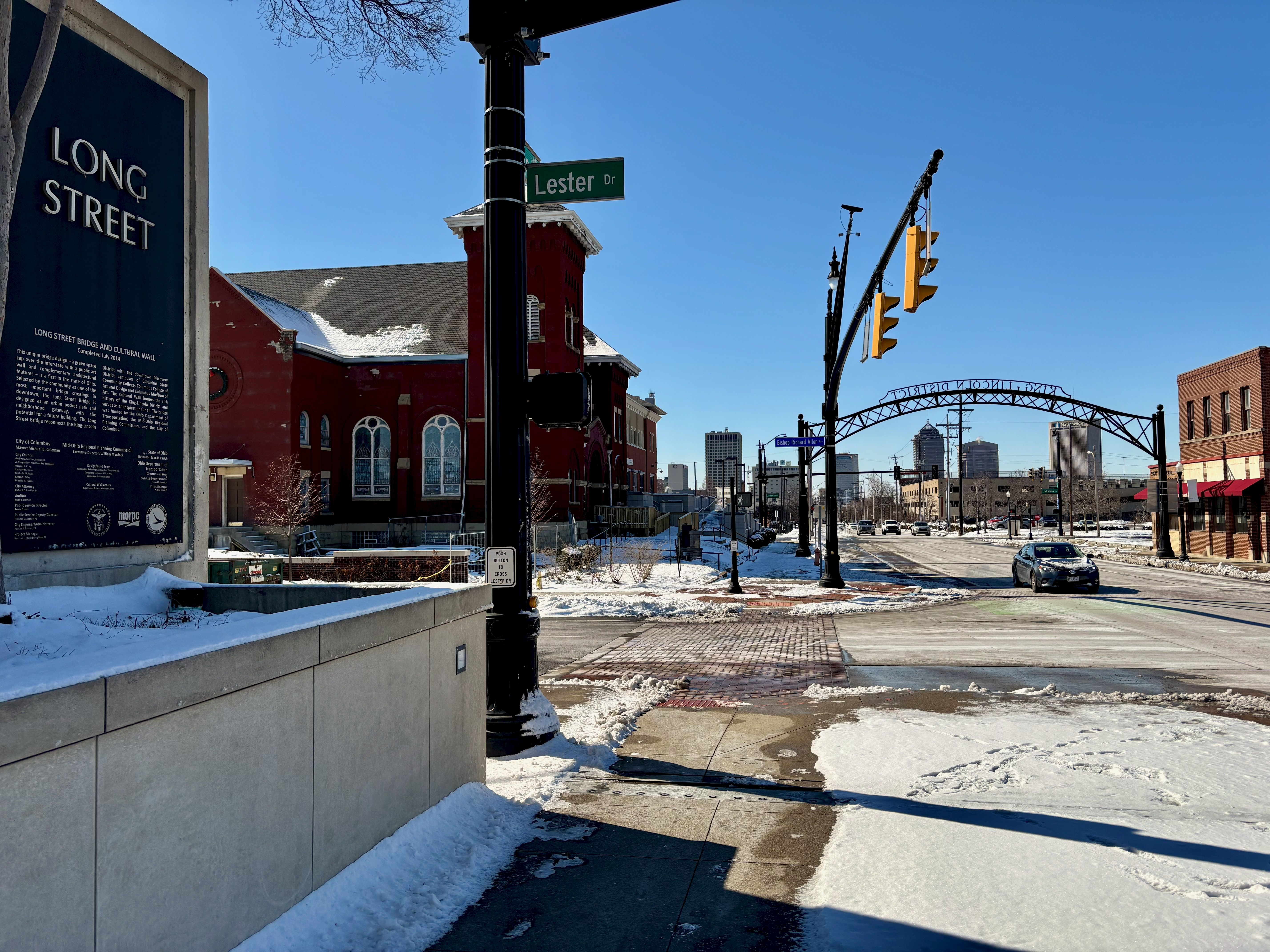
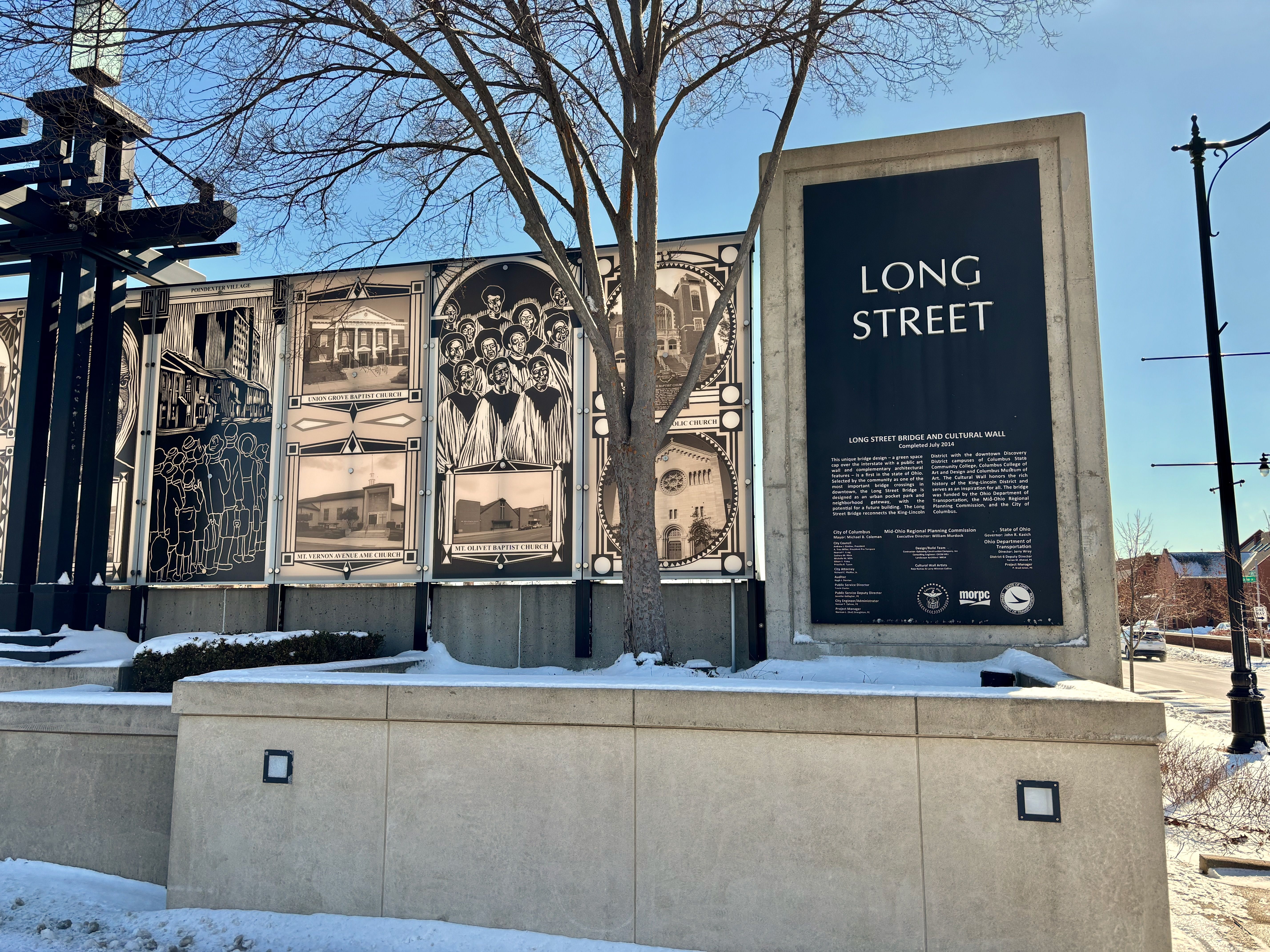
- A bridge and cultural wall across I-71 reconnected the neighborhood to downtown in 2014.
- A new library, health center and Black-owned bank have followed, along with numerous investments in housing.
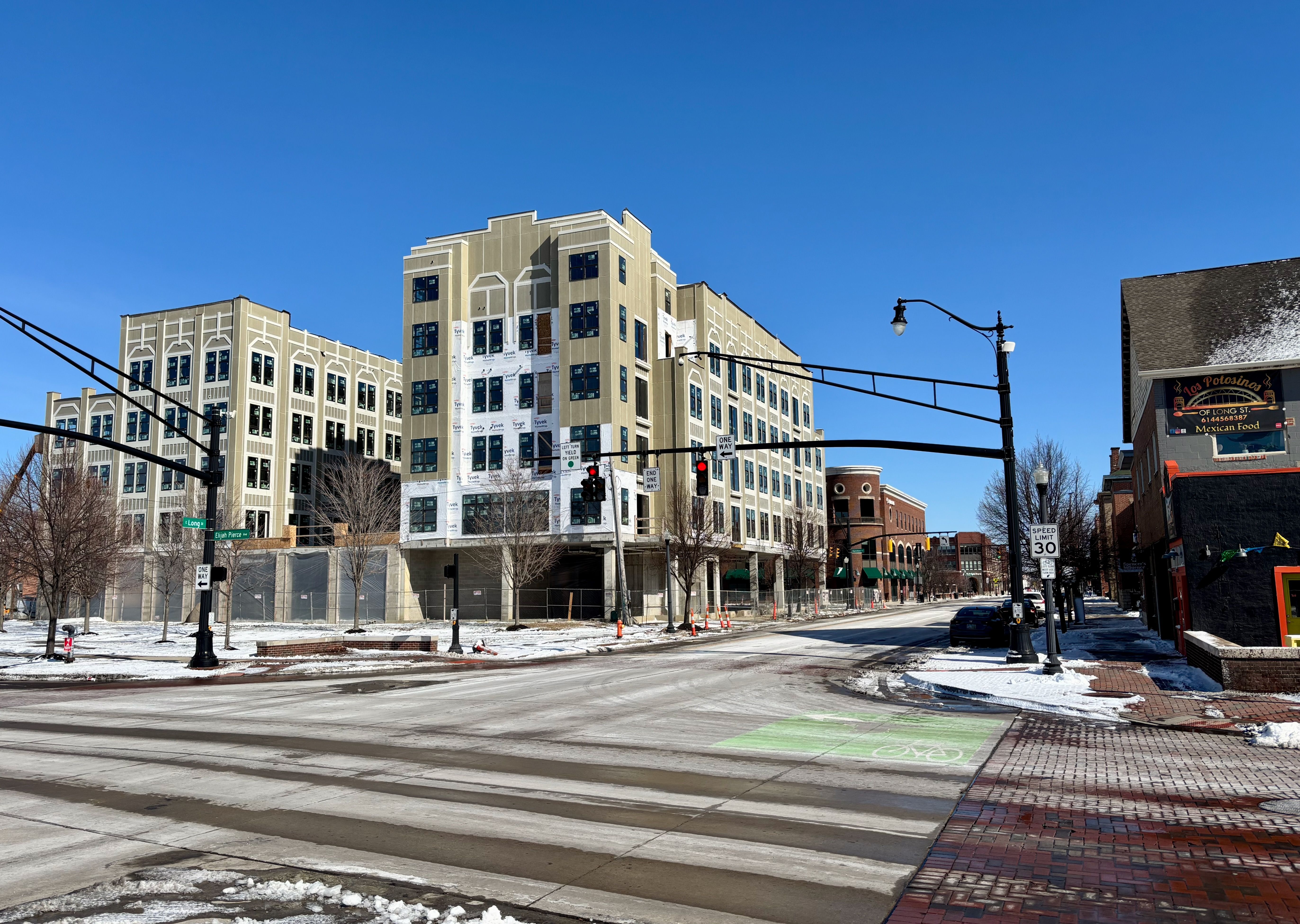
Case in point: A five-story apartment complex is rising up on Long Street that will have an unbeatable view — and a sign bearing the name "Bronzeville" on its roof.
The bottom line: "Show me another community in Columbus with their name on a building facing downtown," Brown says, chuckling. His mother knew best.
Go deeper: Adelphi offers "mission-driven" banking in King-Lincoln Bronzeville
- The "King" and "Lincoln" behind King Lincoln-Bronzeville
- Review: Try the soup of the day at the Lincoln Cafe