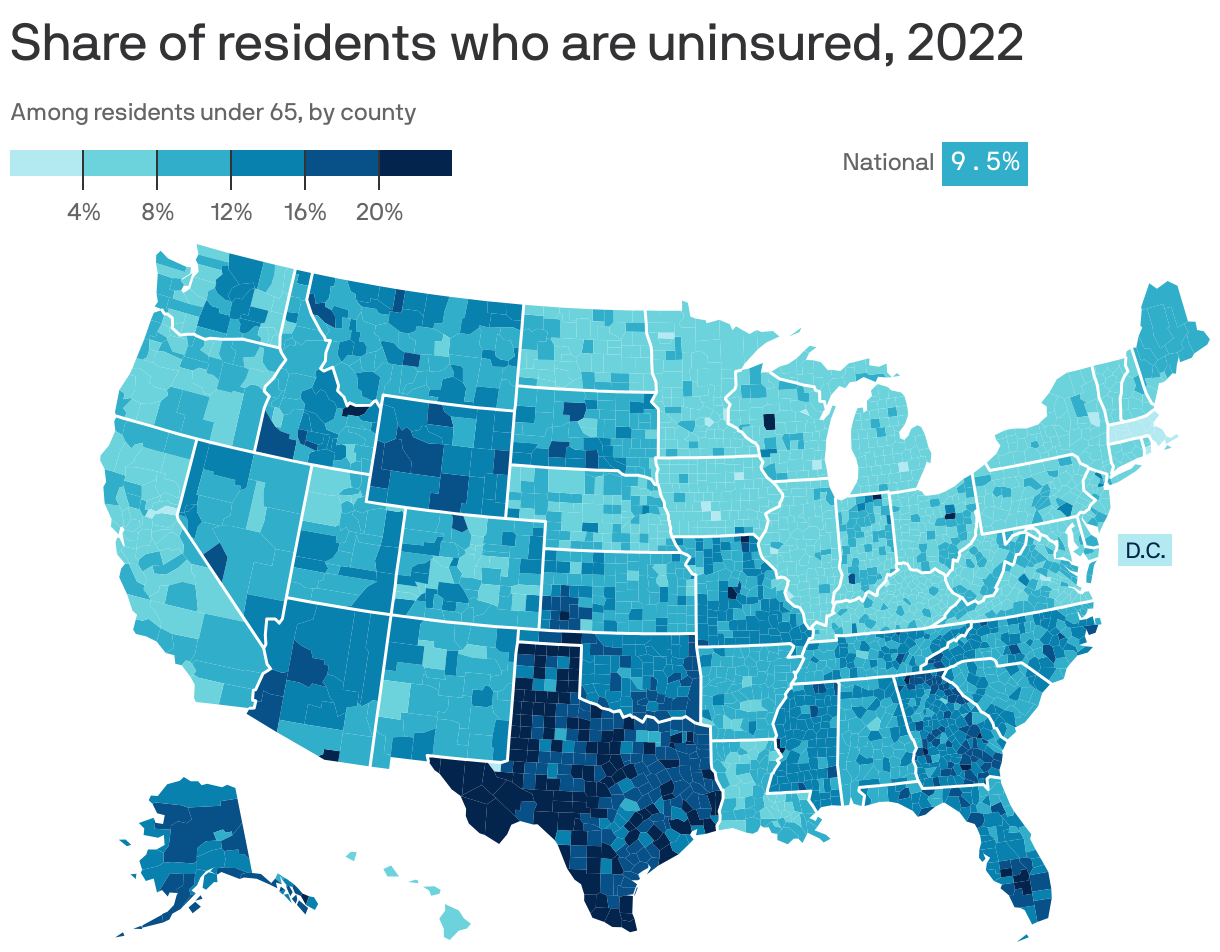
Ohio's uninsured population has dropped since mid-2000s


Add Axios as your preferred source to
see more of our stories on Google.


The number of Ohioans under 65 without health insurance has dropped significantly over the past 15 years, according to new Census Bureau data.
Why it matters: Coverage expansions under the Affordable Care Act and social safety net policies enacted during the height of the COVID-19 pandemic are helping more people get insured across the country, per KFF.
The big picture: 17.8% of U.S. residents were uninsured in 2006, four years before the passage of the Affordable Care Act.
- That dropped to 9.5% in 2022.
Yes, but: Ohio's uninsured rates were consistently below the national figures during that time period.
- The state recorded 12.3% of residents, or just over 1.2 million people, as uninsured in 2006, compared to 7.1% (668,000) in 2022.
Zoom in: County rates vary across the state, with rural areas tending to have higher rates of uninsured residents.
- In Franklin County, 8.2% of residents (around 92,000 people) were without insurance in 2022.
- Delaware County, frequently identified as one of the healthiest counties in America, had the lowest uninsured rate in Ohio at just 4%.
The intrigue: Holmes County in the heart of Amish country is a major outlier, with more than one-third of residents lacking insurance in 2022.
Threat level: More recent preliminary national data shows an uptick in the overall uninsured rate as states cut Medicaid rolls and unemployment rises, Axios' Maya Goldman reports.