Where IVF stands in Ohio after the Alabama ruling

Add Axios as your preferred source to
see more of our stories on Google.
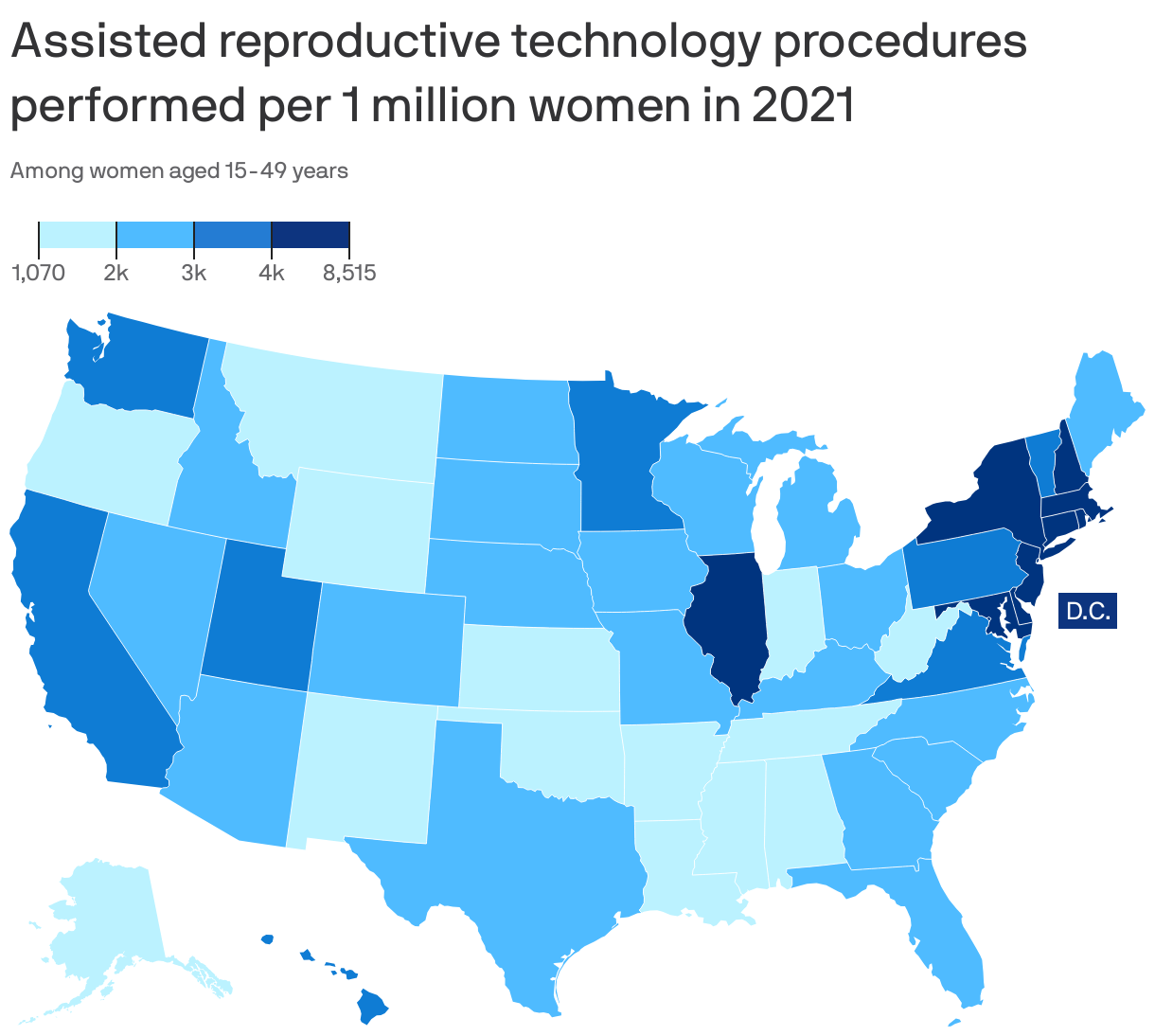
In vitro fertilization led to 2,226 births in Ohio in 2021 — accounting for 1.7% of all births that year, according to the most recent CDC data.
Why it matters: IVF is top of mind for many after the Alabama Supreme Court ruled that frozen embryos created through IVF are children under state law, Axios' Carly Mallenbaum writes.
- The Alabama Legislature recently countered by passing legislation to protect patients and doctors involved with IVF.
State of play: While some states are also considering fetal personhood bills, legislative leaders in Ohio have said bills that would ban IVF aren't under consideration, per the Ohio Capital Journal.
- And Issue 1, passed by voters last year, includes language establishing a constitutional right to fertility treatment for Ohio residents.
Yes, but: Advocates for maintaining access to the procedure warn the state's constitutional protections could be undone by a national abortion ban or even an adverse ruling by the Ohio Supreme Court, per the Statehouse News Bureau.
- One state lawmaker, Rep. Gary Click, has proposed fetal personhood legislation in the past and said while he doesn't have immediate plans to revive the bill, "plans do change."
What they're saying: House Speaker Jason Stephens told the Capital Journal that he's "monitoring any potential ramifications the Alabama decision may have in Ohio" and voiced support for IVF treatments.
Between the lines: IVF patients usually need multiple embryos to ensure just one healthy baby, because the process often involves embryo attrition, Lucky Sekhon, reproductive endocrinologist and infertility specialist at RMA of New York, tells Axios.
- Three or more embryos may be required for a patient to have one pregnancy, Sekhon says.
- Of the embryos that thaw and pass genetic testing, about half to two-thirds lead to pregnancy in an ideal scenario, she says.
By the numbers: Ohio's 11 fertility clinics reported performing 5,526 embryo transfers in 2021, leading to 2,955 pregnancies, per the CDC.
The bottom line: If discarding surplus embryos is restricted, IVF — already expensive and out of reach for many — could become even less accessible.