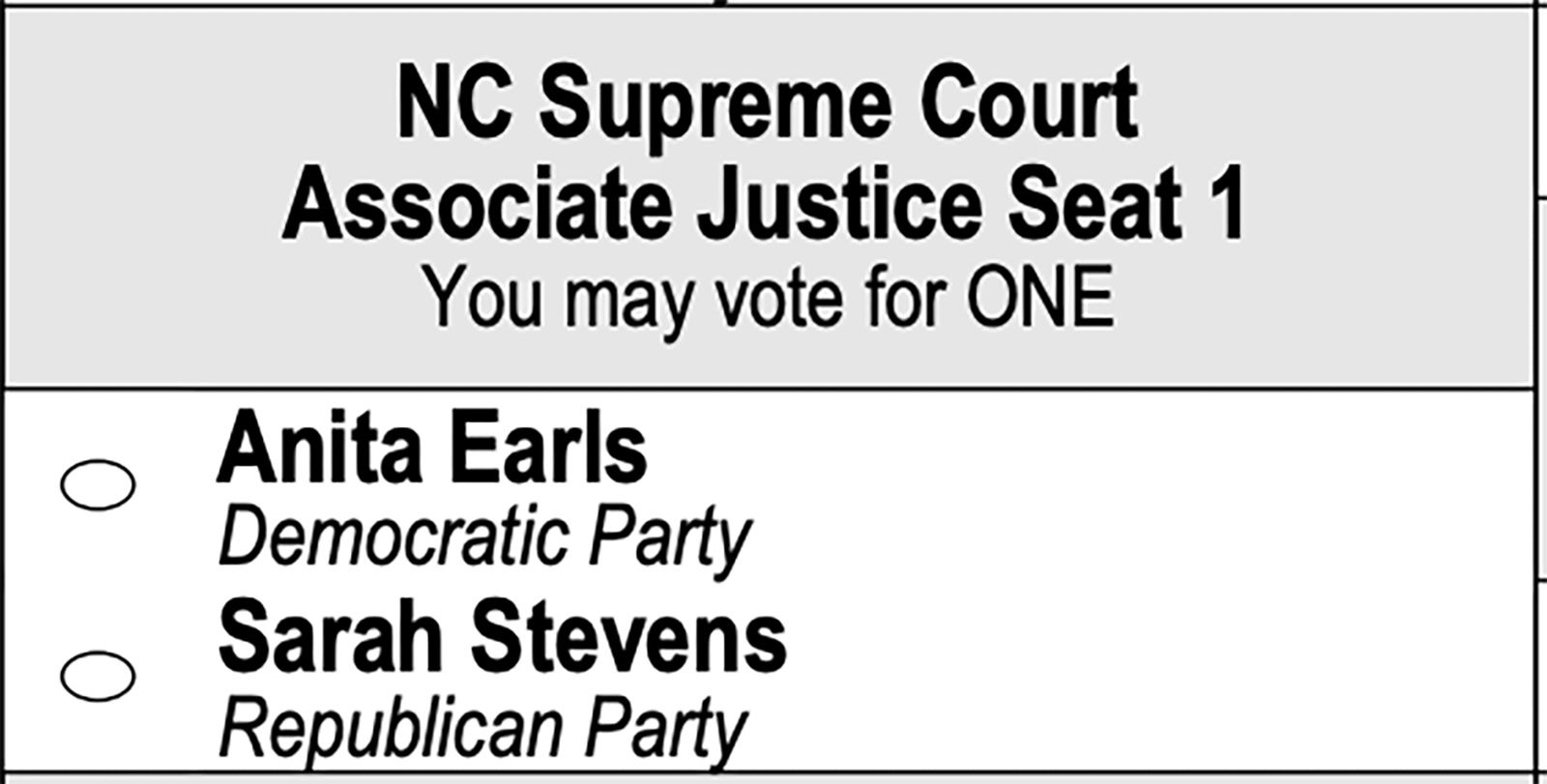
Breaking down the ballot: N.C. Supreme Court

Add Axios as your preferred source to
see more of our stories on Google.
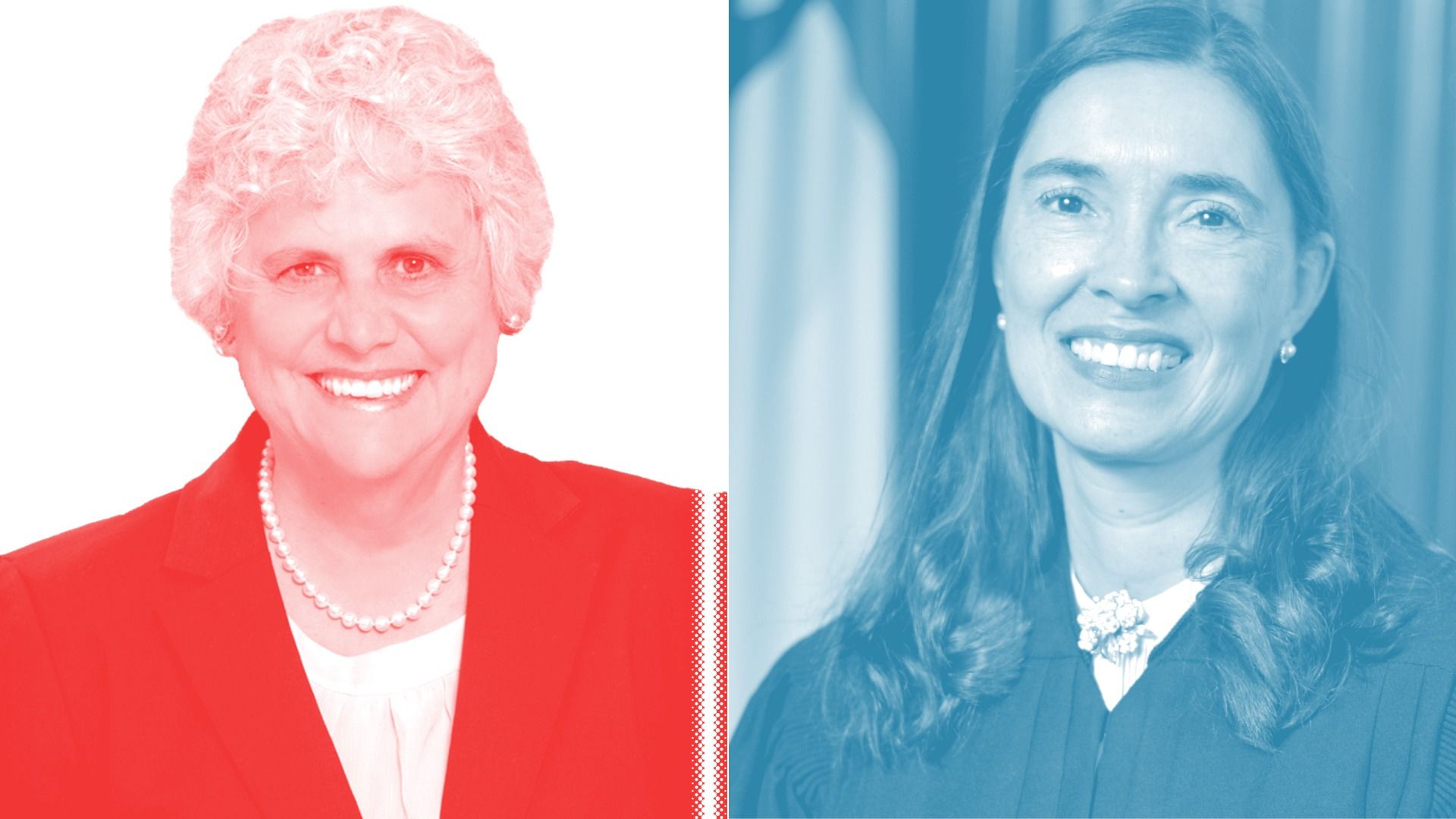
Sarah Stevens (left) and Anita Earls (right). Photos: Courtesy of candidates
Democratic state Supreme Court Justice Anita Earls faces a challenge from longtime conservative lawmaker Sarah Stevens in one of North Carolina's most consequential, yet underrated, races.
Why it matters: Recent elections to the North Carolina Supreme Court — the state's highest court that determines whether the legislature and the governor pass laws compliant with the Constitution — have come down to a few hundred votes.
Flashback: In 2020, just 401 votes separated Republican Justice Paul Newby from Democrat Cheri Beasley. It is the closest statewide race in modern North Carolina history.
- Then, in 2024, the 734 ballots separating Democrat Allison Riggs and Republican Jefferson Griffin sparked a six-month legal battle, with Griffin finally conceding.
State of play: The North Carolina Supreme Court has a 5-2 Republican majority. But that's only been the makeup for a few years, and it could change by 2029.
- The court flipped from a Democratic majority in January 2023.
- The 2026 race will set the stage for 2028, when three Republican justices' terms expire, and the court balance could shift again. This race will either make it one seat easier or harder for one party to grasp control.
Earls is approaching the end of her first eight-year term. She's a civil rights attorney who founded the Southern Coalition for Social Justice after recognizing her law students had few opportunities to practice civil rights law in the region.
- "Equal justice under the law — that's what I stand for," she tells Axios.
- Earls says her opponent, Stevens, would pursue "conservative ideology" rather than being fair, impartial and independent.
Stevens is a Mount Airy attorney who served in the state House for more than 17 years until she resigned in June to focus on her campaign. She chaired the House Judiciary Committee for about 14 years, checking whether bills were reasonable and constitutional before they were sent out, she says.
- "I am a conservative, and I will follow the law as written," she says. "Amy Coney Barrett summed it up best: A judge is a referee, not a king."
- Stevens calls Earls an "activist," accusing Earls of using the seat and twisting the Constitution to get the results she wants.
- Stevens says she would not automatically recuse herself from cases on laws she helped pass, arguing enacted legislation represents the decisions of the entire General Assembly.
Friction point: The two differ on how the court handled recent rulings and reversals on issues such as political gerrymandering.
- Earls, elected in 2018, served on the court when it had a Democratic majority and made such decisions, including ruling that voter ID was discriminatory against Black voters.
- Then, when Republicans gained the majority in 2023, the court made the rare move to rehear — and ultimately overturn — those cases.
Case in point: For the maps, Earls says the Republican court gave state lawmakers "free rein to engage in partisan gerrymandering." Stevens says the Constitution is clear that the General Assembly shall draw the maps.
- Earls says these reversals are a big reason why she's running for reelection.
- "It is so important to have a court that is committed to protecting people's rights," she says.
Meanwhile, Stevens says she's running because when she was in the General Assembly, she saw the Democratic majority overturn laws she helped pass and believed were constitutionally sound.
- "Justice Earls was their leader, and we needed to get her replaced," Stevens says. "I was approached by a couple of the justices saying, 'You are the person that can beat her.'"
The big picture: Even though the state Supreme Court has been one of the most influential bodies in state politics in recent years, many voters are likely to skip this box.
- In the 2024 elections, 183,897 North Carolinians who cast ballots did not vote in the Supreme Court race. The decision ultimately came down to fewer than 800 votes.