Breaking down the ballot: Charlotte bonds

Add Axios as your preferred source to
see more of our stories on Google.
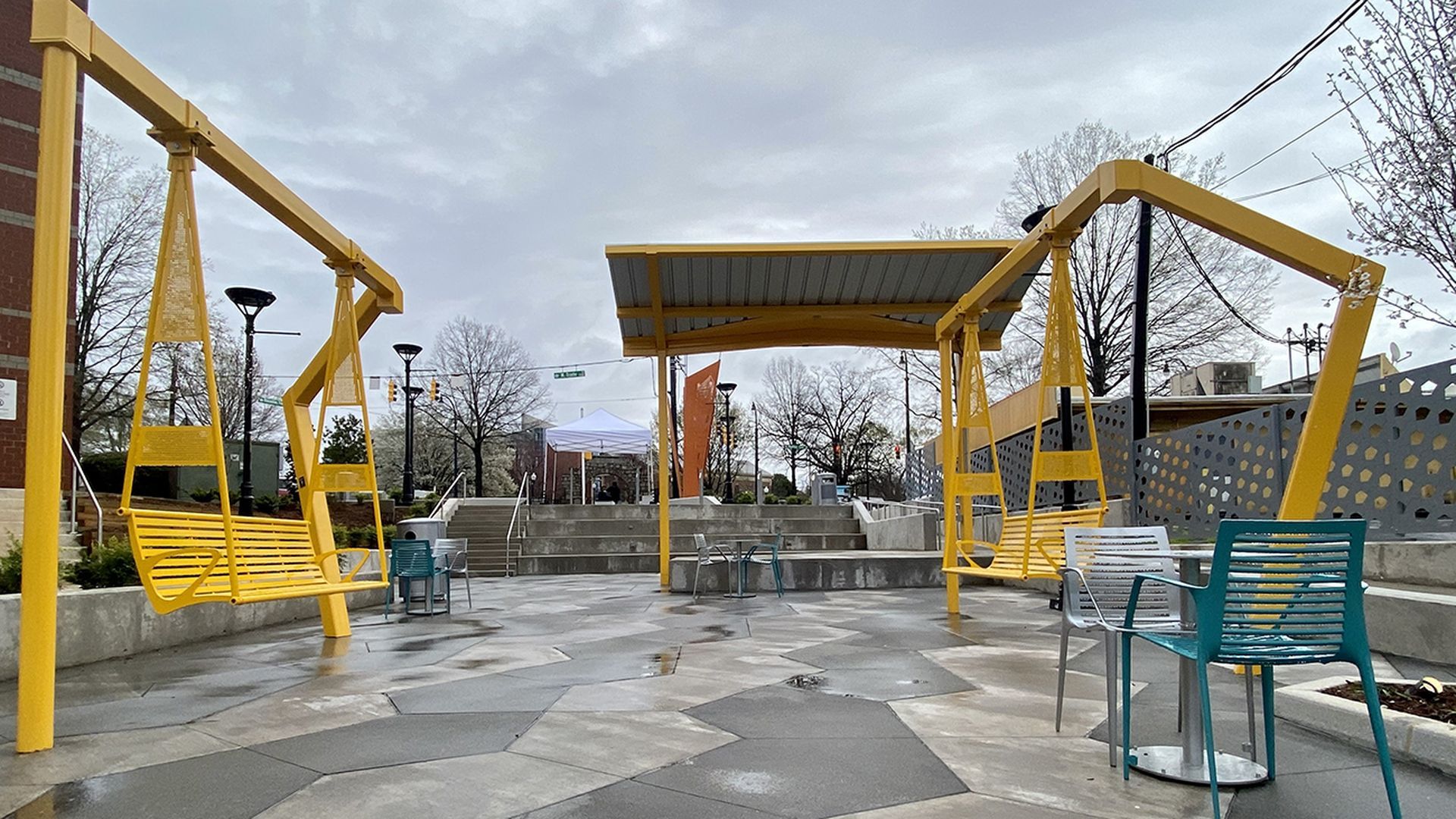
Five Points Plaza. Photo: Ashley Mahoney/Axios
The City of Charlotte is asking for voters' blessing this election to borrow $425 million to bankroll major affordable housing, transportation and infrastructure projects.
Why it matters: The city's bond requests typically pass with little pushback as a way to address the housing crisis and manage explosive growth.
Yes, but: We're still looking at more than $600 million in city money, including $241 million in interest, so it's worth scrutinizing what the bonds would pay for and the effect they'd have before checking "yes."
- For these bonds in particular, the city says it has already accounted for the repayments and interest in the budget and projects no tax increases needed for these referendums.
What they're saying: "As our city grows, these bonds will help us meet that responsibility by caring for the roads, neighborhoods and homes in our community — without raising property taxes," Charlotte Mayor Rob Harrington said in a statement to Axios.
The other side: Charlotte Observer contributing columnist Andrew Dunn argues the city hasn't sufficiently proven it uses the borrowed money effectively, particularly when it comes to closing the widening affordable housing gap.
Here's a look at the three big bond requests on your ballot.
$125M for affordable housing
The city started asking voters to support these bonds in the early 2000s as $10 million packages. That grew to $50 million and then $100 million in 2024. It's now up to a record $125 million.
The money replenishes the city's housing trust fund and is routinely dispersed to developers who agree to build affordable housing.
For example, the city used $3.2 million from the fund to help finance Trella, a mixed-income development in Uptown.
- Of 353 units, 106 are rented at income-based rates for households earning 30%-80% of the area median income, about $23,000 to $63,000 for one person.
While the housing trust fund money mostly goes to creating rentals, the city's bond investment dashboard tracks it going toward payment assistance, repairs for existing homes and purchasing land for future projects, "especially near jobs and transit," the site says.
The city says the fund has preserved 10,869 affordable units and 888 shelter beds since 2002.
The city also plans to spend more from these bonds on anti-displacement efforts, acknowledging the potential impact of some planned transit rail lines.
$280M for transportation
The city expects to largely repay these bonds with money from the 1-cent sales tax increase voters passed last year. It has broken down its anticipated spending as such:
- $160 million for major projects that create new streets, revamp intersections, or turn regular car-dominant streets multimodal by adding sidewalks, bike lanes and more.
- Areas the city's looking at next include Eastway and Shamrock, Ashley/Freedom/Tuckaseegee, Bryant Farms Road, Robinson Church Road, Brown-Grier Road, DeArmon Road and Shamrock Drive.
- $50 million for sidewalks.
- $24 million for street resurfacing.
- $22 million for "Vision Zero," the city initiative to reduce traffic deaths with new pedestrian crossings, upgraded traffic signals and new street lighting.
- $10 million for the bike network.
- $5 million for inspecting, repairing and replacing bridges.
- $4 million for maintaining and replacing traffic management equipment, such as cameras.
- $3 million to update traffic control equipment, such as traffic and pedestrian signals and signs.
- $2 million to improve privately constructed "orphan roads."
$20M for neighborhood infrastructure
These funds would go toward streets, sidewalks, greenways, bike lanes and other infrastructure projects in growing areas and established neighborhoods.
- For example, neighborhood bonds have supported some work in the West Trade-Rozzelles Ferry area, including $5.5 million for the Five Points intersection and plaza near Johnson C. Smith University.