The World Cup could become the Boston economy's saving grace

Add Axios as your preferred source to
see more of our stories on Google.
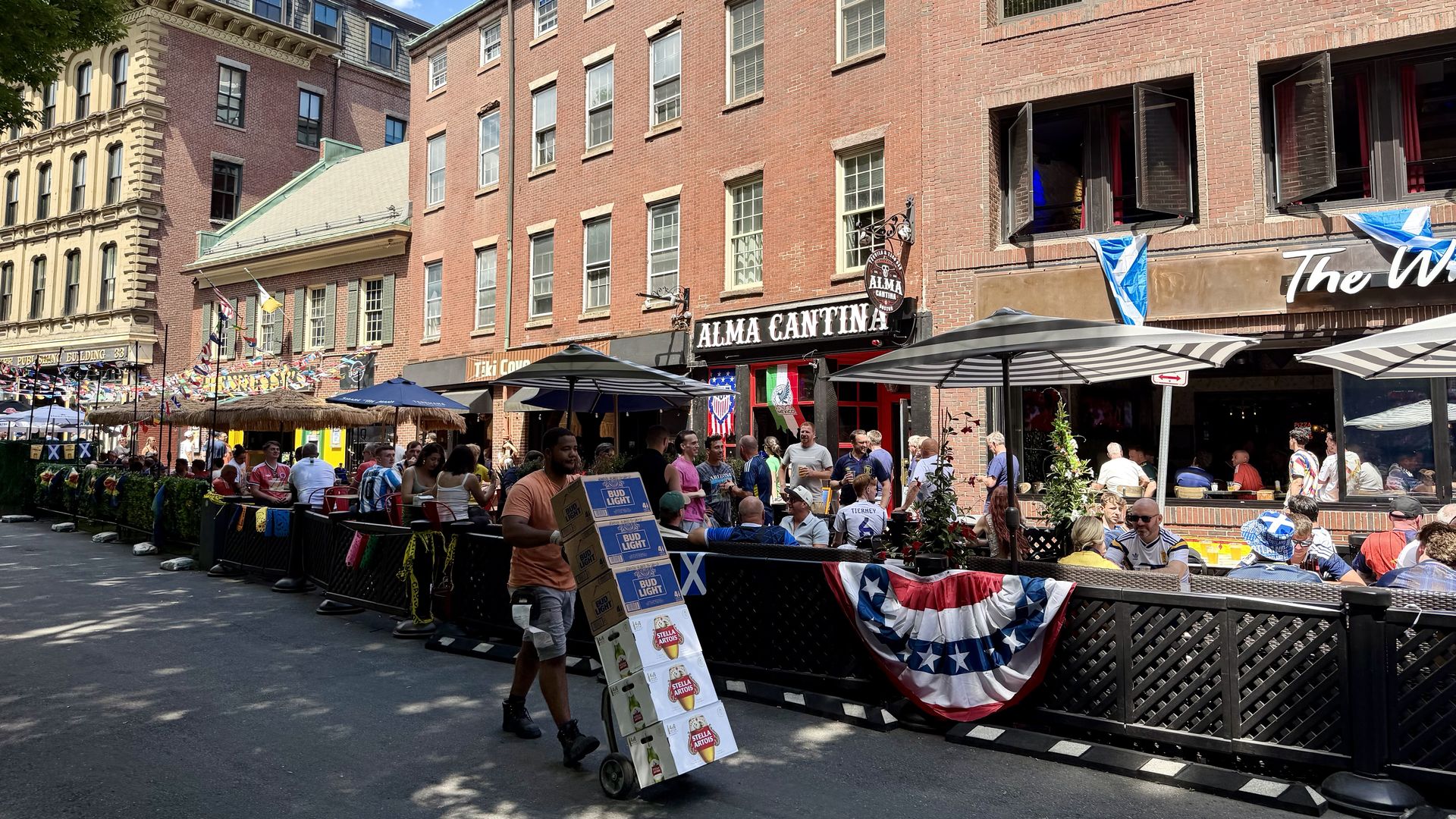
A distributor delivers extra cases of beer to bars downtown in mid-June. Photo: Steph Solis/Axios
Boston-area hotels saw increased spending from tourists during the first two weeks of the 2026 World Cup, even as occupancy levels remained flat.
The big picture: The men's soccer tournament's economic impact remains unknown, but the festivities might just end up being a lifeline for the Greater Boston hospitality sector amid a dip in U.S. tourism.
- The industry had already seen Canadian tourism decline in 2025 — be it due to inflation or in protest of President Trump's policies — and Americans are staying closer to home this summer.
Driving the news: Boston-area hotels reported an 87% occupancy rate, similar to last year, and a 20% increase in spending on hotel rooms and related tourism revenue, per preliminary data from June 12 to June 27.
- That captures World Cup visitors who booked hotel rooms, including Scots, Norwegians, Moroccans and French tourists, per Meet Boston.
In other words, the influx of international visitors resulted in higher spending per hotel room, but they might have replaced Boston's typical summer tourism crowds, says Victor Matheson, a professor of economics and accounting at the College of Holy Cross in Worcester.
- Bars and restaurants saw a boon (at least with the Scots).
- That's likely not the case for the types of businesses usually frequented by summer tourists — museums, theaters, concerts, boutique retailers.
Yes, but: Boston tourism officials say the influx of World Cup fans means money that isn't coming out of local taxpayers' pockets to drive the local economy.
- To them, the initial revenue estimates show an unprecedented impact and potentially a saving grace to an industry struggling with declining international travel to U.S. destinations.
Zoom out: So far, Boston seems to have lucked out compared to other World Cup host cities in terms of fans' spending power.
- Consumer spending at bars and restaurants increased here more than in any other host city during the first two weeks of the World Cup, per data by the payment platform Square.
What they're saying: The real winners this summer — which is also getting a boost from the July Fourth and Tall Ships — could be small businesses, says Martha Sheridan, president and CEO of Meet Boston.
- "At the end of the day, there's going to be so much activity happening in small businesses that we're going to see a really nice bump in spending, in tax generation."
What we're watching: It's still too early in the season for Boston-area business leaders to declare victory.
- It will take at least weeks for Greater Boston to see the full economic impact from the World Cup after Thursday's match, including which segments of the economy are underperforming.
- We also don't know how much that revenue will offset the millions local and state agencies spent to host the tournament.
Reality check: The billion-dollar economic impact projected by FIFA and its local partners seems lofty based on the early figures, per Matheson.