MBTA will use cameras to crack down on parking in bus stops, lanes

Add Axios as your preferred source to
see more of our stories on Google.
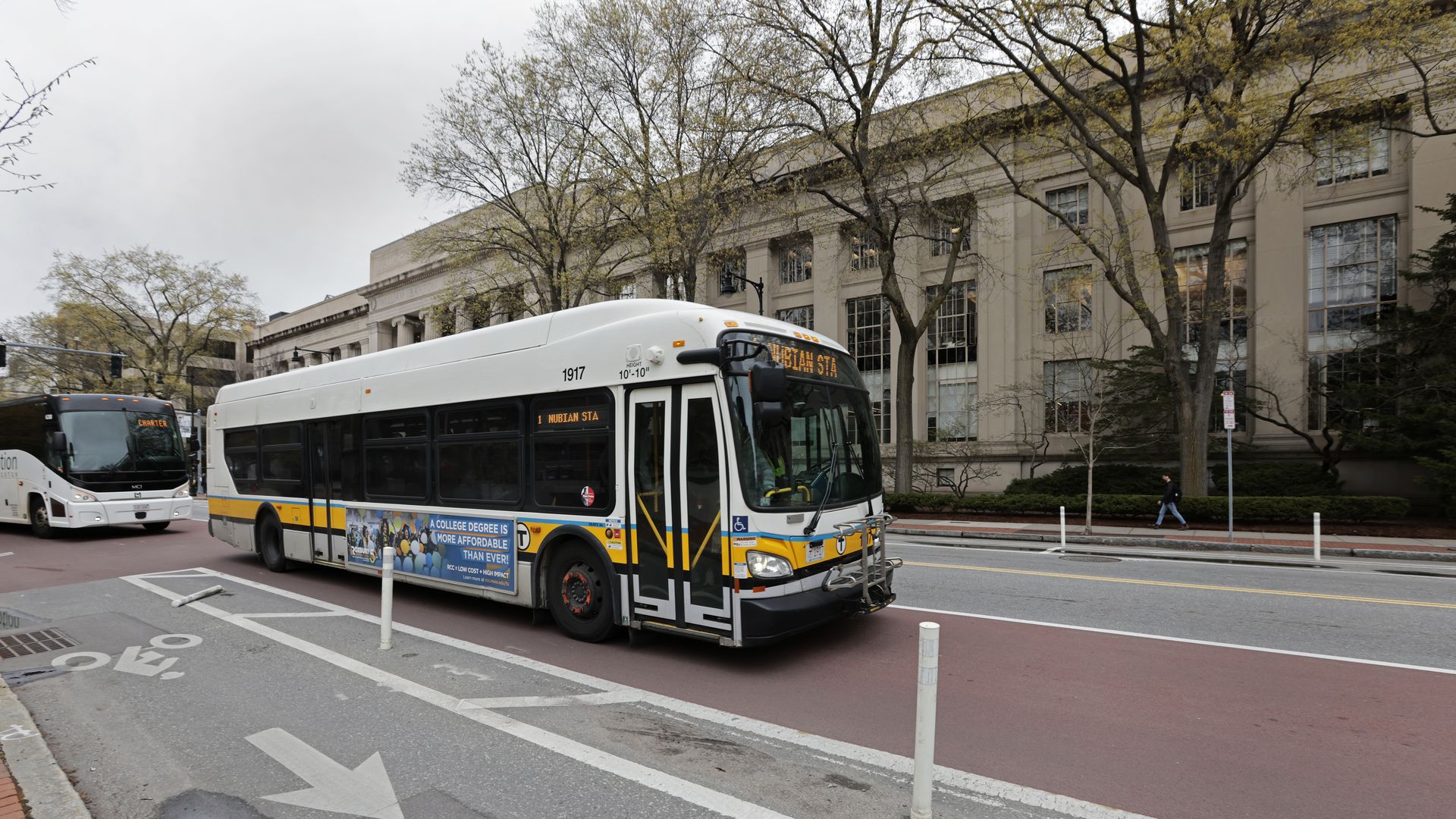
Photo: Pat Greenhouse/The Boston Globe via Getty Images
Boston drivers will have a new reason to quit parking in bus lanes later this year: bus-mounted cameras that can read license plates and issue tickets.
Why it matters: The MBTA is taking advantage of a new law that allows the agency to fine vehicles stopped where they shouldn't be. The hit could be $25-$125.
State of play: The T has 7,000 bus stops and more than 40 miles of dedicated lanes. Some 185,000 people use them every day, according to the agency. Eighty-two percent of riders are low-income and 44% don't have their own car.
- Blocking the stops forces riders to get off in the street, slows the system down, and is dangerous for disabled riders, according to T officials.
What they're saying: "We want to change behavior. We want people to obey the law. We are not trying to generate money," MBTA transit priority director Alexandra Hallowell told the T's board Thursday.
- "The first time you encounter our system, you receive a warning so you have the opportunity to change your behavior before you are being fined."
- The fines will go to the state's transportation trust fund, not the MBTA.
How it works: The tickets will come in the mail to the address attached to the license plate.
- Commercial vehicles will face steeper escalating fines than private drivers.
- The T is considering using technology such as Flock to read the plates and automate the fines.
- If multiple tickets are written for an infraction, say from the MBTA and a local jurisdiction, one of the fines can be challenged and dismissed, Hallowell said.
- It will take three unpaid citations to trigger a vehicle registration hold through the RMV, but licenses won't be suspended for bus zone violations.
What's next: The MBTA Board will vote on final regulations by August, and camera installations should begin in the fall.
- The first wave will be installed in high-traffic corridors and routes near medical facilities.
- There'll be a 60-day grace period after the system launches. The board hasn't yet decided whether first-time offenders will get fines or warnings.