The battle over MCAS

Add Axios as your preferred source to
see more of our stories on Google.
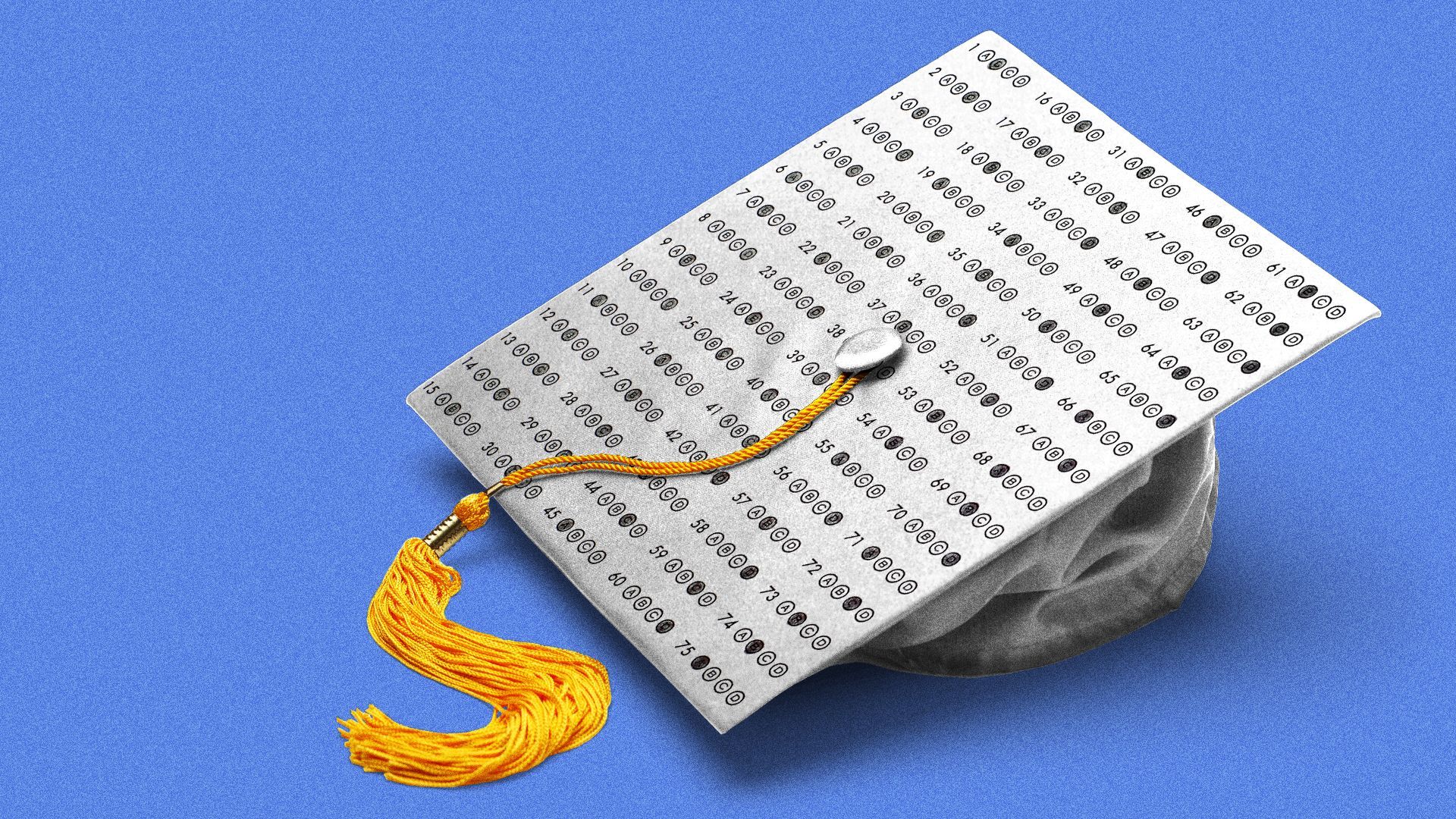
Illustration: Maura Losch/Axios
Students in Massachusetts could no longer be required to pass MCAS exams to earn a high school diploma if voters side with teachers' unions at the ballot this November.
Why it matters: Teachers say making a student's degree depend on high-stakes tests in the 10th grade narrows the curriculum and puts too much pressure on kids.
- They've put Question 2 before voters this fall to remove the graduation requirement, which has been in place since 2003.
The other side: A group of parents, educators and others with stakes in primary education want to stick with the math, science and English exams.
- The "no" campaign says ditching the Massachusetts Comprehensive Assessment System requirement would lower standards for all students.
Follow the money: Unions have already spent over $1 million in support of the measure. They say diplomas should be about completing high school coursework, not passing a standardized exam.
- The ads airing across Massachusetts call for "authentic learning" instead of a curriculum designed around a high-stakes test.
- Without the statewide standard, each district would determine who gets to graduate.
What they're saying: In a Boston Globe op-ed, Cynthia Roy, a technical high school teacher, and Shelley Scruggs, the parent of a vocational student, echoed the union-backed ads.
- "We want schools that recognize the diversity of learners; encourage students to be curious and creative; foster community and collaboration; reward good attendance and a committed effort to learn; and most important prepare students for success at every stage of their lives," they wrote.
Yes, but: Supporters of the MCAS say the exam system has been a huge success in the last 20 years, taking a 75% passing rate in 2003 to 95% last year.
- "We made those standards count by having stakes associated with them," former state Education Secretary Paul Reville said recently.
Editor's note: This story has been corrected to reflect that unions have spent over $1 million to support the measure, not just for advertising.