Most Massachusetts food waste comes from homes

Add Axios as your preferred source to
see more of our stories on Google.
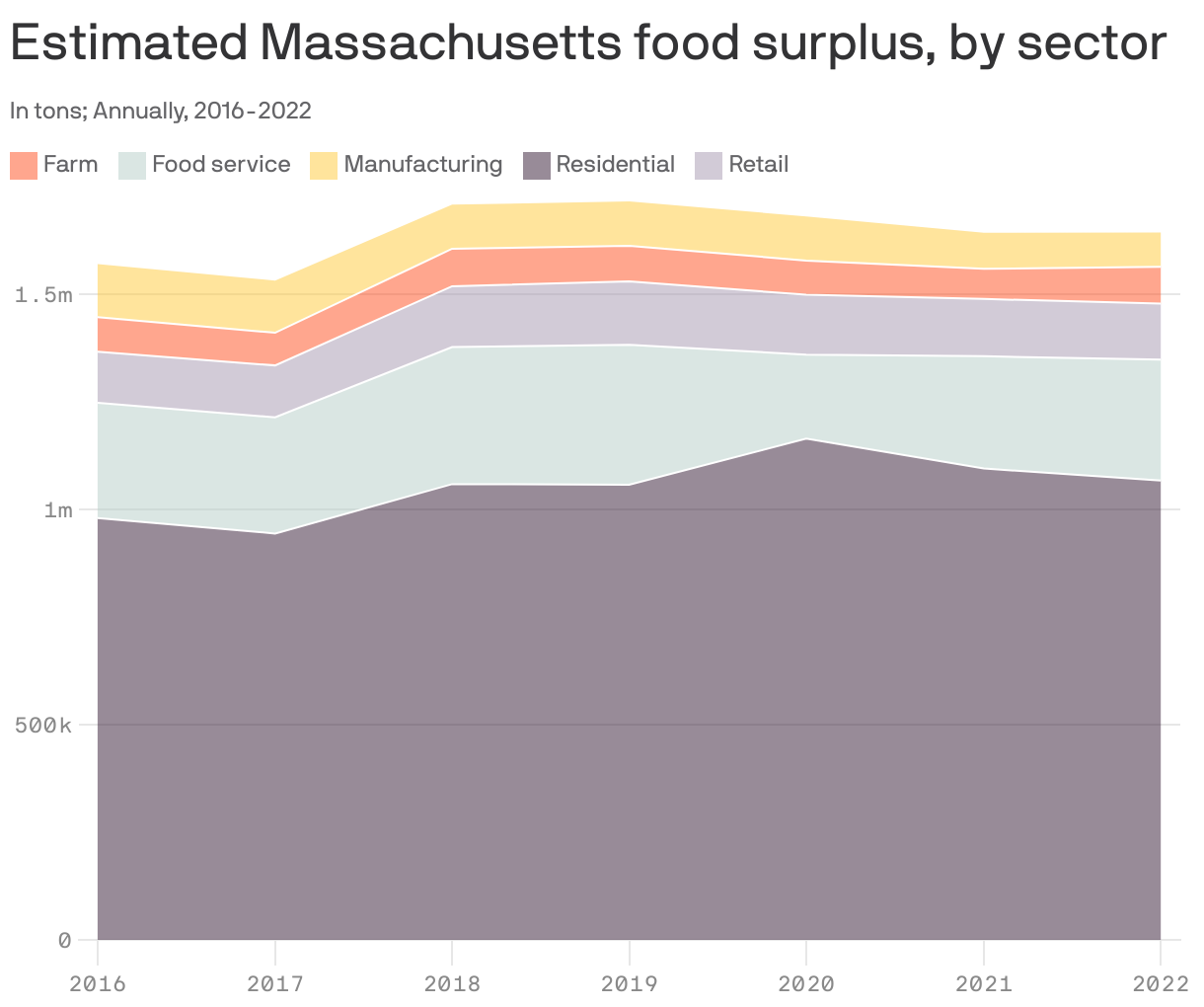
Massachusetts let 1.6 million tons of food go to waste in 2022 — most of it from residential households, per data from the nonprofit ReFED.
Why it matters: Food waste makes up 24% of municipal landfill input and contributes to 6.1% of U.S. greenhouse gas emissions, writes Axios' Simran Parwani.
- It also burns holes in our wallets. On average, a person wastes $759 on uneaten food each year.
Driving the news: Massachusetts saw a nearly 5% increase in food uneaten or unsold between 2016 and 2022, per ReFED.
Zoom in: Some Boston-area restaurants, grocery stores and universities have donated extra food to nonprofits that create meals for locals in need, like Food For Free in Somerville and New York-based Rescuing Leftover Cuisine.
Yes, but: These efforts don't capture the largest source of food waste: the household.
The big picture: Across the country, people and businesses left 88.7 million tons of food uneaten or unsold.
- Residential waste made up 42.8 million tons, or 48%, of that total.
What you can do: Store food properly.
- Freeze food to extend its freshness.
- Dedicate a day each week for eating leftovers.
- Understand the meaning behind "best by" date labels.
- Plan your meals before buying groceries.