Despite rising home values, Boston homeowners pay among lowest shares of property taxes


Add Axios as your preferred source to
see more of our stories on Google.
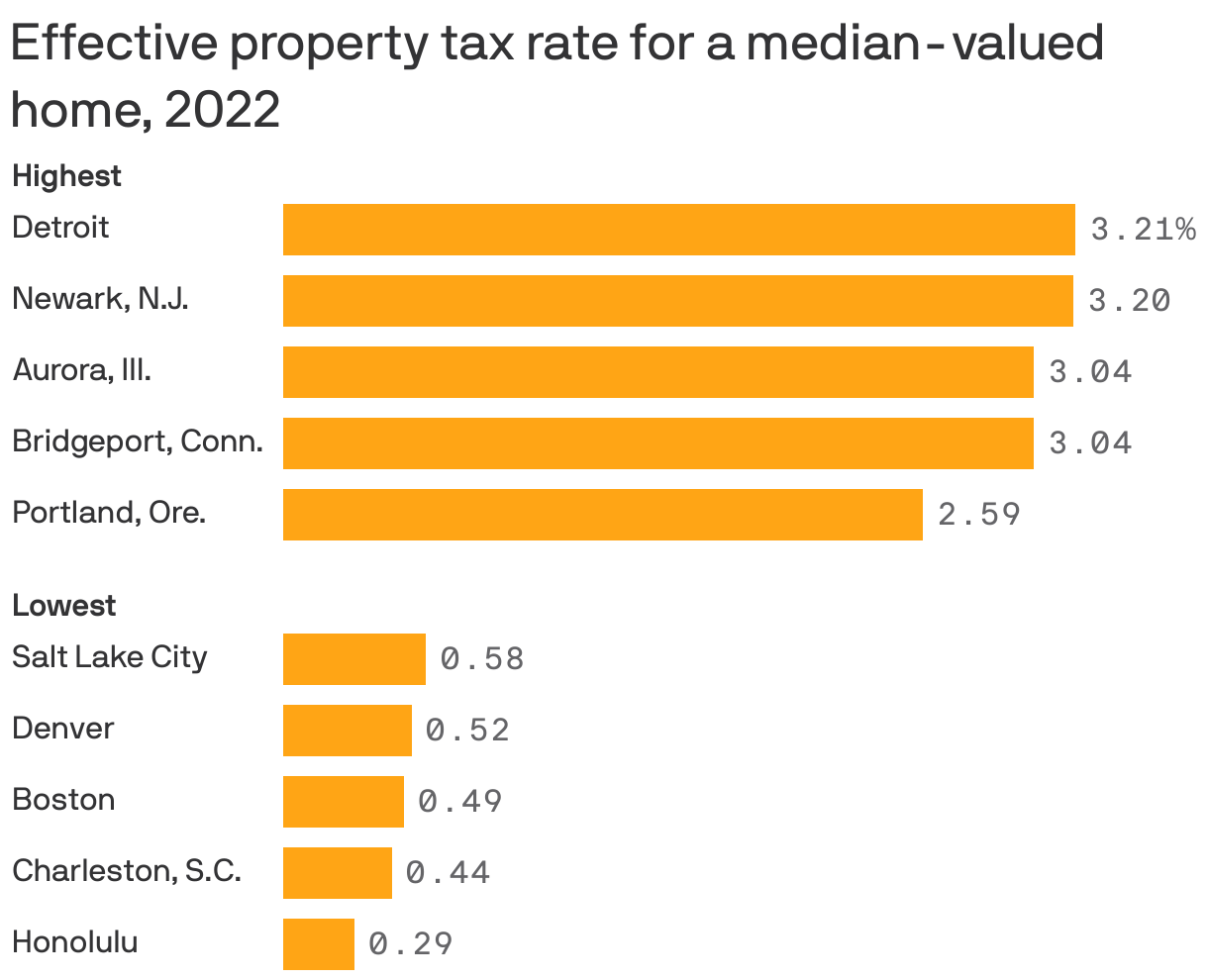
While the overall amount of property taxes Americans paid rose in 2022, effective property tax rates — a homeowner's tax bill as a percentage of a property's value — dropped slightly in large cities last year on average.
- That's according to a new report from the nonprofit Lincoln Institute of Land Policy and the Minnesota Center for Fiscal Excellence.
Driving the news: The effective property tax rate for a median-valued home in Boston was 0.49% in 2022, one of the lowest in the nation.
- On paper, the property tax rate looks higher, at about $10.88 for every $1,000 of a home's value. But home assessments haven't kept pace with fast-rising home values.
- The city's homestead exemption also leads to lower tax bills.
Why it matters: Homeowners in areas like Boston where assessments have lagged will likely see bigger tax bills in the future, once assessments catch up.
Zoom in: Property tax is a key part of the package of costs and public services that affect a city's competitiveness and quality of life, the report says.
- It's also Boston city government's largest revenue source, according to last year's financial statement.
The big picture: Property taxes continue to be out of sync with soaring real estate prices in most places.
- The average effective tax rate on a median-valued owner-occupied home fell to 1.32% in 2022 from 1.33% in 2021 across the country's biggest cities, the report found.
Yes, but: Boston is one of seven cities with tax rates that are half of the study average or less as they reap revenue from other sources.
- The others are Honolulu, Charleston, Denver, Salt Lake City, Boise and Cheyenne.
- Meanwhile, the effective tax rates in Bridgeport, Connecticut; Aurora, Illinois; Newark; and Detroit are at least two times higher than the average.
Reality check: The majority of Boston residents are renters. About 34.8% of housing units were owner-occupied between 2017 and 2021, per census data.
- Renters won't get the higher tax bills when the effective tax rates start to reflect increasing home values, but landlords can still pass along the costs by raising their rents, the report notes.