Wastewater shows spike in Texas COVID cases



Add Axios as your preferred source to
see more of our stories on Google.
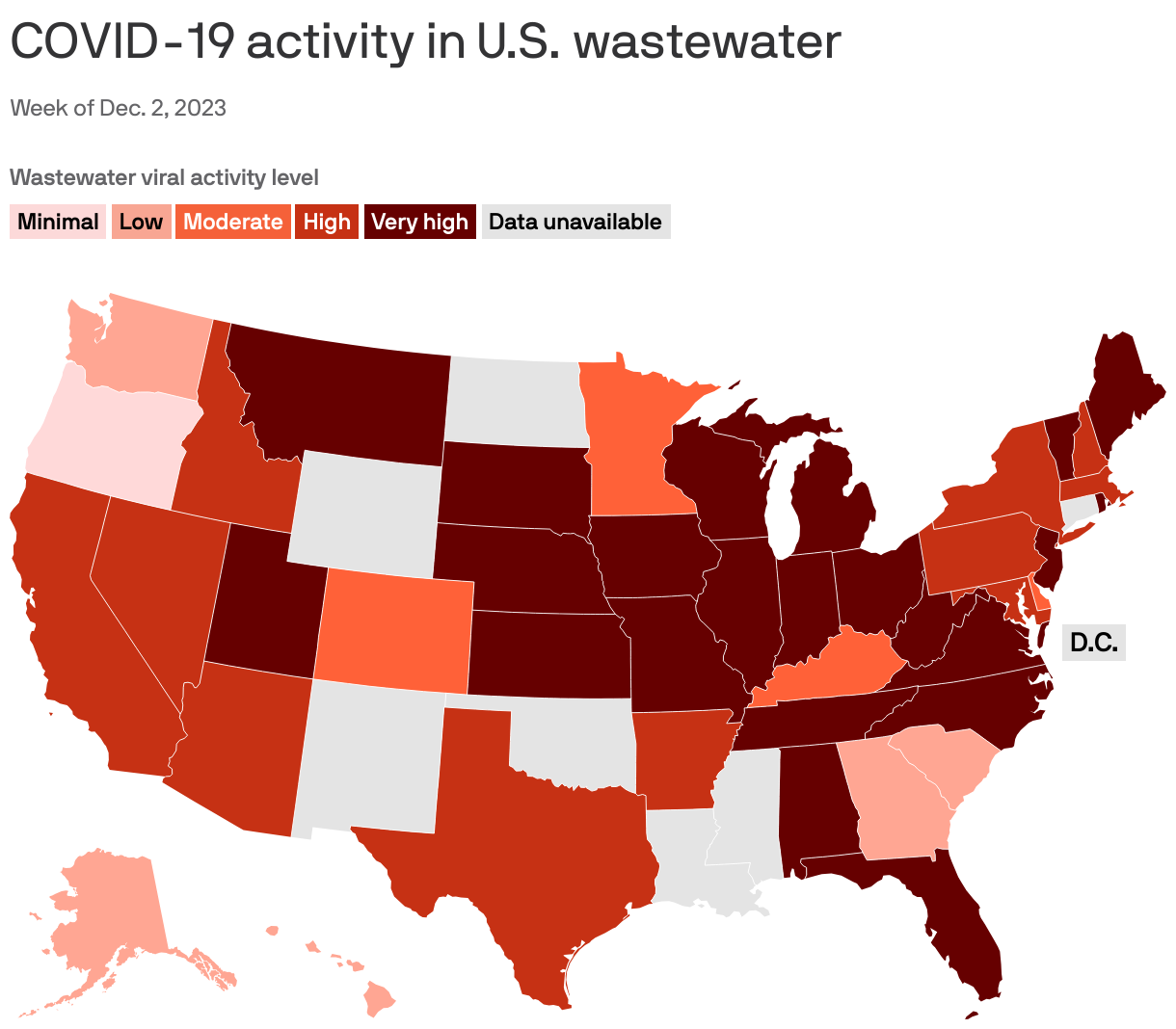
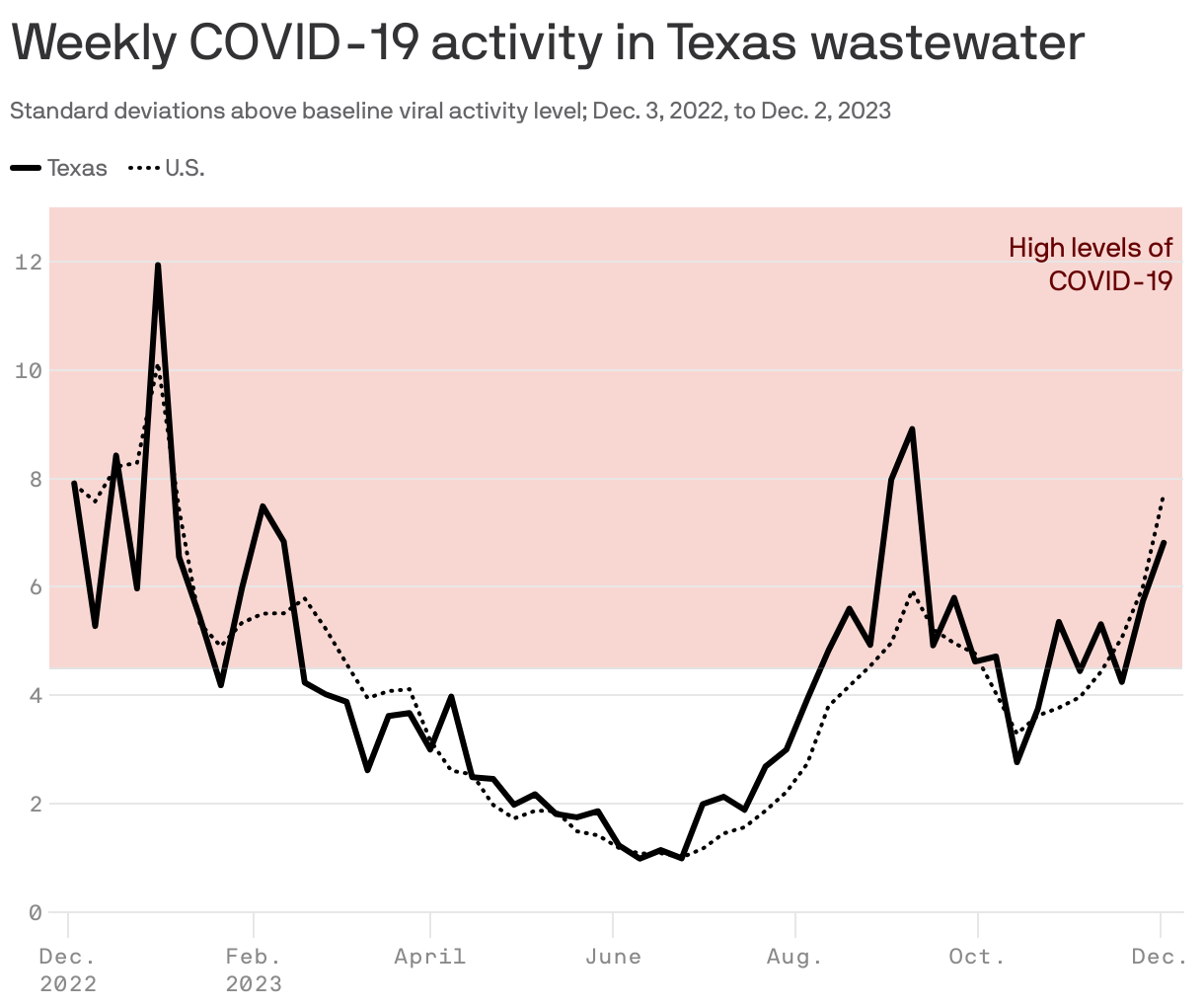
Texas is seeing high levels of COVID-19 as we head into the holiday travel season.
Why it matters: While many Americans by this point have some combination of natural and vaccine-induced immunity, COVID can still make people plenty sick and force them to miss school, work (if they can) and holiday activities.
- It also remains a potentially fatal threat for vulnerable groups, like the elderly and immunocompromised.
- Plus, some evidence suggests that multiple exposures can have a kind of cumulative negative effect, though research is ongoing.
By the numbers: This year, there have been more than 2,900 deaths related to COVID-19 in Texas, per the state health agency's latest surveillance report, compared to 14,646 deaths last year and 43,980 in 2021.
- Across the country, there have been nearly 67,200 deaths related to COVID-19 this year, per provisional CDC data.
Zoom in: Austin-Travis County COVID-19 levels remain low, with wastewater surveillance showing a slight increase from Nov. 29-Dec. 6, the latest data available.
- Weekly lab and hospital reports also show a slight increase in long-term care facilities and school settings related to influenza-like illnesses, according to Janet Pichette, chief epidemiologist of Austin Public Health.
The big picture: As of early December, 22 states had "very high" COVID-19 wastewater levels as defined by the CDC, which compares current rates to baseline measurements at sites nationwide. (Read more about the agency's methodology here.)
- Texas has "high" COVID-19 wastewater levels, according to the CDC, which uses reporting from the state's largest metro areas.
Meanwhile, the CDC recently sounded the alarm on low levels of COVID-19, flu and RSV vaccinations so far this winter.
Of note: Wastewater analysis is one of the best methods for tracking the spread of COVID-19 these days, given how few people are testing and how few of those results are reported to local or state health officials.
Yes, but: It's a relatively new method of tracking contagions that's still getting fleshed out.
- One important caveat: While some states have dozens of wastewater reporting sites, some only have a handful, one or none at all. Texas has 14.
- States with, say, just one wastewater analysis site are categorized according to the findings at that site, even if that data may not accurately reflect local spread across the entire state.
The bottom line: All that said, there's enough data to pretty clearly show a worsening COVID-19 situation nationally — especially when considered alongside other metrics, like hospitalizations, which are rising in many of the places with "very high" wastewater rates.
- That's not entirely surprising, given how COVID has surged in winters past. But it's still a reminder that the most vulnerable may want to take extra precautions this holiday season, like masking up, skipping big crowds and so on.