How Keisha Lance Bottom won the governor's race

Add Axios as your preferred source to
see more of our stories on Google.
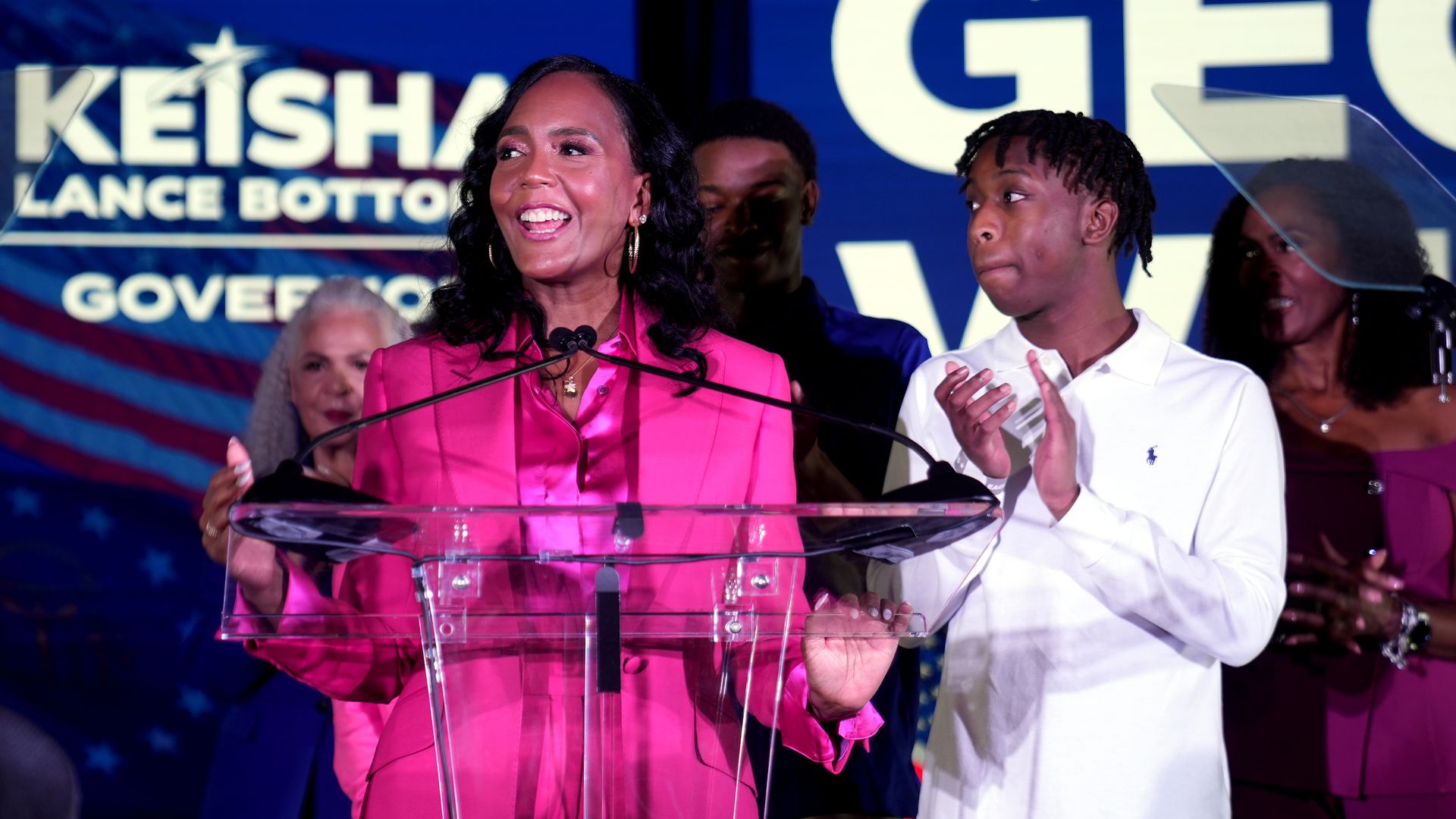
Georgia Gov.-elect Keisha Lance Bottoms speaks during an election night watch party at the Atlanta Marriott Marquis. Photo: Megan Varner/Getty Images
In 2021, Keisha Lance Bottoms chose not to serve a second term as Atlanta's mayor amid growing voter discontent.
- Five years later, Bottoms stunned the nation and made history, becoming Georgia's first Black woman governor by defeating Republican challenger Rick Jackson with 54% of the vote.
Why it matters: Following Stacey Abrams' 2018 playbook of campaigning heavily in middle and south Georgia counties and targeting rural and Black voters was crucial in propelling Bottoms to the governor's mansion.
What they're saying: Charles Bullock, a political scientist at the University of Georgia and coauthor of "The Changing Political South," told Axios Tuesday's results were surprising.
- While Democrats felt confident about a win by U.S. Sen. Jon Ossoff win and were hopeful for a Bottoms victory, they most likely didn't have sweeping all statewide constitutional offices on their bingo card.
- "It's a complete blowout," Bullock said.
Flashback: Republicans began chipping away at Democratic control of statewide offices in 2002 when Sonny Perdue defeated incumbent Gov. Roy Barnes to become the Georgia's first GOP governor in more than 100 years.
- That same year, Saxby Chambliss defeated incumbent Democratic U.S. Sen. Max Cleland.
- Republicans went on to flip other constitutional offices over the years, with the final pickups happening in 2010, when the GOP won the attorney general, agriculture commissioner and labor commissioner seats, and the state schools superintendent post in 2014.
Zoom in: Bullock said the electorate in the 2026 midterms was different from two or even four years ago. Georgia's Black voter turnout was "really strong," and Hispanic voters also leaned Democratic.
- He also said younger people showed up at the ballot box during the early voting period.
What they did: The Bottoms campaign held rallies and and mobilized voters across rural counties in middle and south Georgia.
- It's the same blueprint that catapulted Abrams onto the national stage and put her within 54,000 votes of winning the gubernatorial race against Brian Kemp in 2018.
- U.S. Rep. Everton Blair (D-Ga.) who is serving out the unexpired term of David Scott, told Abrams at a Covington event on Sunday that Democrats' wins "are because of the groundwork that you put in and countless hours supporting Democrats like me up and down the ballot."
The intrigue: Fewer people voted for Bottoms than they did for Ossoff and nearly all Democrats running for statewide office, suggesting some voters either chose not to vote in the governor's race or supported Jackson.
Stunning stat: Jackson spent more than $220 million of his own fortune in his campaign to become Georgia's next governor, the AJC reports.
- Bullock said Jackson's advertising that criticized Bottoms' tenure as mayor may have turned off some voters, particularly those in metro Atlanta.
- But many others, he said, may not have been in tune with what was happening in the city or may not have lived in the state during that time.
The big picture: Atlanta Mayor Andre Dickens, who succeeded Bottoms, said during Ossoff's watch party that the Democratic wins across Georgia show "the South got something to say," a reference to André 3000's declaration about the future of hip-hop at the 1995 Source Awards.
What happened on the Republican side? Bullock said numbers show that Republican voters in GOP-dominated counties "were not as enthusiastic as Democrats to make the commitment to get to the polls."
- Jordan Fuchs, a Republican consultant who works in the secretary of state's office, said voters "sent a clear message that they want leaders who care about their gas and groceries and not ballrooms and reflecting pools."
- She told Axios Tuesday's election was a "100% a referendum on Trump" but added that the Republican Party in Georgia has been dysfunctional over the years, to the point where some supporters, specifically metro Atlanta women, felt like they've been purged from the party.
State of play: Bottoms won in part because she appealed not only to her base but to white women in the region, Fuchs said.
- Republican voters most likely sat out this election due to their dissatisfaction over the economy and Trump's policy decisions.
- "The momentum clearly was on the Democratic side," she said.
What's next: The Georgia GOP said in a statement it will focus on welcoming new voices, investing in local chapters and developing "leaders who understand that public service starts with showing up and listening."
- Fuchs' advice for the party: Stop trying to relitigate the 2020 election.
- "It's a fundamental misunderstanding of what is going on around us," she said. "Voters don't want to talk about 2020."