Metro Atlanta's $8.9 billion I-285 toll-lane expansion advances

Add Axios as your preferred source to
see more of our stories on Google.
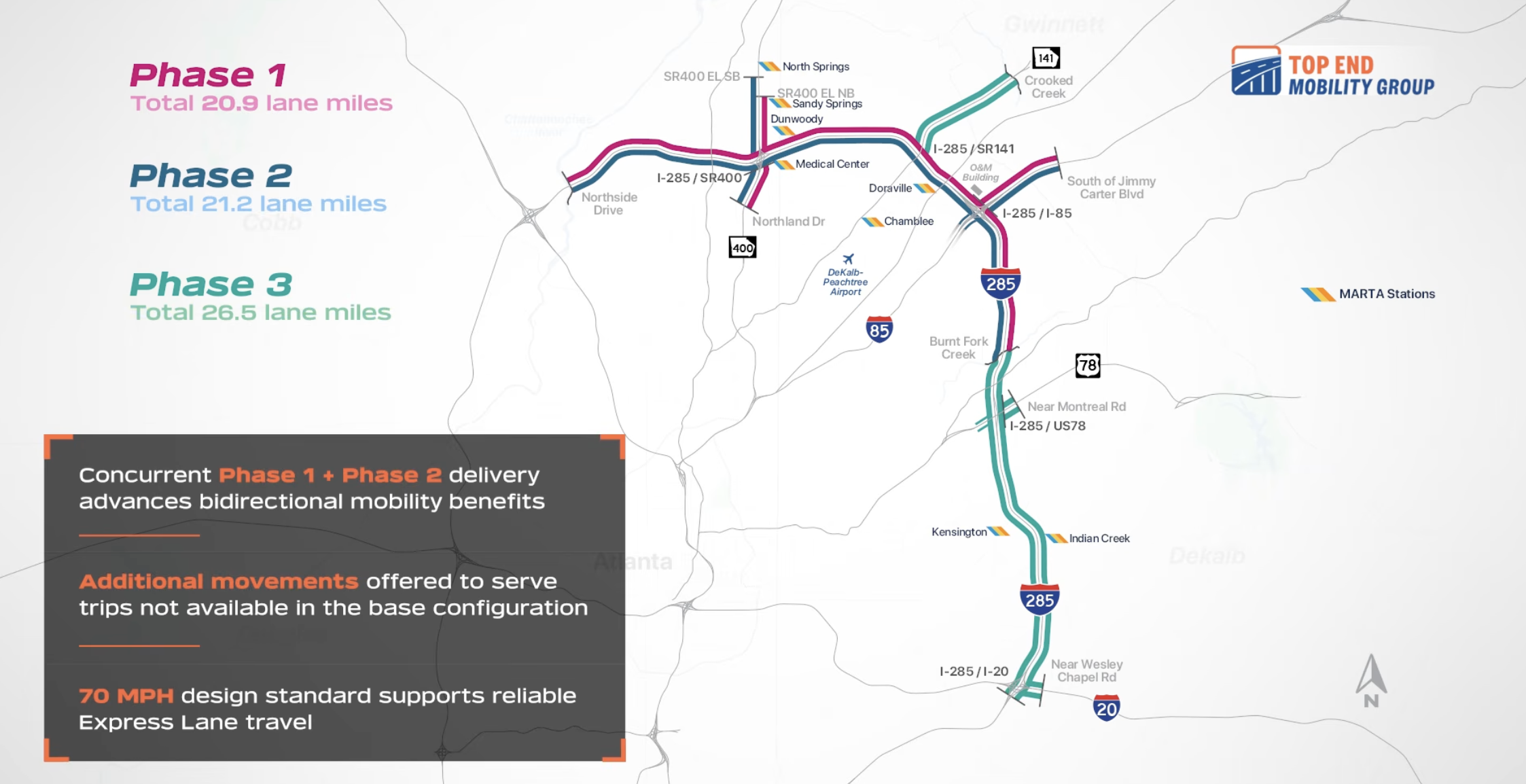
Screenshot: Top End Mobility Group/Courtesy of GDOT
An $8.9 billion plan to expand metro Atlanta's toll-lane network on Interstate 285's congested north end could spark years of construction and community impacts in the quest for congestion relief.
Why it matters: The I-285 East Express Lanes project kicks off one of the Georgia Department of Transportation's biggest to date and allows a private consortium to collect toll revenue for half a century.
Driving the news: The State Transportation Board on Oct. 15 approved the selection of Top End Mobility Group, a group of international infrastructure companies, to design and build the toll-lane project.
Zoom in: The project's $8.9 billion first phase calls for two outer-loop express lanes heading west from Henderson Road near Tucker to Northside Drive near Sandy Springs.
- The new lanes would connect to I-85 and Georgia 400 and have a 2034 target opening date.
- The subsequent phase would add two inner-loop express lanes heading in the opposite direction.
A later phase would extend those east-side express lanes to I-20. Estimated completion date: 2040.
- A sister project on I-285's west side would also include toll lanes.
How it works: Georgia's toll-lane program allows drivers to pay a premium to bypass gridlock. A private development group designs, finances, builds and operates the toll lanes in exchange for retaining the toll revenues.
- Under the proposed deal with GDOT, the consortium would pay the state a $23.6 billion concession fee in six annual installments. The group would collect tolls for 50 years.
- The state would oversee the project. The operator would set dynamic tolls within contractual limits established by the State Road and Tollway Authority.
Between the lines: Public transit buses and state-registered vanpools would be allowed to use the express lanes.
- However, the project scope does not include additional transit infrastructure like stations.
- GDOT said it's working with other agencies "to advance Express Lanes Transit (ELT) to create more regional connectivity."
Threat level: GDOT officials acknowledged that the project would require some property acquisition and vegetation removal in addition to the expected construction effects.
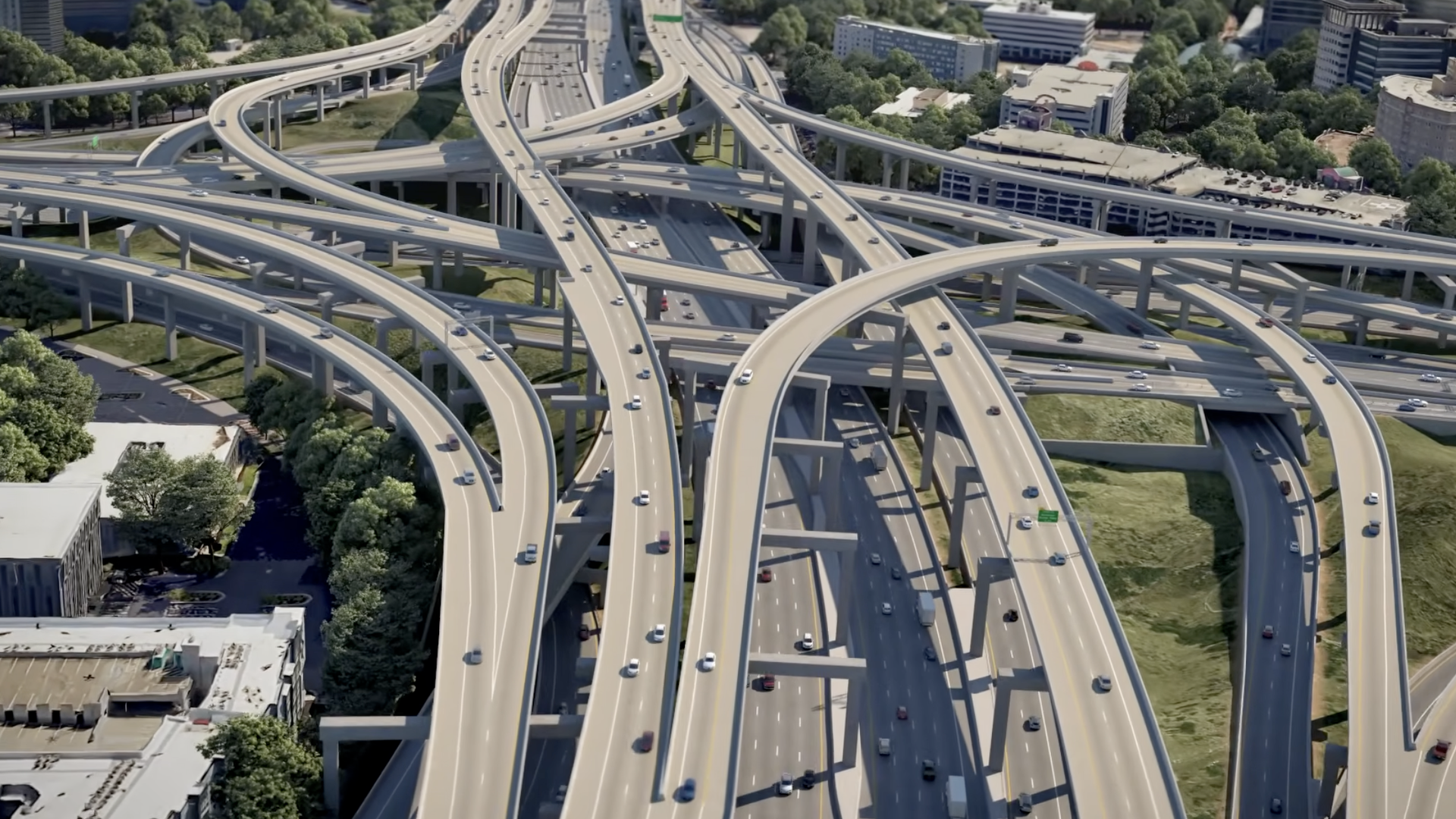
- Nearby communities on the project's east side like Montreal Woods and Lindmoor Woods have raised concerns about noise and the elevated express lanes becoming eyesores.
What they're saying: GDOT spokesperson Natalie Dale told Axios that the agency "recognizes the importance of maintaining open communication with communities along the corridor and remains committed to ongoing project updates and engagement throughout final design and construction."
- Right-of-way acquisition needs can change, she said, and the agency plans to "minimize construction-related impacts where feasible."
What's next: GDOT and Top End Mobility Group are expected to sign a comprehensive agreement in December and spend the next year finalizing the design. Construction could begin in late 2027 or 2028.