Georgia schools test drones to confront active shooters

Add Axios as your preferred source to
see more of our stories on Google.
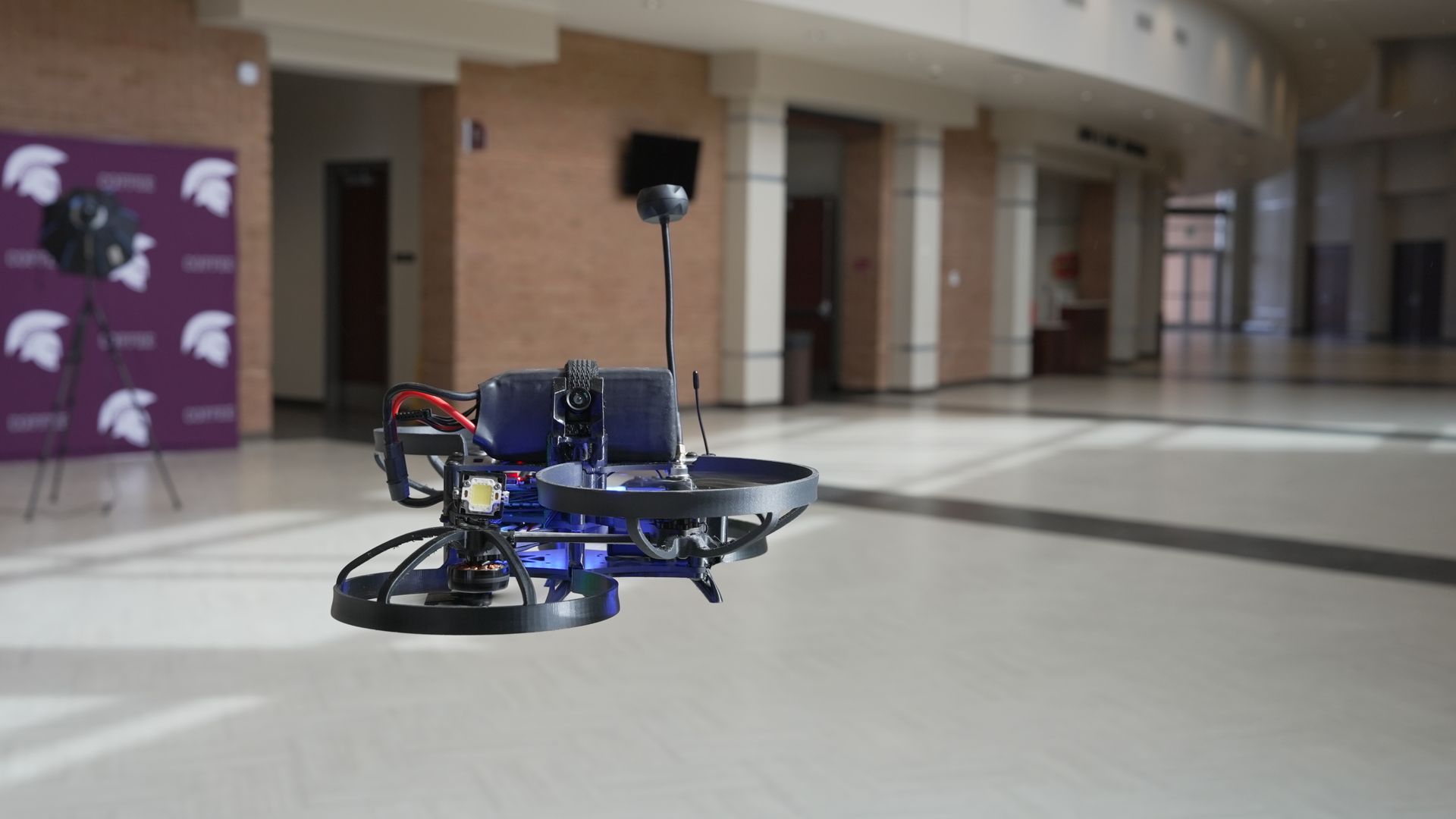
The remote-controlled devices will be tested in five Georgia schools. Photo: Courtesy of Mithril Defense
Georgia is spending $550,000 to test technology that dispatches drones equipped with pepper gel and strobe lights to stop active shooters.
Why it matters: Texas-based Mithril Defense's Campus Guardian Angel drones push the multibillion-dollar school safety industry beyond cameras and weapon detectors toward privately operated systems capable of using force inside schools.
How it works: Secure charging boxes, each capable of holding six drones, are placed at strategic points around a school. A teacher or staff member can trigger an alert through an app or panic button.
- Personnel at the company's Austin command center assess the alert and, if they determine the threat is credible, remotely launch and pilot the drones.
- Pilots use a digital model of the school and live camera feeds to search for the suspected attacker. The company says the drones can fly 30–50 mph indoors, reach an attacker in about 15 seconds and travel as fast as 100 mph outside.
- The drones have speakers to communicate with the suspect, teachers or law enforcement. In addition to pepper gel and strobe lights, the devices can sound sirens and air poppers, break uncoated windows and ram a confirmed attacker, the company says.
"Once I get the drones on you, you just can't escape them," Bill King, a former Navy SEAL and Mithril Defense co-founder, told the Washington Post in July.
Yes, but: Critics note that the remote-controlled vehicles have not responded to an actual school shooting.
- Everytown for Gun Safety has called the drones experimental technology that could turn schools into "battlezones." The group argues that officials should invest in preventing shootings instead.
- The Learning Policy Institute says evidence supporting many school-security technologies is thin and that supportive school environments and mental health support have stronger evidence behind them.
The other side: Mithril says the CGA system could complement law enforcement officers, not replace them; provide officers with live intelligence; and disorient a shooter while police respond.
State of play: The current list of participating Georgia schools includes River Ridge, Gainesville, Coffee County, Statesboro and Troup County high schools.
- Florida and Colorado schools are also adopting or testing the system.
What's next: A Georgia Department of Education spokesperson told Axios that the systems are scheduled to roll out this fall.
- In addition to supplying the equipment, she said, the CGA team will "conduct on-site training, participate in exercises as required, and operate the systems as a production service once live in each school."
She said the Georgia General Assembly "has indicated they would like quantifiable results on improved response times and officer safety" to measure the pilot program's effectiveness.