Plan to move Atlanta Olympic cauldron sparks backlash in Summerhill

Add Axios as your preferred source to
see more of our stories on Google.
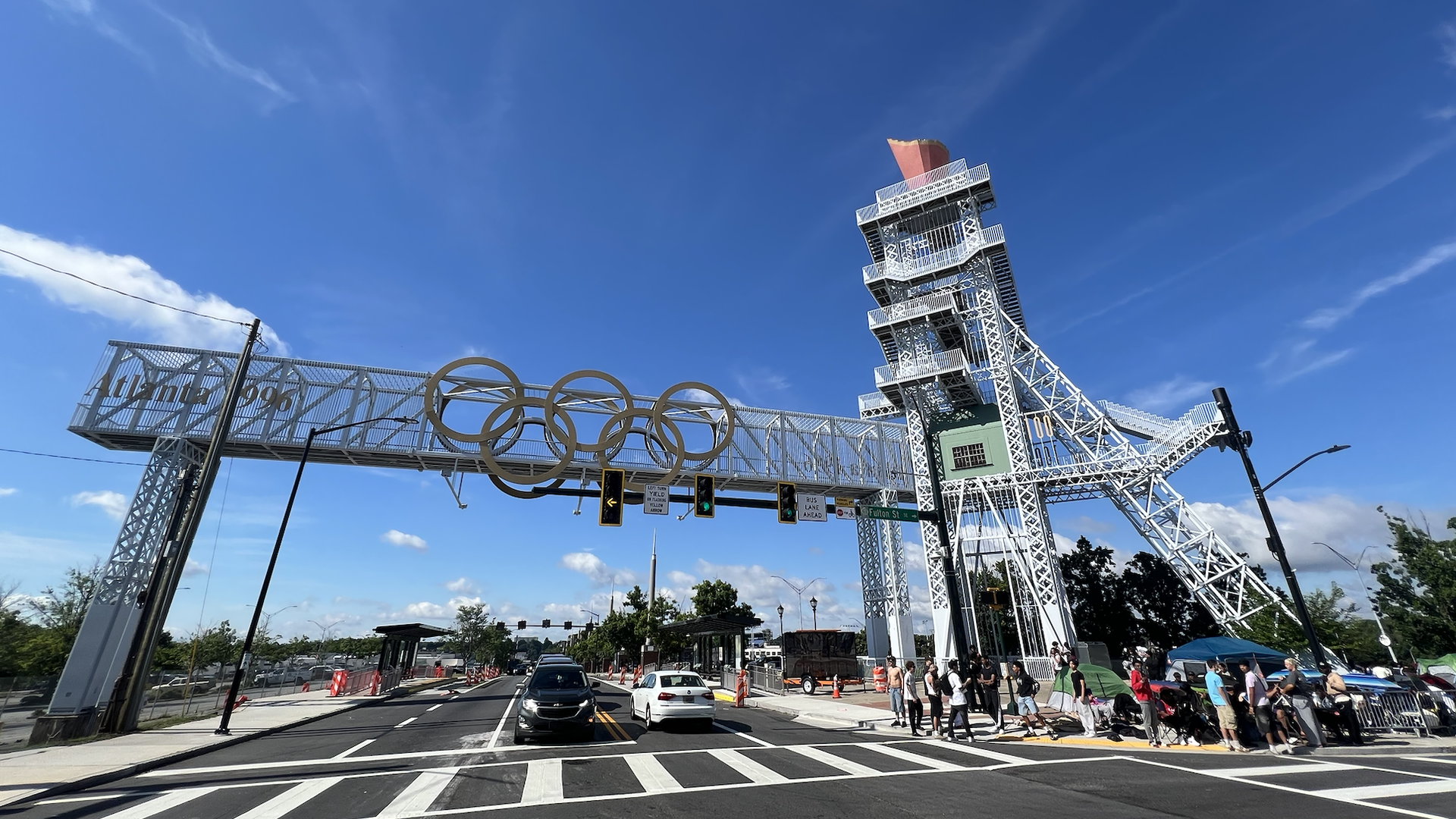
The Olympic rings bridge, tower and cauldron at the corner of Fulton Street and Hank Aaron Drive in Atlanta's Summerhill neighborhood. Photo: David Mitchell/Atlanta Preservation Center
A plan to relocate the Olympic cauldron from the Atlanta neighborhood that hosted the 1996 games is drawing outrage from some residents and historic preservation activists.
Why it matters: The cauldron, its tower and the Olympic rings bridge spanning Hank Aaron Drive are world-famous artifacts that cement Summerhill's role in the 1996 games.
- Muhammad Ali lit the cauldron at Centennial Olympic Stadium in Summerhill during the opening ceremony.
- That stadium later was renamed Turner Field and was home to the Braves until 2016.
The latest: The Georgia World Congress Center Authority has issued a request for proposals to relocate the cauldron from the neighborhood to Centennial Olympic Park.
- According to the request, the cauldron has gas flame nozzles, and "the gas flame capability will be operational in its new location."
- Once it's refurbished and refinished, the cauldron will be installed at the Downtown park.
What they're saying: John Helton, president of the Organized Neighbors of Summerhill, told Axios residents only learned the project was moving forward within the last few weeks.
- No one from Georgia State University, which owns the land where the cauldron sits, contacted the community for their input.
- "It's really disappointing, for one," he said. "Angry on another level, and kind of feeling that it's just being more of the same: more things being done to us instead of with us."
The other side: Georgia State University announced last week in a press release that the cauldron will be relocated.
- GSU is partnering with Billy Payne, who led the organizing committee to bring the games to Atlanta with former Mayor Andrew Young, to move the cauldron to Centennial Olympic Park.
- The university, which purchased Turner Field in 2017 and later opened the stadium for its football team, said it will enhance the tower and bridge to "celebrate the deeply intertwined legacies of the 1996 Atlanta Olympic Games, Georgia State and the Summerhill community."
Flashback: Summerhill was one of two Atlanta neighborhoods where freed Black people were allowed to settle during Reconstruction, according to Segregation by Design, a resource hub that highlights the dismantling of historically Black neighborhoods.
- Helton said construction of the Downtown Connector and urban renewal projects "decimated" homes, schools and the community's grid network.
- Promises made to economically revive Summerhill between the Atlanta-Fulton County stadium opening in 1966 and the Olympics never materialized, Helton told Axios.
- "It really took the Braves leaving many years later before any redevelopment began happening in Summerhill," he said.
The big picture: David Mitchell, executive director of the Atlanta Preservation Center, told Axios the cauldron is "one of the few things that has been able to withstand the challenges that Summerhill has endured and suffered and navigated."
- "It makes Summerhill stand out when so much of its original identity is no longer with us."