After delays and security concerns, Dunwoody approves Flock agreement

Add Axios as your preferred source to
see more of our stories on Google.
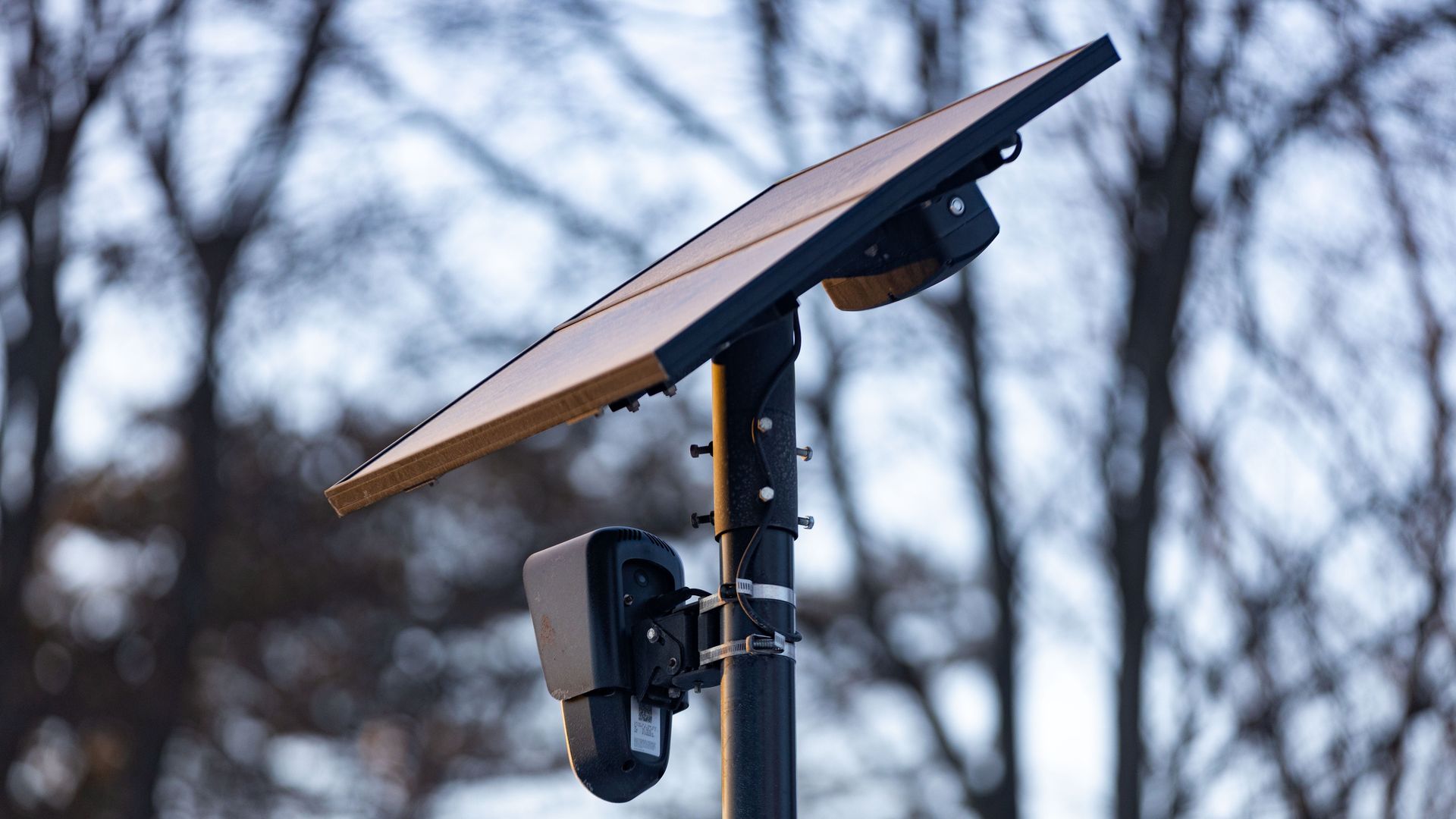
A Flock Safety surveillance camera. Photo: Courtesy of Antranik Tavitian/Bloomberg via Getty Images
After months of delays, security concerns and community angst, Dunwoody leaders approved a new contract with Flock Safety to continue operating license plate reader cameras in the city.
Why it matters: While the Atlanta-based company remains generally popular among law enforcement agencies and governments, some cities are ending agreements over privacy issues and concerns about how federal immigration authorities can use collected information to track down and detain undocumented people.
Driving the news: Dunwoody council members unanimously approved its master services agreement with Flock, a $15,000 contract to implement its OS 911 system for the police department, and an agreement to use its Drone as First Responder program for $200,000.
Catch up quick: The vote to approve the 12-month agreement with Flock had been delayed in February and March after YouTuber Benn Jordan showed Dunwoody leaders how he was able to hack into the camera system.
What they're saying: Jordan, who lives in Mableton, told Axios cities like Dunwoody should "make sure that you have an independent security audit before having a surveillance vendor."
- During Monday's Council meeting, resident Jason Hunyar alleged, based on public records he requested, that a Flock employee "initiated" viewing a live camera feed at the Marcus Jewish Community Center of Atlanta.
- Flock employees accessed cameras in the fitness center, pool area and gymnastics room, Hunyar said.
- Fellow Dunwoody resident Jessica Burbank told Council members Flock is "building a national network of surveillance cameras."
- "I think it's time to carefully consider if this is really how we want to live in America," she said.
The other side: Mayor Lynn Deutsch said she was "concerned and perplexed" when the camera at MJCCA was accessed by a Flock employee.
- Deutsch said Flock's previous agreement with Dunwoody allowed the company to use the city's network of cameras for demonstrations.
- The agreement approved Monday no longer contains that provision, and Flock spokesperson Holly Beilin told Axios the company sent a letter of apology to MJCCA.
- Chris Castaldo, Flock's chief information security officer, addressed in a blog published last month security concerns and how it protects data collected by license plate readers.
The big picture: Beilin said concerns over license plate reader technology are part of a larger national conversation over surveillance, data, privacy and security.
- "That being said, we have to build trust with communities so that they understand that this data is secure and that it's being used in a way that aligns with their values," Beilin told Axios.
- Flock now has new compliance tools that allow clients to tweak settings to prohibit immigration-related searches or get flags when unusual search patterns are made by users, for example.
Zoom out: Cities across the country are cutting ties with Flock.
- Denver Mayor Mike Johnston said in February the city would not renew its contract with the Atlanta-based company, and instead approved a contract with Axon to provide license plate reader technology.
- City Council members in San Diego late last year urged the police department to seek alternatives to Flock for its citywide license plate reader program but ended up maintaining its contract with the company.
- Several cities in California, including Santa Cruz and Mountain View, have ended agreements with Flock, according to the Guardian.
What we're watching: Whether cities that have agreements with Flock will begin to feel pressure from residents who have concerns about the technology.