Why Georgia wildfires are surging this year

Add Axios as your preferred source to
see more of our stories on Google.
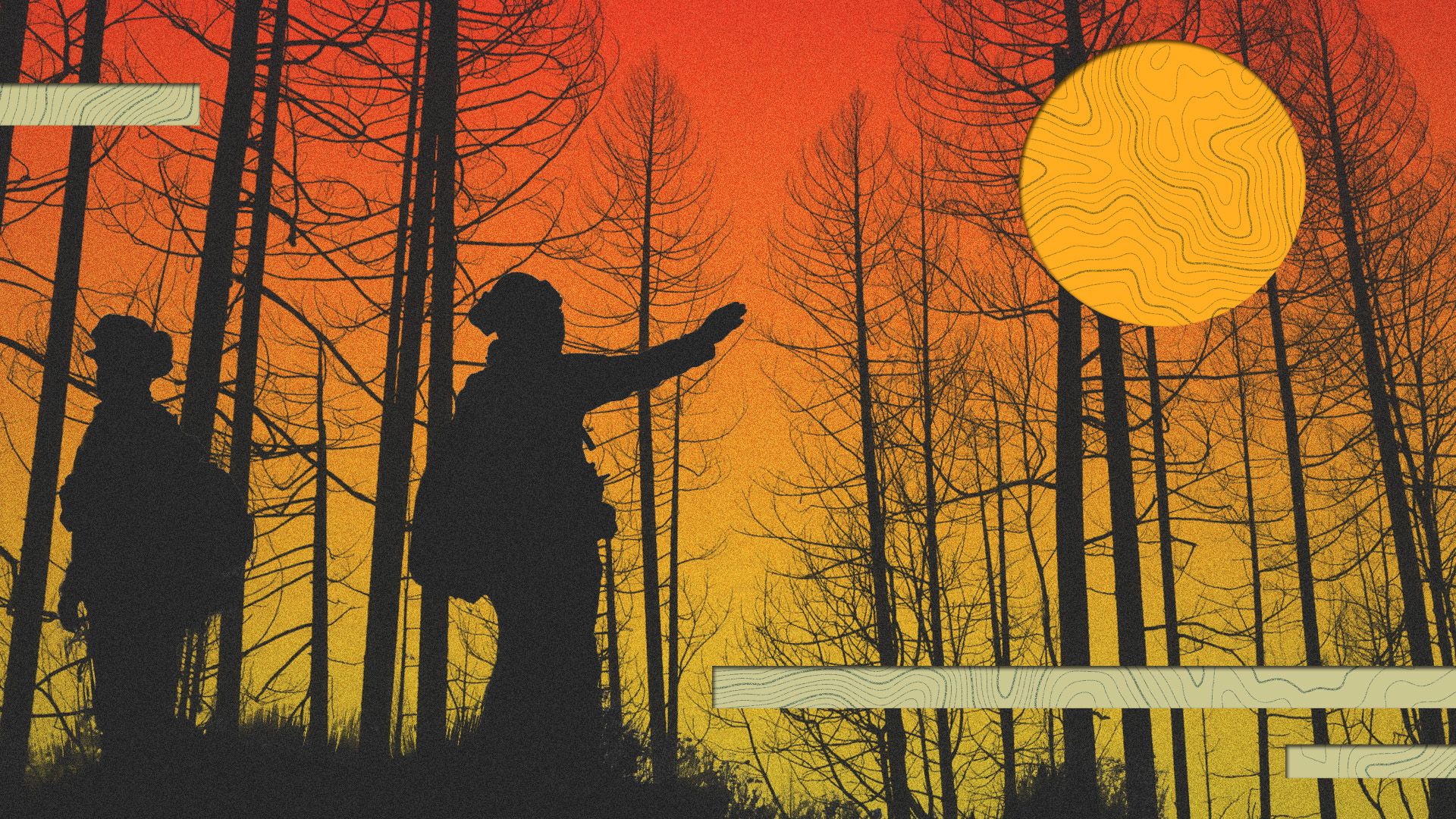
Photo illustration: Shoshana Gordon/Axios. Photos: Frederic J. Brown, Carlos Avila Gonzalez/The San Francisco Chronicle via Getty Images
Georgia is on pace for its worst wildfire season in recent years, driven by the state's most severe drought in a decade.
Why it matters: The threat isn't limited to rural South Georgia, where the state's timber and agriculture businesses are concentrated.
- More than 80% of Georgia's population live in the wildland-urban interface — areas where neighborhoods border forests — and smoke can reach metro Atlanta, causing Code Red air quality days and spiking ER visits.
Zoom in: The state is experiencing the warmer, drier conditions of a La Niña weather pattern, Georgia Forestry Commission fire chief Thomas Barrett told Axios.
- Downed timber from Hurricane Helene has dried out, creating heavy fuel loads that burn hotter and are harder to contain.
A spark from a passing train or a pile of burning leaves can ignite blazes. Barrett said some "zombie fires" from months ago are still smoldering underground and re-igniting.
By the numbers: The GFC has recorded more than 4,100 wildfires this fiscal year on state-protected lands — everything except national park land and military installations.
- 31,000 acres have burned.
- "That's way above our averages — probably as much as 100% more than our typical five-year averages," Barrett said.
Flashback: The 2007 Bugaboo Scrub Fire near the Okefenokee Swamp was the largest in Georgia history, burning 564,000 acres and destroying more than $65 million in timber. Smoke from the blaze reached metro Atlanta.
Stunning stat: Georgia conducts prescribed burns on 1.5 million acres every year. "You have a wildfire, and you're responding to it. That's you playing defense," Barrett said. "And so we try to do a lot of offense too, when we can."
- The burn program has helped Georgia avoid the catastrophic fires often seen out West. State lawmakers this year passed legislation preempting local governments from restricting the practice.
What's next: Officials expect fires to be concentrated in south and southeast Georgia for the rest of the season, when an El Niño pattern — typically rainier for the Southeast — could bring relief.
The bottom line: "Be careful with campfires," Barrett said. "Be careful with cooking fires, or any kind of recreation that they're doing outside that might cause a spark — certainly the damage can be a whole lot worse when we're in this extreme drought."