Metro Atlanta growth defies U.S. immigration-driven slowdown


Add Axios as your preferred source to
see more of our stories on Google.
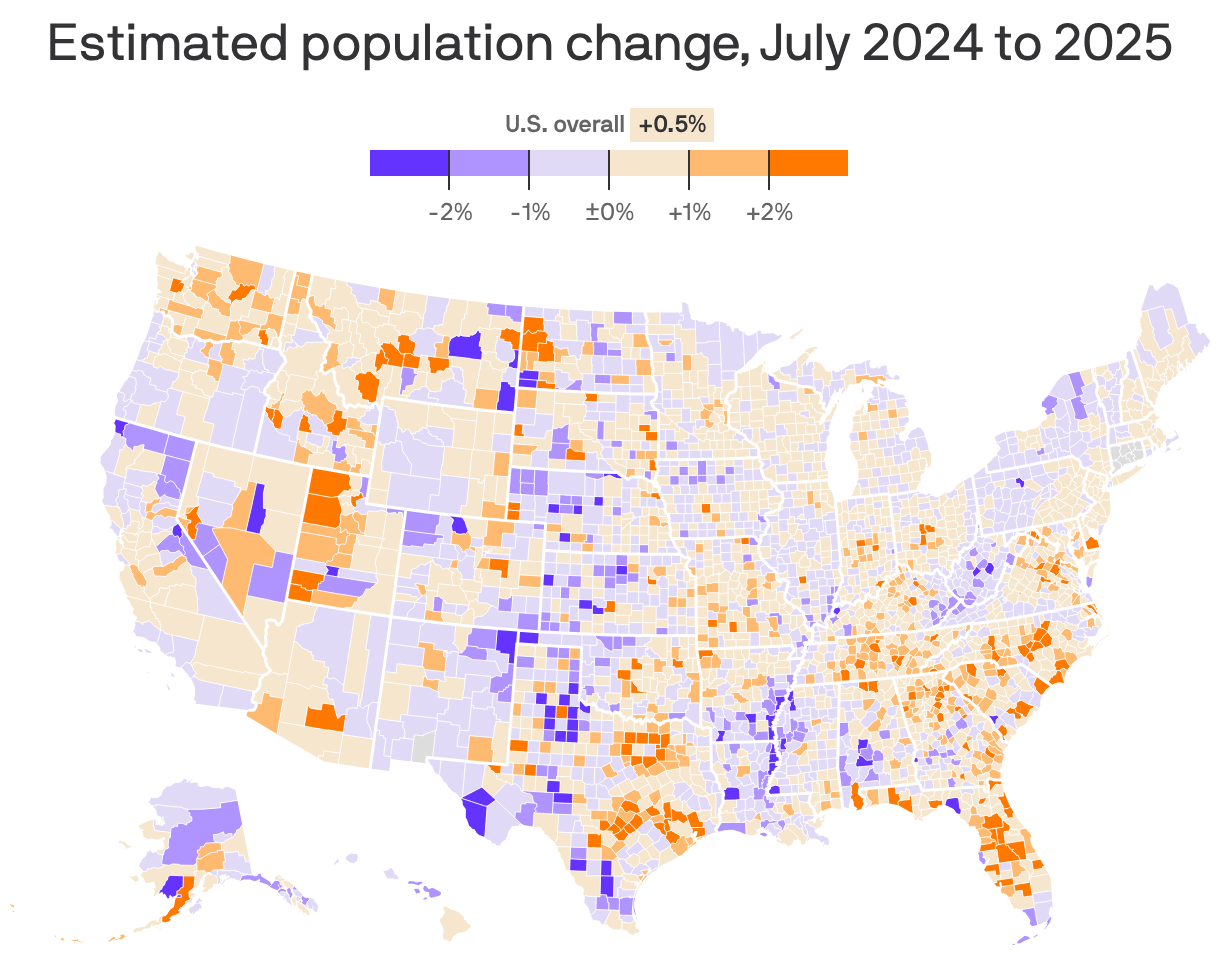
Metro Atlanta is continuing to grow as most counties nationwide see an immigration-driven slowdown, new U.S. Census data shows.
Why it matters: The new data offers the best look yet at how tighter immigration enforcement is affecting America's demographic makeup.
Driving the news: International migration fell in nine out of 10 U.S. counties between 2024 and 2025 compared to the prior period, the Census Bureau says.
- Other counties stayed flat.
Zoom in: Counties including Jackson and Long — both near large economic developments like SK Battery or Hyundai's Metaplant — were among those that saw population growth above 5%.
- Core metro counties, including Fulton, DeKalb, Clayton and Fayette, reported growth around 1% during that time period.
- Still, the Atlanta-Sandy Springs-Marietta metro was the third-fastest-growing metro by numeric growth, adding roughly 62,000 people between July 2024 and 2025. It trails the metros of Houston and Dallas.
Between the lines: Nationwide, the drop in immigration is hitting populous areas especially hard.
- Census Bureau demographer George M. Hayward said in a statement: "The nation's largest counties ... are often international migration hubs, gaining large numbers of international migrants and losing people that move to other parts of the country via domestic migration."
The big picture: The U.S. overall still grew by 0.5% between 2024-25. But that's down from 1% over the previous period.
Nationwide natural change (births minus deaths) held steady, while international migration plummeted from about 2.8 million people to 1.3 million — about a 55% drop.
- Caveat: International migration census data comprises both foreigners and Americans coming home from abroad, including military service members.
The other side: The fastest-growing metros overall from 2024-25 were Ocala, Florida (+3.4%); Myrtle Beach, South Carolina (+3.2%), and Spartanburg, South Carolina. (+2.8%).