Measles cases rising in Georgia as vaccination rates drop


Add Axios as your preferred source to
see more of our stories on Google.
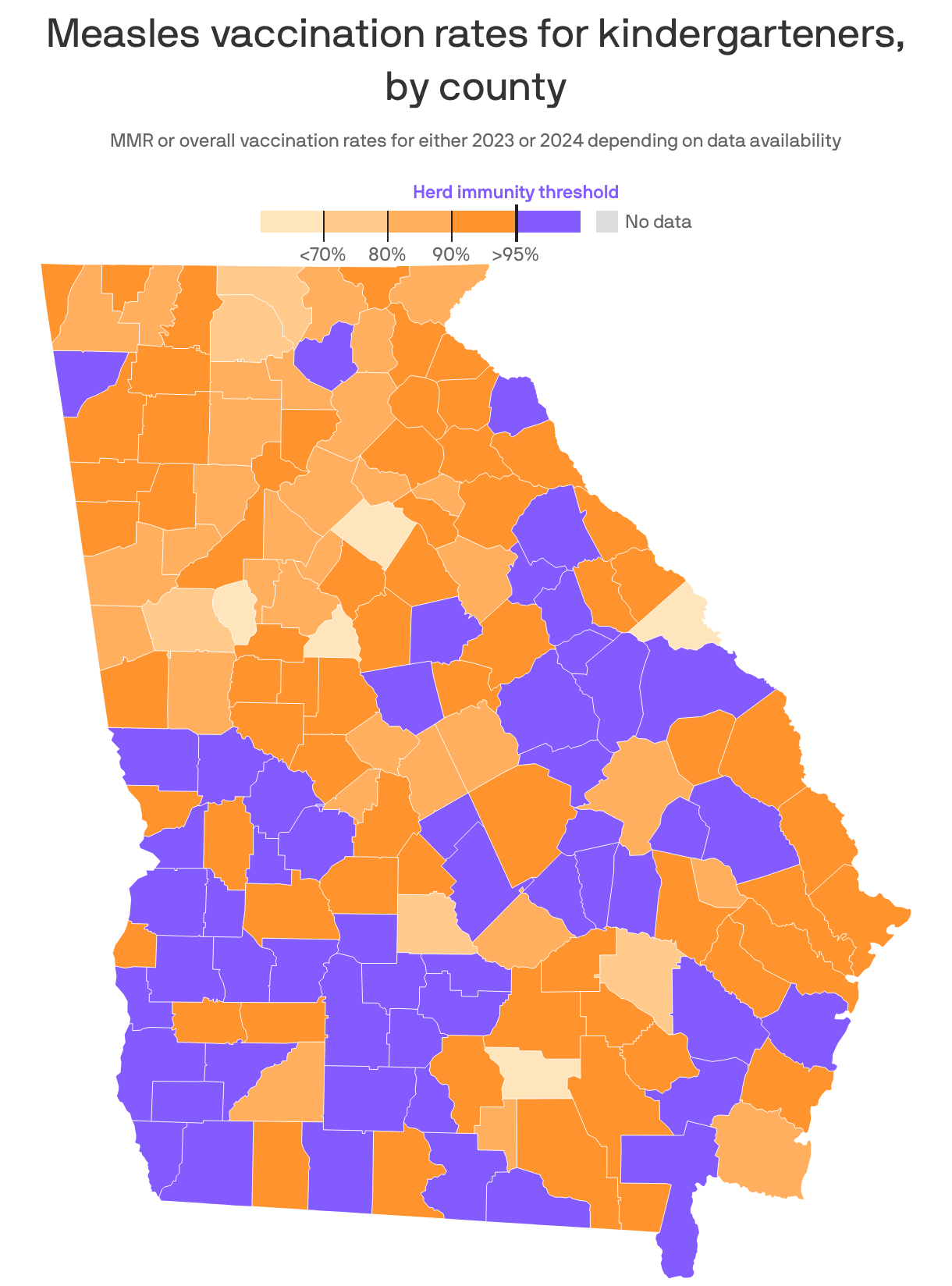
Cases of measles are surging in Georgia, leaving local communities vulnerable to a virus that was uncommon until recent years and which public health officials say is preventable.
Why it matters: Most North Georgia counties don't meet the herd immunity threshold for measles, with vaccination rates for kindergarteners well below the 95% mark, per new data collected and analyzed by the Washington Post.
Catch up quick: On Tuesday, the Georgia Department of Public Health confirmed that a baby along the Georgia coast became the state's first measles case in 2026.
- The baby is too young to receive the measles vaccine and acquired the virus while traveling internationally, according to the department.
- Health officials are contacting people who were possibly exposed to the virus.
By the numbers: Georgia recorded 10 cases in 2025 and six in 2024, according to state health department data.
- Except for a surge in cases in 2019, most years have been measles free.
Stunning stat: Georgia's herd immunity is 89%, down from 94% before the COVID-19 pandemic, according to the data.
- That threshold is widely considered necessary to contain the virus' spread.
Caveat: State health officials provided the Post county-level data for overall vaccination rates, not just the MMR vaccine.
- "In at least four counties, the latest rates were under 50 percent, possibly attributable to reporting problems," the outlet said.
The big picture: The battle against infectious diseases like the flu and measles has taken a hit with sinking vaccination rates for children in many parts of the U.S.
- The decline has set the U.S. up to lose its coveted elimination status for the first time in decades.
What's next: Federal health policy is shifting.
- On Jan. 5, the Trump administration overhauled the childhood vaccination schedule by cutting recommended shots to 11, though the recommended list still includes a measles shot for kids.
- DPH has not changed its immunization schedule based on the new guidelines. A spokesperson did not respond to Axios' request for a comment.
The bottom line: State health officials are stressing the efficacy of the MMR virus to prevent acquiring measles.
- "More than 95% of the people who receive a single dose of MMR will develop immunity to all three viruses. A second dose boosts immunity, typically enhancing protection to 98%," the department said.
Go deeper: Where vaccination rates declined the most, by county