Atlanta's bid to extend tax districts draws skepticism

Add Axios as your preferred source to
see more of our stories on Google.
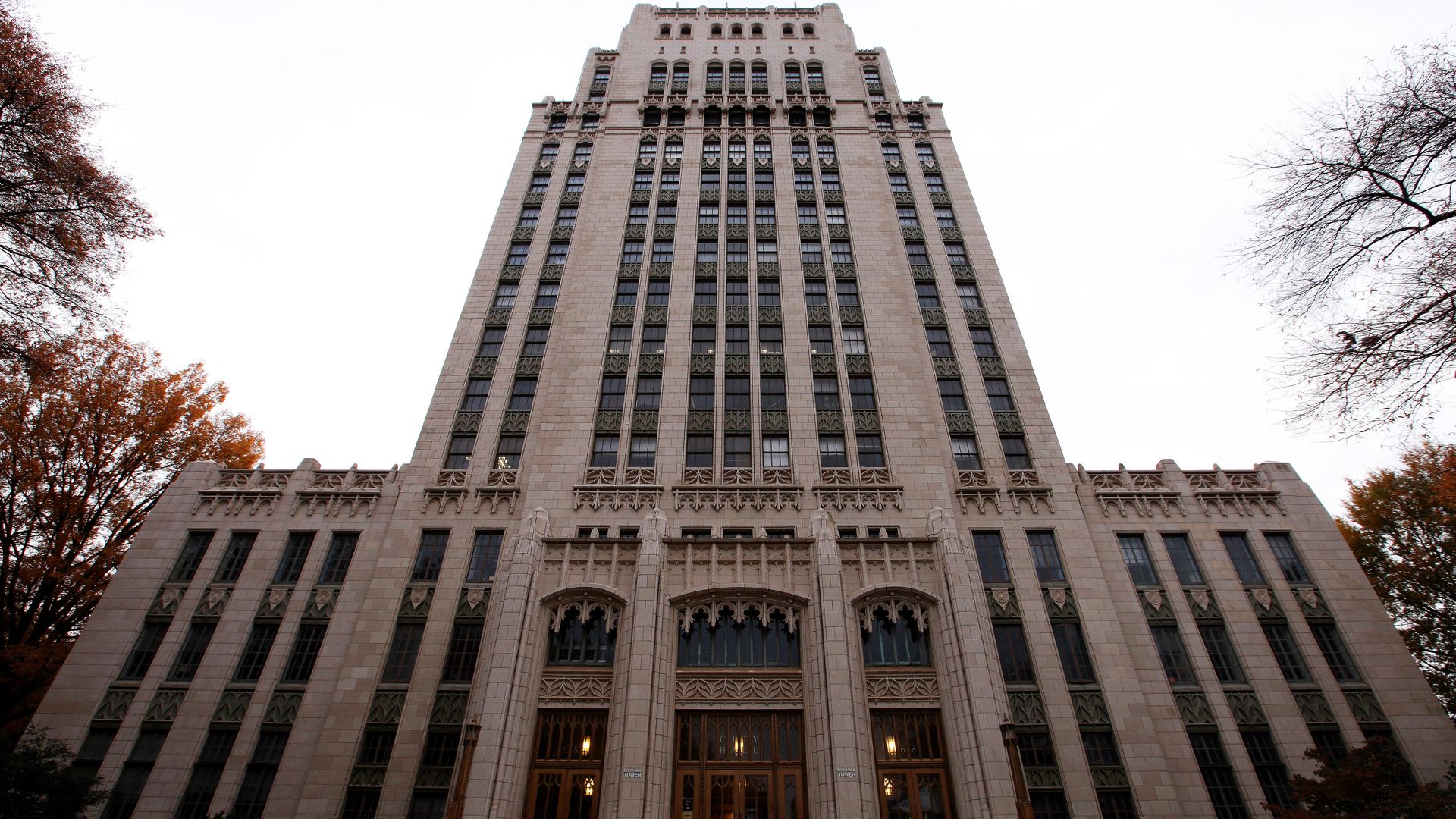
Atlanta City Hall. Photo: Courtesy of Raymond Boyd/Getty Images
Mayor Andre Dickens' proposal to extend tax allocation districts to fund projects aimed at addressing social and economic inequities is drawing criticism from some longtime local government watchers.
Why it matters: Dickens wants to use up to $5 billion from those TADs to invest in the city's ambitious Neighborhood Reinvestment Initiative, which the city said would among other things improve access to jobs, education and fresh food, expand its transit network and build affordable housing.
- The city would need to extend the life cycle of the TADs through at least 2050, which would require the approval of Fulton County and Atlanta Public Schools.
How it works: Tax allocation districts are defined areas within a city where future revenue from increased property tax assessments spurred by development are directed towards improvement projects within those boundaries.
- This is money that would have otherwise been directed into the general funds of the city of Atlanta, APS and Fulton County.
- Atlanta has eight TADs that are active, and Dickens said they are all set to expire over the next five to 13 years.
- The city would need to extend each one past 2050 "in order for the neighborhood reinvestment initiative to truly succeed," Dickens said.
What they're saying: Dan Immergluck, professor emeritus at Georgia State University, told Axios the city's initiative will exacerbate inequities because most of the TADs, such as the Beltline and Perry-Bolton, are in neighborhoods already being gentrified.
- "None of the schools are going to get tax dollars, whether they're in the TAD or not, and [Grady Memorial] Hospital is not going to get those tax dollars," he said.
- Julian Bene, a former Invest Atlanta board member, likened the extension to a "backdoor tax increase" because APS and Fulton County may have to raise property taxes due to budget shortfalls.
The other side: Courtney English, the mayor's chief of staff, told Axios in an interview that it's "factually incorrect" that residents would see any tax increases if the TADs were extended.
- He also said that when he served on the school board, he helped negotiate a payment in lieu of taxes (PILOT) agreement with the city of Atlanta that guaranteed APS would receive $100 million during the current lifespan of the Beltline TAD.
- English said the underassessment of commercial real estate costs Fulton County, APS and the city more than $100 million each year and "ultimately means that single family homeowners are left carrying the bag."
- A child born in Atlanta has less than a 4% chance of breaking out of poverty, and English said this initiative can reverse that trend.
- "So the question before us, ultimately is, who do we want to be as a city?," English asked. "And this is ultimately an opportunity for us to address the root causes that have held us back for so long."
What we're watching: Whether the Atlanta Board of Education and the Fulton County Commission will agree to extending the TADs for another 25 years.
- "APS is navigating a challenging budget season, and every decision we make will remain grounded in our core mission: supporting the education and long-term success of Atlanta's students," the school system said in a statement to Axios.
What's next: The City Council's Community Development/Human Services Committee will consider the ordinance that would extend the life span of each TAD.
Editor's note: This story has been corrected to note the mayor's chief of staff said the underassessment of commercial real estate costs the city, APS and Fulton County more than $100 million each year (not $100).