Georgia electricity costs rise amid data center boom

Add Axios as your preferred source to
see more of our stories on Google.
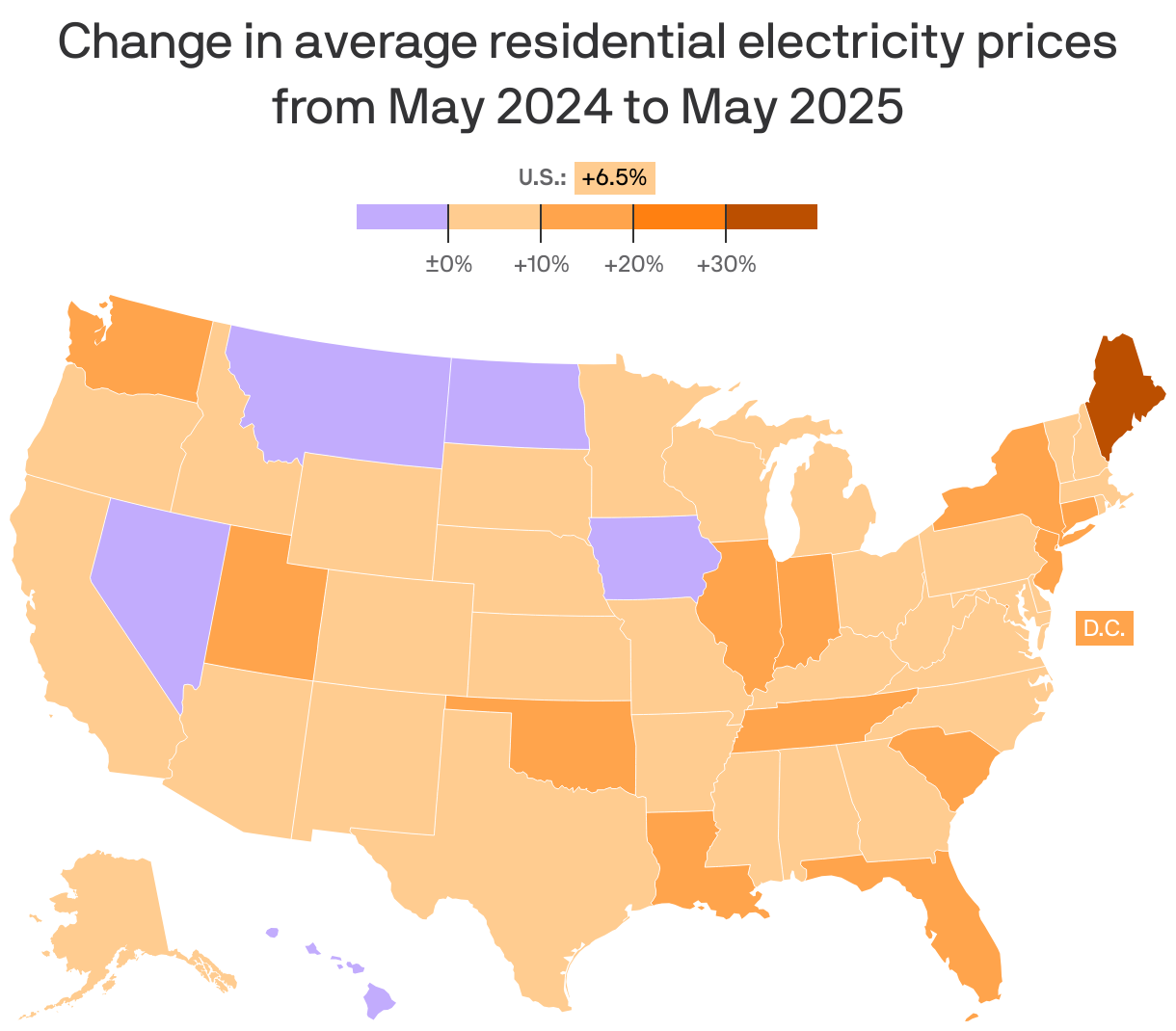
Electricity costs are rising in Georgia and across the country — and could get even higher for some amid the explosion in data centers powering AI and more.
Why it matters: Surging power bills could further stress many Americans' budgets as pretty much everything else gets more expensive, too.
By the numbers: Georgia's average retail residential price for 1 kilowatt-hour of electricity rose from 14.93 cents to 15 cents between May 2024 and May 2025, per the latest available data from the U.S. Energy Information Administration, a gain of about 0.5%.
- That statistic includes all utilities, not just Georgia Power, which provides electricity to 2.8 million ratepayers, mostly in metro Atlanta.
Context: Georgia Power residential customers using more than 1,000 kilowatt-hours a month are paying about $43 more than they did at the end of 2022, according to the utility.
- That increase has helped pay for Plant Vogtle's two new over-budget nuclear reactors and fuel costs.
- Add a July with record-high temperatures and it becomes clearer why some customers saw their electricity bills double or triple.
The other side: A Georgia Power spokesperson told Axios the state's data center growth is partly why the utility can accommodate a three-year freeze of base rates.
- They argue the PSC rules have financial and contractual obligations, which means "residential and small business customers are protected from cost increases tied to these projects."
Caveat: In July, the Georgia Public Service Commission approved a plan to keep Georgia Power rates stable through 2028.
- However, the utility next year will ask the regulators to pass clean-up costs related to Hurricane Helene and other storms on to customers.
Zoom in: Georgia Power wants to add 9,000 megawatts of capacity by 2031 to handle a (potentially overestimated) data center boom, according to Georgia Recorder.
- 80% of that new electricity would be consumed by data centers and generated mostly using fossil fuels.
The intrigue: In January, the PSC approved a rule change that the utility regulator says would protect residential ratepayers from surges in demand from data centers.
- A bill to codify that policy, which consumer advocates say could provide ratepayers with greater protections, passed out of committee during the most recent Georgia General Assembly but did not receive a full vote.
The bottom line: Many of us are paying for the AI boom, whether we use the tech or not.
Editor's note: This story has been corrected to reflect that it is compared to late 2022 (not to 2023) that some customers are now paying $43 more a month.