Why sommeliers are sipping 4,000-year-old iceberg water in Atlanta

Add Axios as your preferred source to
see more of our stories on Google.
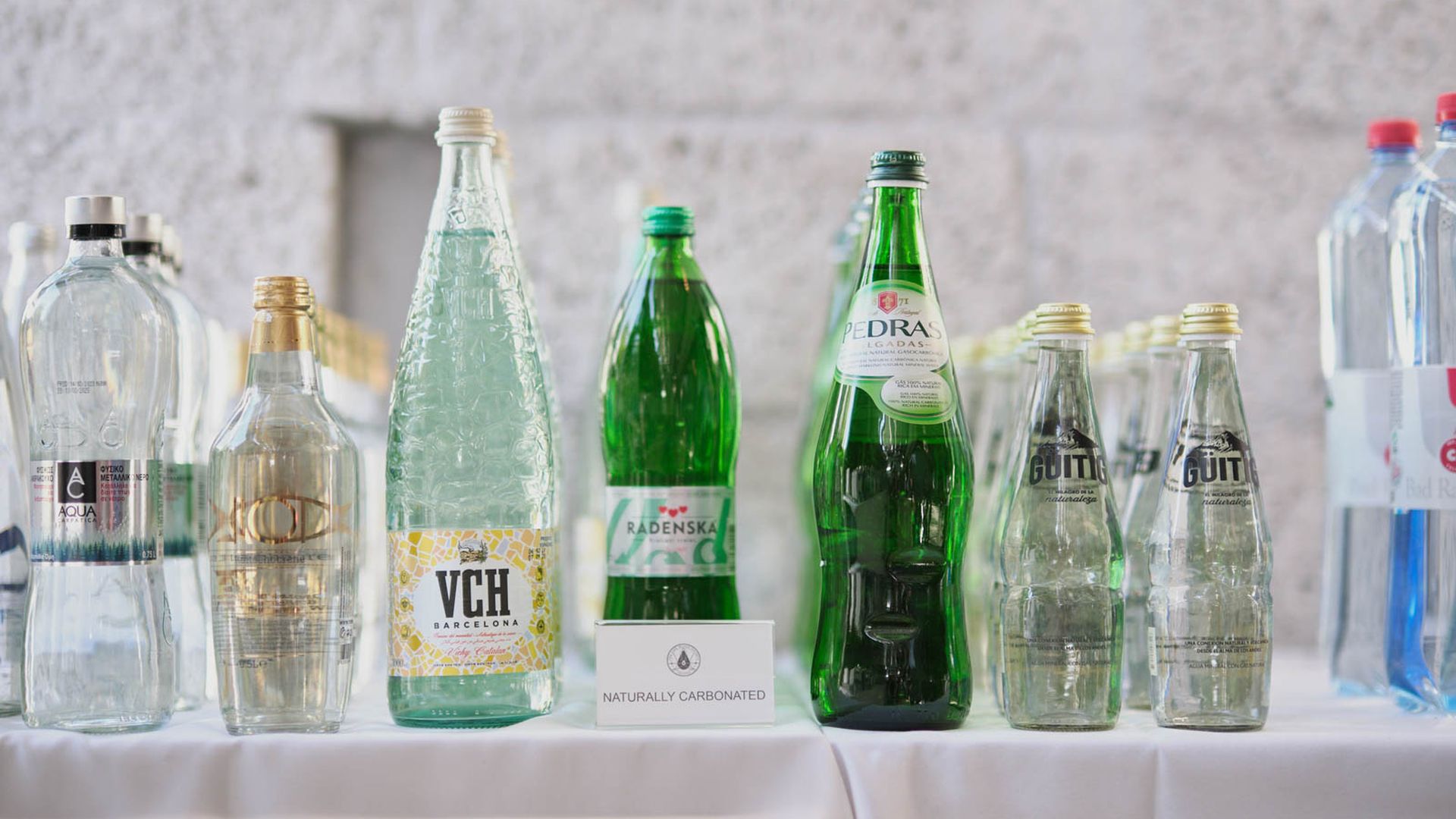
Only one can rule them all. Photo: Courtesy of Fine Water Summit
Have you ever tasted raindrops from Tasmania that never touched the Earth? Or water that's been locked inside a Norwegian iceberg for millennia?
Why it matters: You probably haven't (I haven't). But you also probably haven't been to the Fine Water Summit, a globe-trotting annual gathering of water sommeliers who live, breathe and sip the most luxurious of las aguas.
- This year's conference — and the crowd-pleaser taste contest — runs April 25-27 in Buckhead. Expect roughly 1,000 bottles of rare, expensive and hard-to-find waters, plus plenty of thirst-quenching and storytelling.
How it works: We're not talking about bottled water brands found at Circle K — most of which are just purified tap water, Michael Mascha, the owner of Fine Water Media and summit organizer, told Axios.
- Premium, or fine, water has terroir and natural minerals thanks to the geology and processes it undergoes, he said.
- Some brands, like Socosani, which is bottled snowmelt that filtered through volcanic rocks in a remote part of Peru, can be purchased in select local stores.
- Others, like the magnesium-rich ROI, can cost $200 for a six pack and can only be obtained after a long hero's quest (like a flight to Slovenia or making an online order).
Reality check: Plastic bottled water, especially bottles transported halfway around the world for consumption, is bad for the environment.
- Premium water, most of which is bottled in glass to preserve its characteristics, is intended for special occasions and memorable meals, not everyday use.
- "I'm not having water shipped from Fiji or New Zealand to make my pasta," said Mascha. "That would be totally stupid."
The summit's agenda includes seminars on sustainability, including how to communicate that message to the public.
What they're saying: "I'm trying to elevate water away from pure hydration to an experience," Mascha said, adding that some restaurants are adding luxury water to their drink menus to meet increased interest in non-alcoholic options.
- "Hydration is important, but it's also important that we give value to water, and that we see water in a different way."
Catch up quick: Mascha, who co-founded a water sommelier training program in 2018, started exploring and experimenting with water in the early 2000s after his doctor told him to stop drinking wine if he wanted to live.
- "When I go to a party, I bring a bottle of Svalbarði, the iceberg water, and I tell people, 'This is 4,000-year-old water. This is rain that fell 4,000 years ago.' No one talks about the 50-year-old Burgundy anymore."
Zoom in: For the taste awards, a panel of five water sommeliers and experts will sample brands in categories like still, sparkling and naturally carbonated and rank them according to minerality and mouthfeel.
Fun fact: Mascha and the other taste contest judges don't have a palette cleanser to reset their taste buds between sips. They start by sampling waters with very low minerality and then move up.