Atlanta rainstorms are getting more intense amid climate change


Add Axios as your preferred source to
see more of our stories on Google.
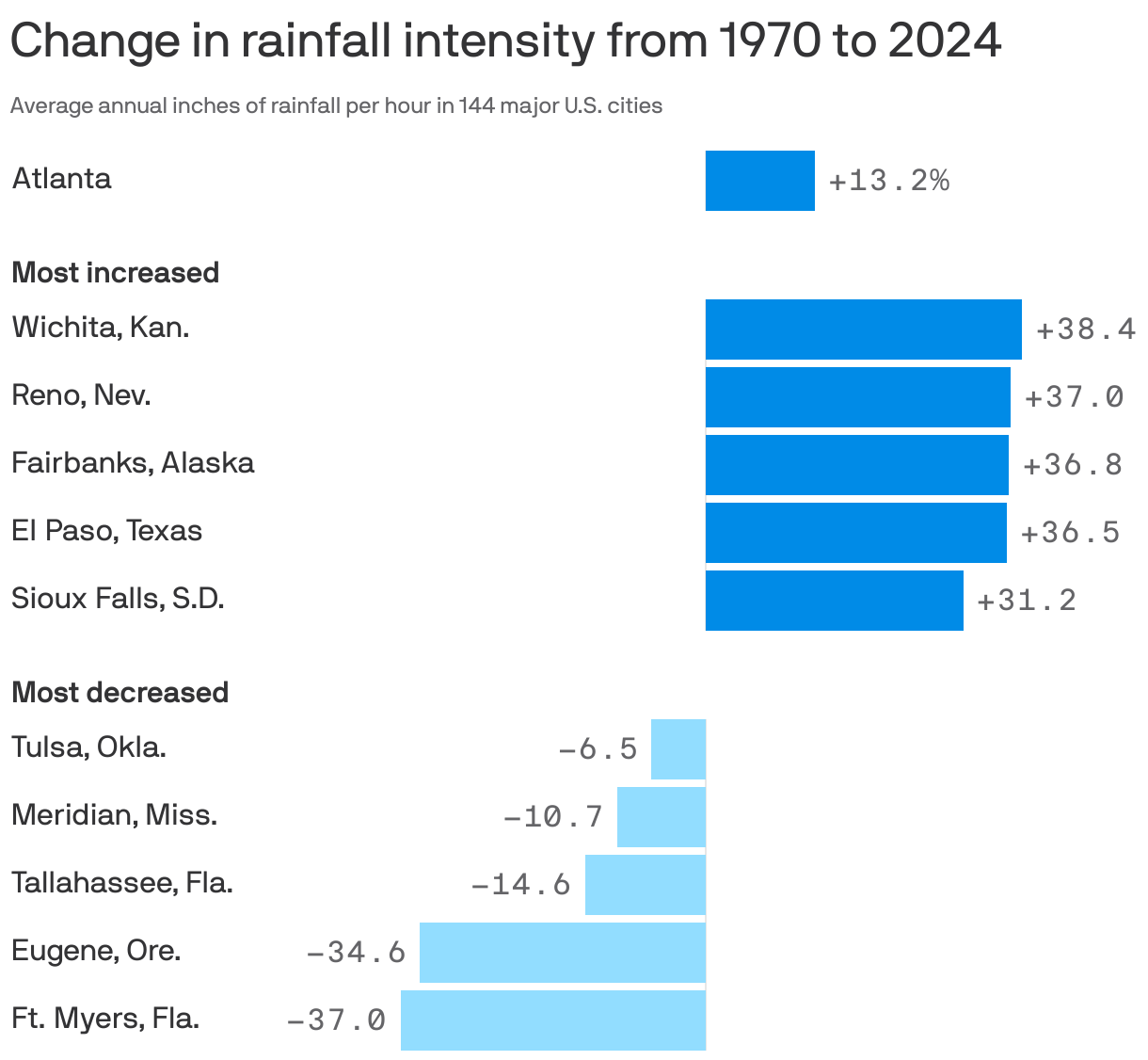
Rainstorms are getting more intense in Atlanta and other U.S. cities amid human-driven climate change, a new analysis finds.
Why it matters: More intense precipitation events can cause flash flooding, landslides, dangerous driving conditions and other potentially deadly hazards.
Driving the news: Hourly rainfall intensity increased between 1970 and 2024 in nearly 90% of the 144 locations analyzed, according to a new report from Climate Central, a research and communications group.
- In Atlanta, that intensity grew by 13.%.
Zoom in: The city over the last 25 years has grappled with heavy and rapid downpours that have led to flash flooding and residents being trapped in their homes.
- In 2002, Atlanta's Vine City neighborhood was devastated by a flood that destroyed 60 properties (the site of the flooding is now home to Rodney Cook Park, which can capture and store up to 10 million gallons of stormwater).
- Record flooding killed 10 people and damaged 20,000 homes and businesses when metro Atlanta was relentlessly peppered with rain over a seven-day period Sept. 15-22, 2009, according to the National Weather Service.
- Between 10 and 20 inches of rain was recorded Sept. 20-21, 2009, NWS reported.
- When Hurricane Helene moved through Georgia last year, residents in DeKalb County and Buckhead had to be rescued when flood waters moved into their homes.
How it works: The researchers divided each location's total annual rainfall by its total hours of annual rainfall, using NOAA weather station data.
- That approach quantifies how much rain fell for each hour it was raining in a given year — in other words, rainfall intensity.
- Some locations were not included because their stations haven't consistently collected hourly precipitation data.
Between the lines: Human-driven climate change is resulting in warmer air, which holds more moisture and thus can drive more intense precipitation.
- Hotter temperatures also evaporate more water vapor from lakes, oceans and vegetation.
Zoom out: Wichita, Kansas (+38%), Reno, Nevada (+37%) and Fairbanks, Alaska (+37%) had the biggest gains in hourly rainfall intensity between 1970 and 2024, the analysis shows.
- That Reno is in the top three underscores Climate Central's point that rainfall intensity is rising in places that are generally dry, not just those that get at least a decent amount of annual rainfall.
Threat level: Flooding costs the U.S. economy up to nearly $500 billion annually, by one estimate, and is creating "climate abandonment" zones as people flee for safer areas, Axios' Andrew Freedman reports.
- Researchers have also found that predominantly Black coastal communities may be particularly vulnerable to increased flood risk over the coming decades, Climate Central notes.
What's next: The group recommends that people stay aware of their area's flooding risks, and suggests homeowners carry flood insurance and improve their home's resiliency against flooding as able.