Immigration fuels metro Atlanta's population growth


Add Axios as your preferred source to
see more of our stories on Google.

A spike in immigration contributed to a boom in metro Atlanta's population in recent years, per the U.S. Census Bureau.
Why it matters: An exodus of city-dwellers rocked many U.S. metros during the COVID-19 pandemic, but some are clawing back residents (and their productivity, creativity and tax dollars).
Driving the news: Metro Atlanta grew by 4.7% from 2020 to 2024, reaching roughly 6.4 million people.
- Between 2023 and 2024 alone, the population grew by about 75,000 people.
The big picture: The Atlanta Regional Commission has projected that "in-migration" — people moving to metro Atlanta from elsewhere in the U.S. and the world — will make up 80% of the region's population growth by 2050.
Between the lines: Immigration helped fuel the latest population spike.
- Two-thirds of the 208,833 people who moved to metro Atlanta between April 2020 and July 2024 were from another country, per census data.
- Meanwhile, "natural change" (births outpacing deaths) contributed to population growth of 95,222 people in the same period.
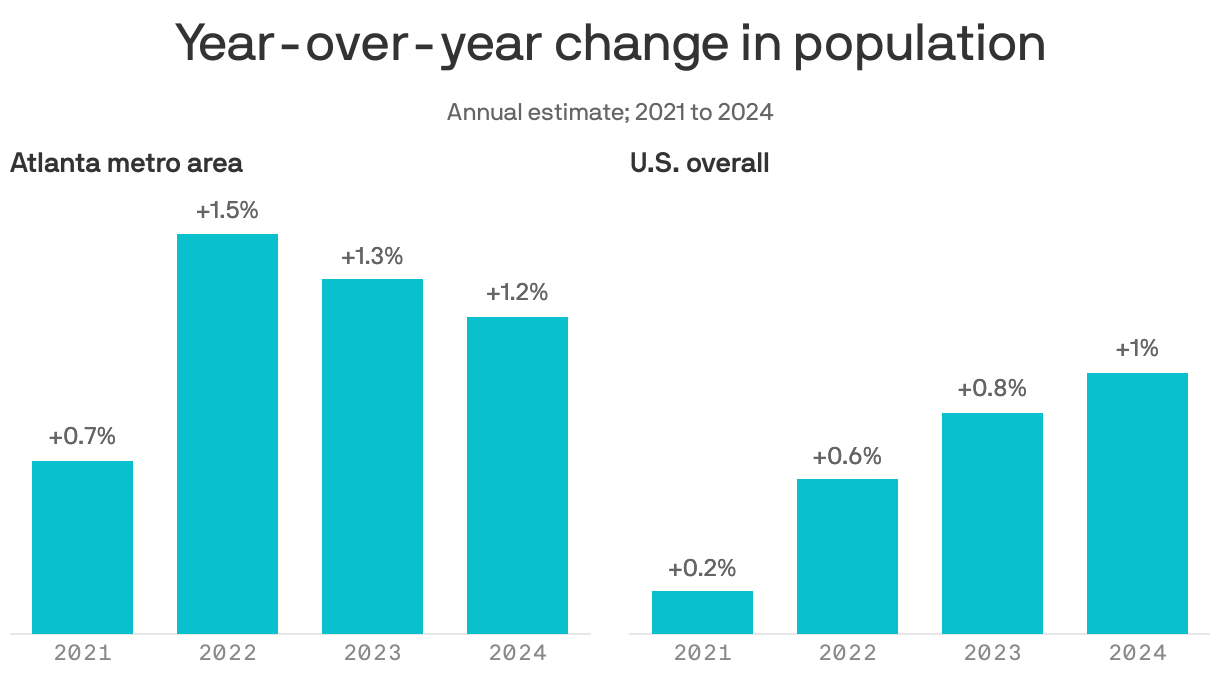
Zoom out: The number of people living in U.S. metro areas rose by almost 3.2 million between 2023 and 2024, the Census Bureau said last week — a gain of about 1.1%.
- By comparison, the total U.S. population rose by 1% during that time.
- Almost all of the fastest-growing metro areas are in the South.
How it works: The bureau bases these estimates on current data for births, deaths and migration, all of which affect overall population.
What's next: Demographers and other researchers will be keeping a close eye on how Trump administration policies affect immigration levels.
Context: Immigrants, documented and otherwise, inject billions of dollars into the economy and pay millions in taxes each year.