Georgia scammers will break your heart and drain your wallet


Add Axios as your preferred source to
see more of our stories on Google.
Hoodwinking Don Juans and Janes fleeced lonely hearts in Georgia to the tune of more than $25 million in 2024, according to reports filed with the FTC.
Why it matters: Georgia is a scammer's playground (and apparently fertile ground for TV consumer reporters).
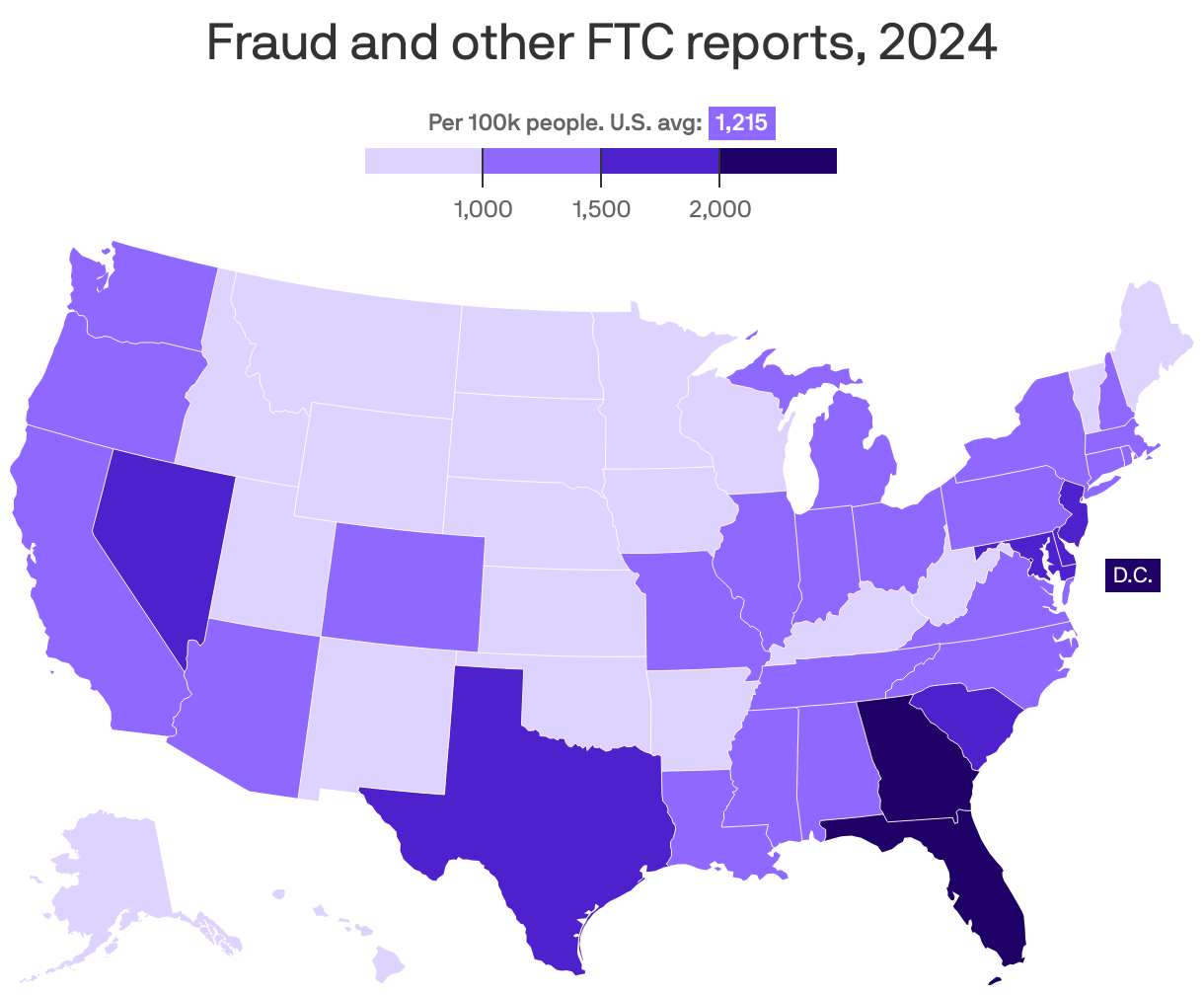
- In 2024, Georgia residents filed the nation's third-largest number of FTC reports per 100,000 residents for fraud and other topics.
Zoom in: Online shopping scams generated Georgia's largest number of reports (9,908) and $7.7 million in reported losses last year. View the data
Yes, but: By comparison, people filed 1,227 reports alleging they were ripped off under romantic pretenses.
- The subcategory chalked up the biggest financial hit: $25.3 million, which was actually lower than the previous year's $31.3 million.
Stunning stat: Many fraudsters prey on older, less digitally savvy people — but of those Georgians 19 and younger who reported fraud in 2024, 49% said they lost money, compared to 25% of those 70-79 years old.
- Georgia residents aged 80 and over reported losing the highest median dollar amount ($1,860).
Zoom out: Americans reported losing over $12.5 billion to various forms of fraud last year, per the data — up a staggering 25% from 2023.
Threat level: The spike suggests fraudsters are outpacing both law enforcement and efforts to educate consumers on how to protect themselves.
Driving the news: Investment and impostor scams took the biggest financial tolls last year, the FTC says, with consumers losing $5.7 billion and nearly $3 billion to each, respectively.
- Scams where perpetrators pretend to be government representatives are particularly hot right now, with reported losses increasing from $171 million in 2023 to $789 million in 2024.
Between the lines: The raw number of FTC fraud reports remained relatively steady year-over-year.
- But there was a big spike in the share of victims reporting that they lost money as a result of fraud: 38% in 2024, up from 27% in 2023.
Caveat: FTC fraud reports are voluntary, and many instances of fraud and other scams go unreported — meaning all these numbers are probably undercounts.
What's next: Companies like Visa are stepping up efforts to detect and fight back against fraud and scams, Axios' Sam Sabin reports.