Allergy season is getting longer in Atlanta. Blame climate change


Add Axios as your preferred source to
see more of our stories on Google.
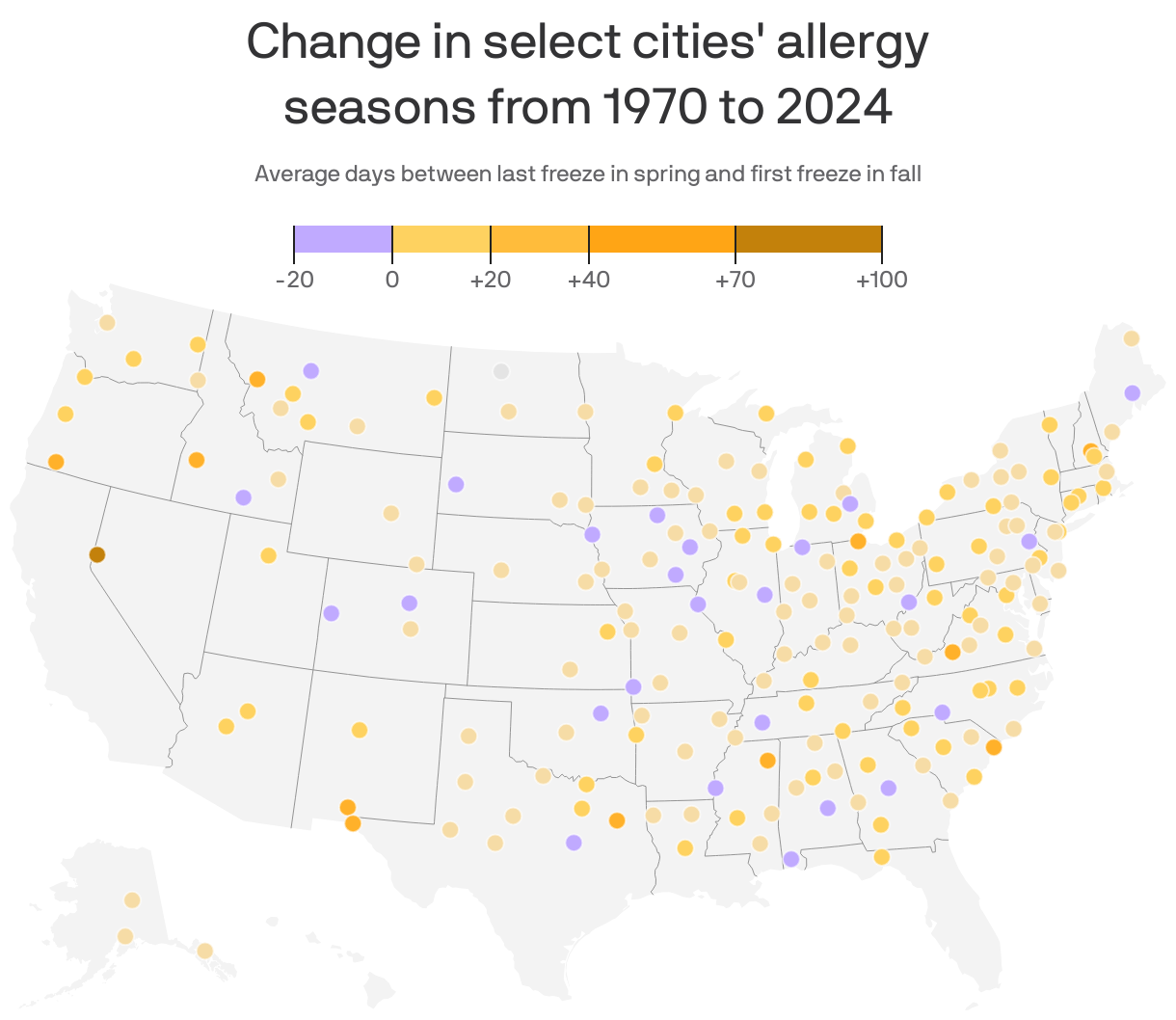
If you feel like your spring allergies strike earlier each year, then you're not off the mark: A new analysis found most major U.S. cities are experiencing longer seasons amid human-caused climate change.
Why it matters: Millions of Americans endure runny noses, itchy throats, and worse health effects each spring allergy season.
Driving the news: The freeze-free growing season lengthened between 1970 and 2024 in nearly 90% of the 198 cities analyzed by Climate Central, a research and communications group.
- Among those cities, the freeze-free season lengthened by 20 days on average.
- In Atlanta, the average season grew by 36 (yes, you read that right) days.
- That's up slightly from the average of 34 days recorded from 1970 to 2021.
How it works: Climate Central uses the freeze-free period — the number of consecutive days with minimum temperatures above 32°F — as a proxy for allergy season.
- Above-freezing temperatures allow for better plant growth, and thus the release of more sneeze-inducing pollen.
Zoom in: A glance at the pollen counts pulled by Atlanta Allergy and Asthma shows we had more days when the numbers hovered in the moderate to high range last month than in February 2024.
- Mild temperatures last month also triggered the early release of pollen from trees like maple, birch and juniper, according to Atlanta Allergy.
What they're saying: Dr. Lily Hwang, who works at Atlanta Allergy's offices in Sandy Springs and Lawrenceville, told Axios that since mid-February, they've seen an increase in patients reporting seasonal allergy symptoms.
- That spike, she said, could be attributed to the warmer temperatures Atlanta had during that time.
- "We've been seeing earlier and earlier symptoms due to the change in our weather [patterns], and so I think that that's been the trend for the last five to eight years," she said.
Zoom out: Reno, Nevada (96 more consecutive freeze-free days from 1970 to 2024); Myrtle Beach, South Carolina (52) and Toledo, Ohio (45) have had some of the biggest increases among the cities analyzed.
- Conversely, the number of consecutive freeze-free days decreased in places like Waco, Texas (-14); Tulsa, Oklahoma (-14), and Denver (-8).
Between the lines: "Climate change makes pollen seasons not only longer, but also more intense due to heat-trapping pollution," Climate Central says in its report.
- "Higher levels of planet-warming CO2 in the air can boost pollen production in plants, particularly in grasses and ragweed."
Threat level: Nationwide pollen production stands to dramatically increase alongside high CO2 pollution, according to a 2022 study highlighted in the report.
How to survive allergy season: Stock up on your preferred allergy meds. Dr. Hwang recommends using saline rinses, steroid nasal sprays and eye drops that not only relieve allergy symptoms, but also provide artificial tears for that dry, gritty feeling.
- Shower at night so pollen doesn't transfer onto your linens or furniture.
- If you have pets, wipe off their paws and their fur when they return from a walk or playtime.
- Consider booking an appointment with an allergist to find out exactly what could be causing you discomfort, Dr. Hwang said.
- You may think it's pollen, but dust mites and other culprits could be behind your flareups.
- "That's where allergen immunotherapy or allergy shots can really provide a lot of help because then you're not chasing the pollen count, which is what I feel a lot of patients are [doing with] their medications," she said.