Football season is the peak for sports betting, but Georgia can't cash in


Add Axios as your preferred source to
see more of our stories on Google.
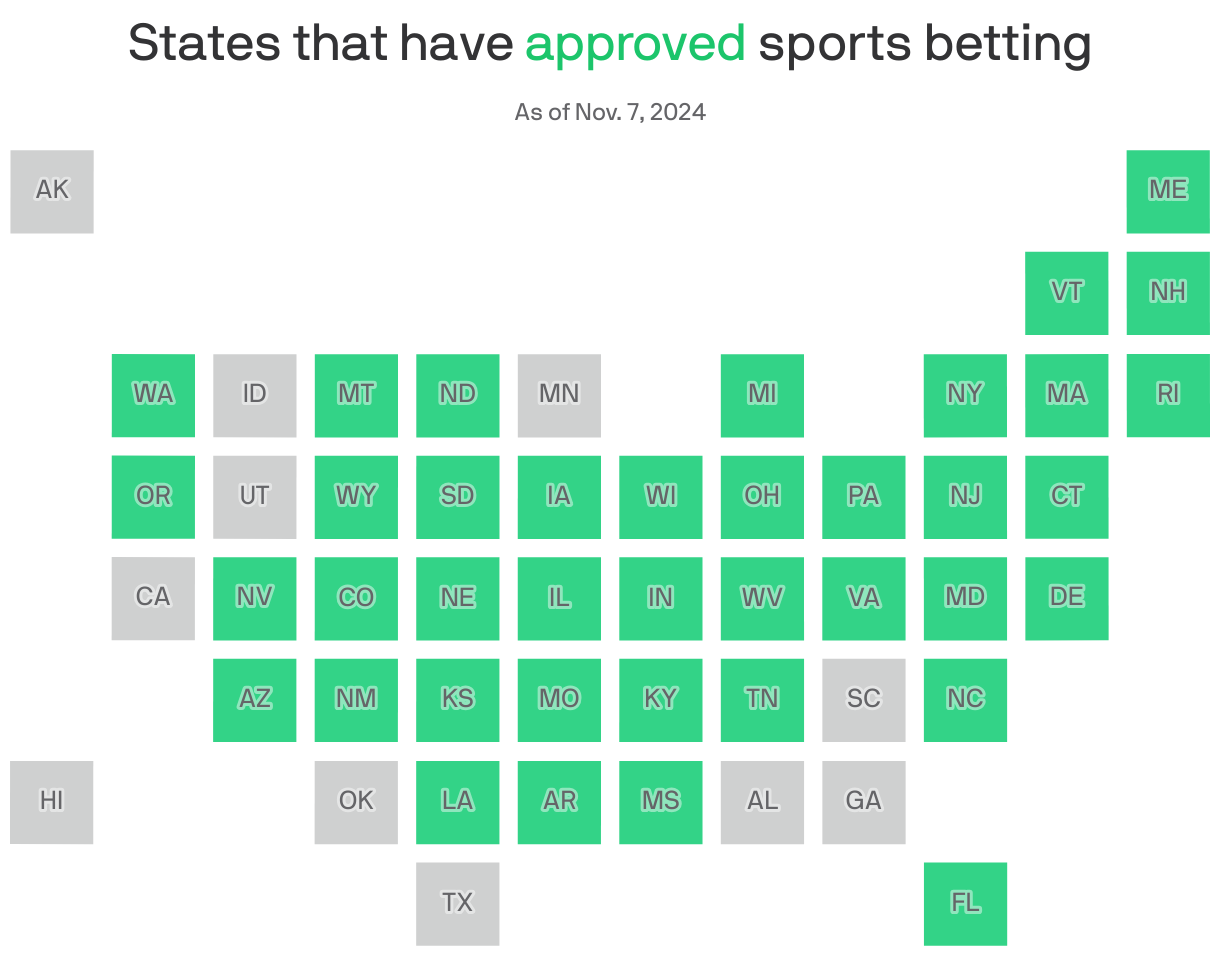
When it comes to legalized sports gambling, there's football, and then there's everything else. Not that Georgia would know.
Why it matters: While the percentages can vary wildly, each of the 38 states (and D.C.) that have legalized sports betting receive some level of tax revenue on their residents' gambling.
- Good teams generally spur more bets than bad ones, meaning localities have never been more financially invested in their teams' success.
The big picture: Americans tend to wager far more money during the NFL and college football seasons than during other periods of the year, an Axios review of a dozen states' betting data finds.
- Most follow the same trend — a boost during the fall months and a peak during football playoff season, then a dip during the summer.
Yes, but: Georgia is not part of this trend, as it's one of the shrinking number of states that don't allow sports betting.
- Legislation has repeatedly been introduced in the Georgia General Assembly that would legalize sports betting.
- The state Senate last year year passed two pieces of legislation that would have authorized sports betting, but the bills died after lawmakers could not agree on how the state should spend taxes collected on that revenue, according to the AP.
The intrigue: While the state does not allow betting on sports, it does permit daily fantasy sports like Atlanta-based PrizePicks.
Catch up quick: This Sunday's Super Bowl LIX is a rematch between two teams with different state laws. Sports gambling was legalized in Missouri late last year, but the permitting process is still playing out and sportsbooks aren't live yet.
- Pennsylvania, meanwhile, has had legal online sports gambling since 2019 and its betting predictably spikes each winter.
- When these two teams played in Super Bowl LVII in February 2023, Pennsylvania made over $14 million on $600 million wagered that month.
Stunning stat: The American Gaming Association estimates Americans will wager $1.39 billion on the Super Bowl this year.
Between the lines: State leaders are increasingly taking advantage of the sports betting windfall.
- Illinois raised its tax on sportsbooks last year, and Ohio Gov. Mike DeWine wants to do the same to raise funds for stadium repairs.
What's next: Given the tax upside, expect the holdouts to consider their own piece of the action soon.