Atlanta residents oppose plan to demolish old substation for parking lot

Add Axios as your preferred source to
see more of our stories on Google.
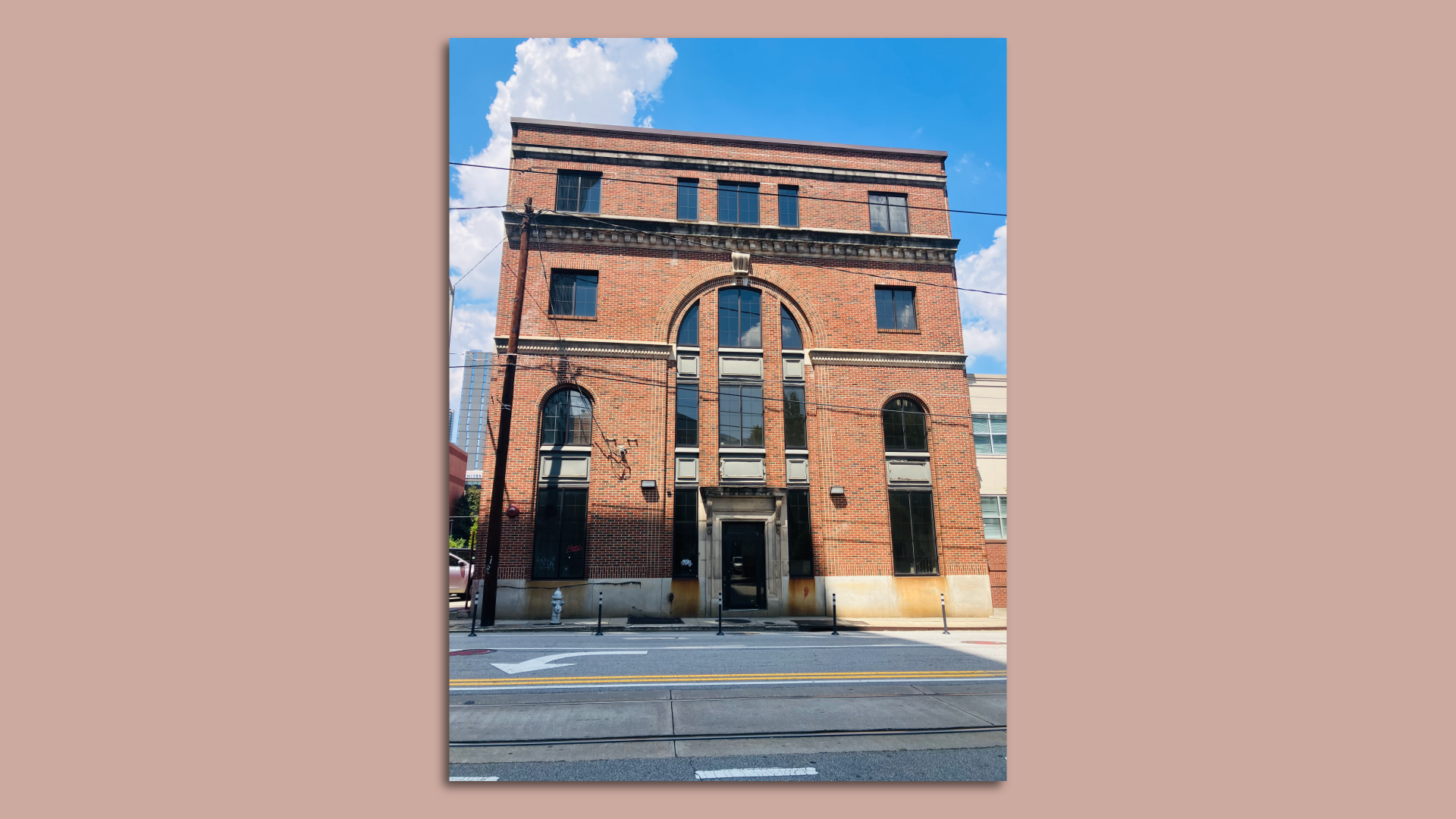
148 Edgewood Ave. in Atlanta. Photo: Kristal Dixon/Axios
Georgia State University is weighing feedback on its proposal to demolish a nearly 100-year-old building in a historic district and turn it into a parking lot.
Why it matters: The building, at 148 Edgewood Ave., is within the local Martin Luther King Jr. Historic District and is part of the larger context of preserving commercial and residential spaces that help tell the story of the Civil Rights Movement in Atlanta, said Kyle Kessler, a resident who is opposed to the university's plan.
- "So, any building that we lose of that era does irreparable damage to being able to tell that story through the built environment," he told Axios.
What they're saying: David Mitchell, executive director of the Atlanta Preservation Center, told Axios that the building is "part of the fabric of Auburn Avenue [and] part of the fabric of Edgewood."
- He also said an adaptive reuse of the building would be a suitable alternative to tearing it down.
Context: The building was constructed as a substation in 1926 by the company now known as Georgia Power to supply electricity to downtown, said Kessler, who created a petition to stop the proposed demolition.
- As of Tuesday, the petition had 752 signatures.
- The power company sold the building to Georgia State in 1966, and the university has mostly used it for storage, Kessler told Axios.
- Kessler said the state's Historic Preservation Division determined that the building qualifies to be individually included on the National Register of Historic Places.
Friction point: State law requires the university to hold a public hearing if at least 100 people make such a request, and as of last week, no hearing date had been scheduled, Kessler told Axios.
- Kessler, who lives in downtown, said there are a few other former substation buildings across Atlanta that were constructed in a similar style, and they all tell the story of power companies trying to keep up with increasing electricity demand in a growing city.
What's next: A spokesperson for Terracon, an environmental consulting firm that's working with Georgia State on the project, said the university will decide next steps after it is finished evaluating feedback.