Jimmy Carter at 100: What life was like in Georgia in 1924

Add Axios as your preferred source to
see more of our stories on Google.
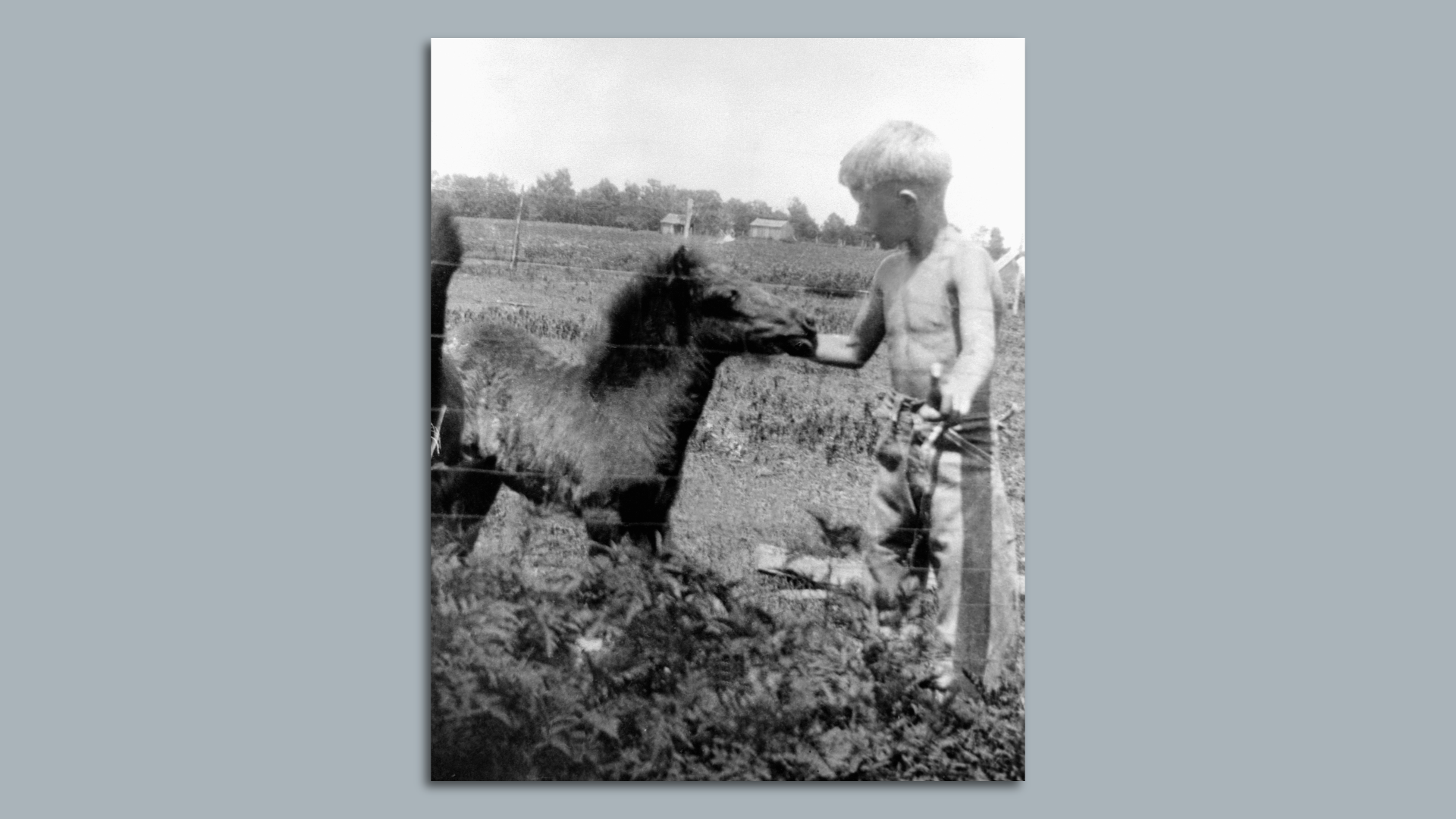
Jimmy Carter as a boy petting a colt in a field in the 1920s. Photo: Corbis via Getty Images
It's Oct. 1, 1924, and the nation's longest-living president was just born. What was life like for the average Georgian 100 years ago?
We can start with the obvious: There was no internet, cellphone service or social media. Electricity was sparse in rural parts of the state.
- Former President Jimmy Carter grew up on a farm without power and indoor plumbing.
- Georgia's economy was powered by the agriculture industry.
The big picture: World War I had ended six years earlier, and the "Roaring '20s" were in full swing.
- Prohibition, which was ratified as the 18th amendment to the U.S. Constitution, went into effect four years earlier, as did the 19th amendment granting women the right to vote.
Zoom in: While the state's cotton farmers saw their crops in high demand during the war, the 1920s brought that to a screeching halt.
- The price of the crop dropped from 35 cents per pound to 17 cents per pound by the end of the war, according to GPB Resources.
- The boll weevil, a pest first discovered in Georgia in 1915, decimated the cotton industry, which would not begin to recover until the late 20th century.
Politics: Even though Atlanta and other urban hubs had the most people, voters and elected officials from rural areas determined who would run the state thanks to the county unit system.
Yes, but: Jim Crow laws ruled every facet of life for Georgians. Black residents were denied equal protection under the law and could not vote.
- Sharecropping was a common way of life in rural Georgia and prevented many Black and poor white people from realizing their economic dreams.
- Legalized segregation prevented Black residents from using the same schools, libraries, parks, restaurants, shops and public transportation in the same manner as white people.
- The Ku Klux Klan was a prominent force in Georgia society; Gov. Clifford Walker, who was re-elected in 1924, was known for his membership in the racist organization, according to the New Georgia Encyclopedia.
Pop culture: Hollywood's Silent Era would last another three years.
- Margaret Mitchell's "Gone with the Wind" wouldn't be published for another 12 years.
- Charlie Chaplin, Douglas Fairbanks and Mary Pickford were just some of most well-known movie stars in the 1920s.
- Jazz music dominated the decade.
- TV had not been invented yet; people huddled around the radio to listen to shows, music and the news.
Fun fact: Two days after Jimmy Carter was born, Franklin D. Roosevelt made his first trip to Warm Springs, Ga. — about 70 miles from Plains — in the hopes of treating his polio.
- The future president would later build a retreat in this small Georgia town, known as Roosevelt's Little White House.