Gesundheit! Atlanta's fall allergy season ramps up


Add Axios as your preferred source to
see more of our stories on Google.
If you're feeling run down lately, a plant — not an illness — may be to blame.
Why it matters: Climate change is making Atlanta's allergy seasons longer and more intense. This fall is a prime example.
Driving the news: It's not unusual for weed pollen to spike this time of year, causing fatigue, itchy eyes, sneezing and scratchy throats.
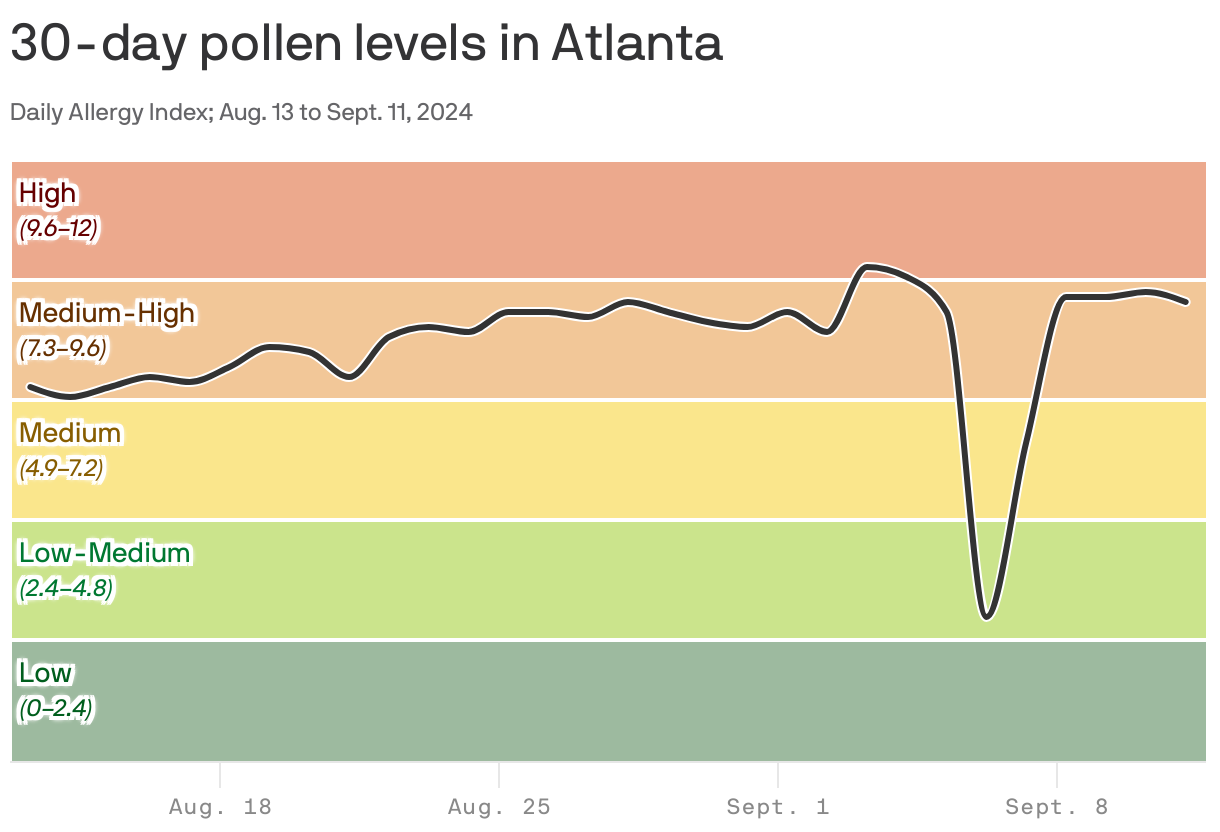
By the numbers: The amount of pollen in local air has been medium-high nearly every day since Aug. 13, according to Pollen.com. Ragweeds, chenopods and nettle are the top allergens.
- After a sharp dip in early September, counts have spiked.
Relief is coming: Fall allergy season typically tapers when frost arrives in late October or early November.
Zoom out: A 2023 Emory University study over a 26-year period found that Black patients in Atlanta were almost twice as likely to go to the emergency room for pollen-related allergic asthma as white patients.
Pro tips: Newer antihistamines like Claritin, Allegra and Zyrtec offer relief without the drowsiness associated with older antihistamines like Benadryl. They can be combined with nasal steroid sprays like Flonase.
- Several days of continuous therapy may be necessary to curb symptoms.
- Closing windows in the morning and showering before bed can reduce exposure.
- Sign up for local pollen alerts.
The big picture: Worsening allergy seasons are a concern nationwide. NOAA researchers are developing a new pollen forecasting model, the first of its kind for a federal agency.