Atlanta's idyllic spring seasons are getting warmer



Add Axios as your preferred source to
see more of our stories on Google.
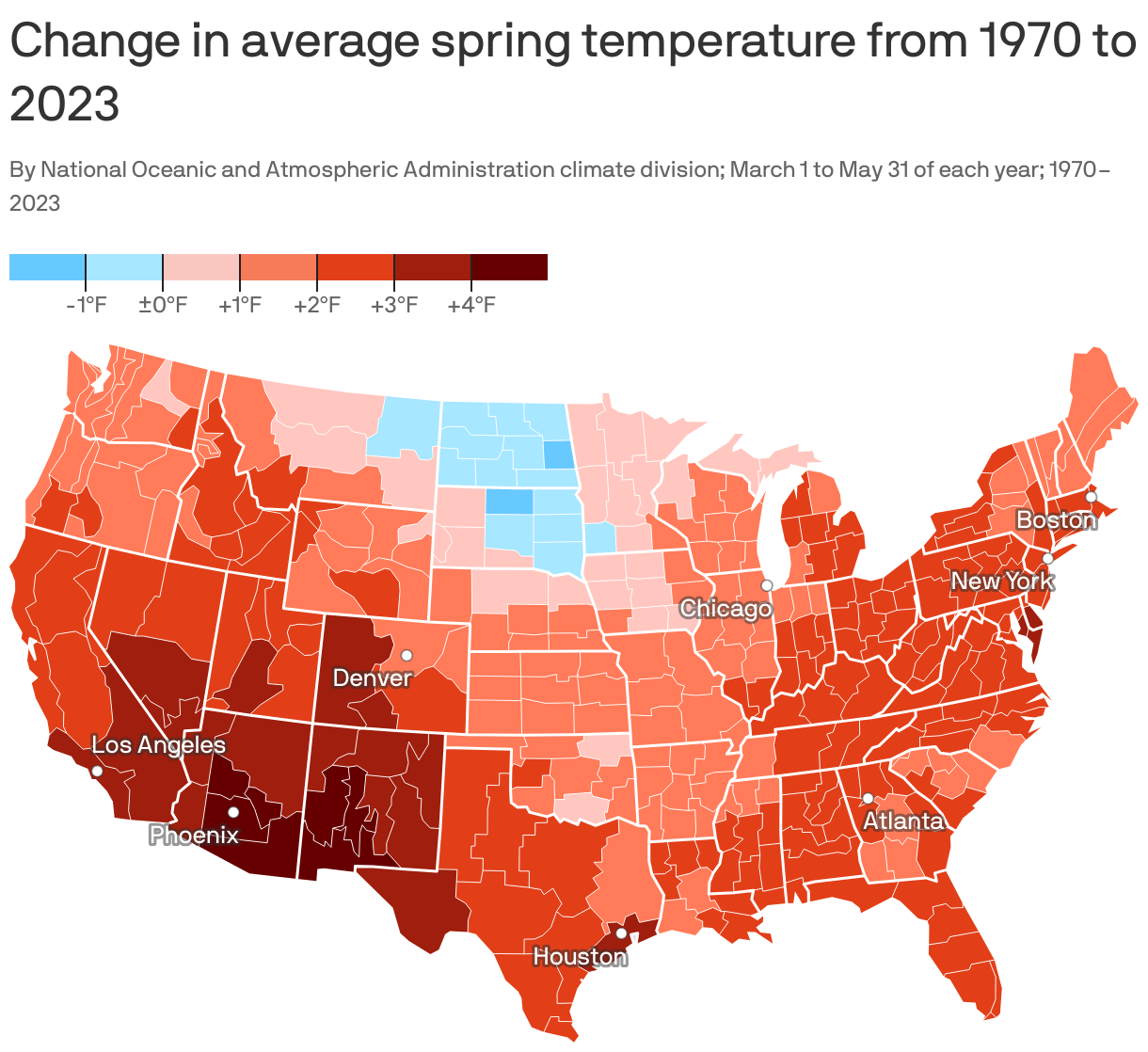
Atlanta's spring seasons are getting warmer — a trend reflecting human-caused warming.
Why it matters: Much of the seasonal climate change discussion is focused on summer and winter, when temperatures are typically at their annual high and low extremes.
- But the "between seasons" — Atlanta's not-to-be-missed (actual) spring and fall — are affected too.
By the numbers: Springtime in Atlanta warmed by 1.5°F on average between 1970 and 2023, per Climate Central, a climate research and communications nonprofit.
- That's cooler compared to warming of 2.2°F on average across nearly 230 U.S. cities but trending upward.
Zoom in: Heat waves, sudden storms and flash floods are landlocked metro Atlanta's biggest threats from climate change.
- The city's climate strategy hinges on transitioning City Hall to 100% clean energy by 2035. As of December 2023, however, the city was falling short of its 2025 goal.
Stunning stat: Spring has gotten notably warmer in the American Southwest, where average seasonal temperatures have risen by more than 6°F in some places.
What it did: The group's analysis is based on NOAA data and looks at meteorological spring, which begins March 1 and ends May 31.