Georgia's birthrate is declining


Add Axios as your preferred source to
see more of our stories on Google.


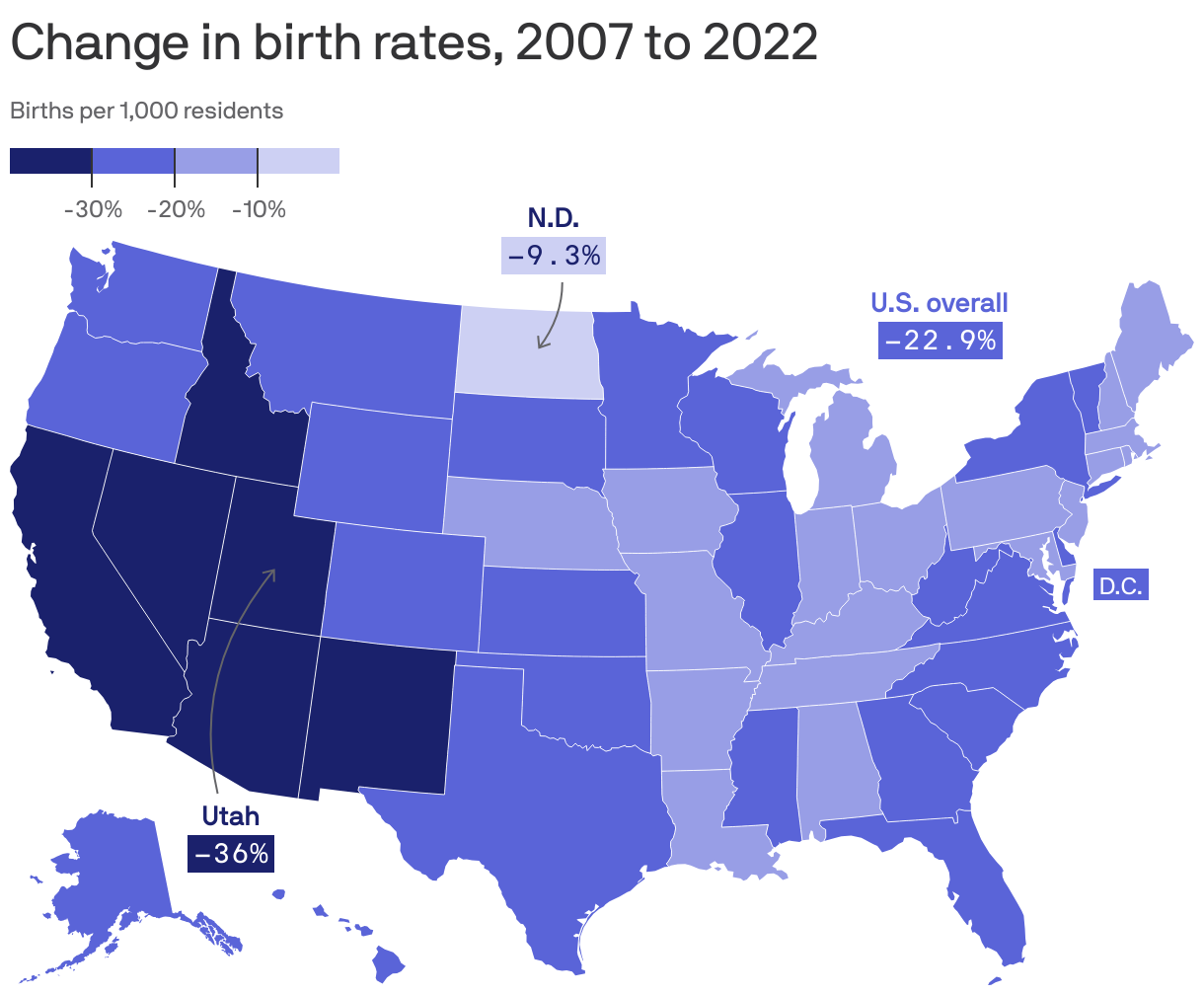
Georgia's birthrate dropped significantly between 2007 and 2022 — falling nearly 29%, according to new CDC data.
Why it matters: The birthrate is a closely watched figure for myriad reasons.
- It tends to fall as income rises, which can be an indication of better access to contraception, family planning and abortion care.
- And it tends to be lower in societies with higher rates of women in the workforce.
The big picture: Georgia's decline in birthrate is in line with what's happening across the country. During the same time period, the nationwide birthrate fell from 14.3 births per 1,000 people to 11.1, or nearly 23%.
Threat level: Some fear that if the birthrate dips too low, it will bring about a crisis where there are too few young people to care for an aging populace. (This is a particularly salient issue in Japan, which has among the world's oldest populations and where the birthrate fell to a record low last year.)
The intrigue: In the years before the COVID-19 pandemic, the birthrate across the U.S. and in Georgia was steadily declining year over year (except for a slight bump in 2014).
- While it dropped from 11.4 in 2019 to 11.0 in 2020, it remained flat in 2021 — and even ticked up slightly in 2022, to 11.1.
The bottom line: It'll take a few more years before the pandemic's impact on birthrates is fully understood. In the meantime, it seems likely the overall rate will resume its downward trend as post-pandemic normality continues settling in.