Few Georgians know the new suicide prevention lifeline exists one year after launch


Add Axios as your preferred source to
see more of our stories on Google.
Illustration: Eniola Odetunde/Axios
Only about 16% of Georgia residents have a complete understanding of the national suicide prevention hotline a year after it launched, according to a new survey conducted by the Georgia Department of Behavioral Health and Developmental Disabilities.
Driving the news: The survey, which was conducted in May, shows 31% of respondents were aware of the 9-8-8 number while 54% "correctly understood its role as the Suicide and Crisis Lifeline," the agency said Tuesday.
Why it matters: Dialing the national suicide prevention hotline became easier last year, but answering some of those calls has proven difficult for crisis workers in Georgia and other states, Axios' Sabrina Moreno reports.
- 13.4% of the more than 11,000 988 calls made across Georgia went unanswered between April and May this year, according to a new analysis from health research outlet KFF.
What they're saying: The state's survey results show DBHDD needs to do more to improve awareness, Commissioner Kevin Tanner said in a statement.
- "It's the easy button for access to mental health services, and it’s going to take resources and a commitment to continue building out this network," he added.
Zoom in: DBHDD said in a release earlier this month that its partners, on average, answer calls within 10 seconds, despite a 12% increase in demand since the lifeline launched a year ago.
- DBHDD said it has invested close to $56 million to build out the system, including hiring more counselors who can answer calls and expanding access to mobile crisis response teams.
Yes, but: Without more outreach and resources, 988 could languish as the nation continues to grapple with its mental health crisis.
- Even as we hit the service's one-year mark, few states have established long-term funding commitments to sustain it, Moreno reports.
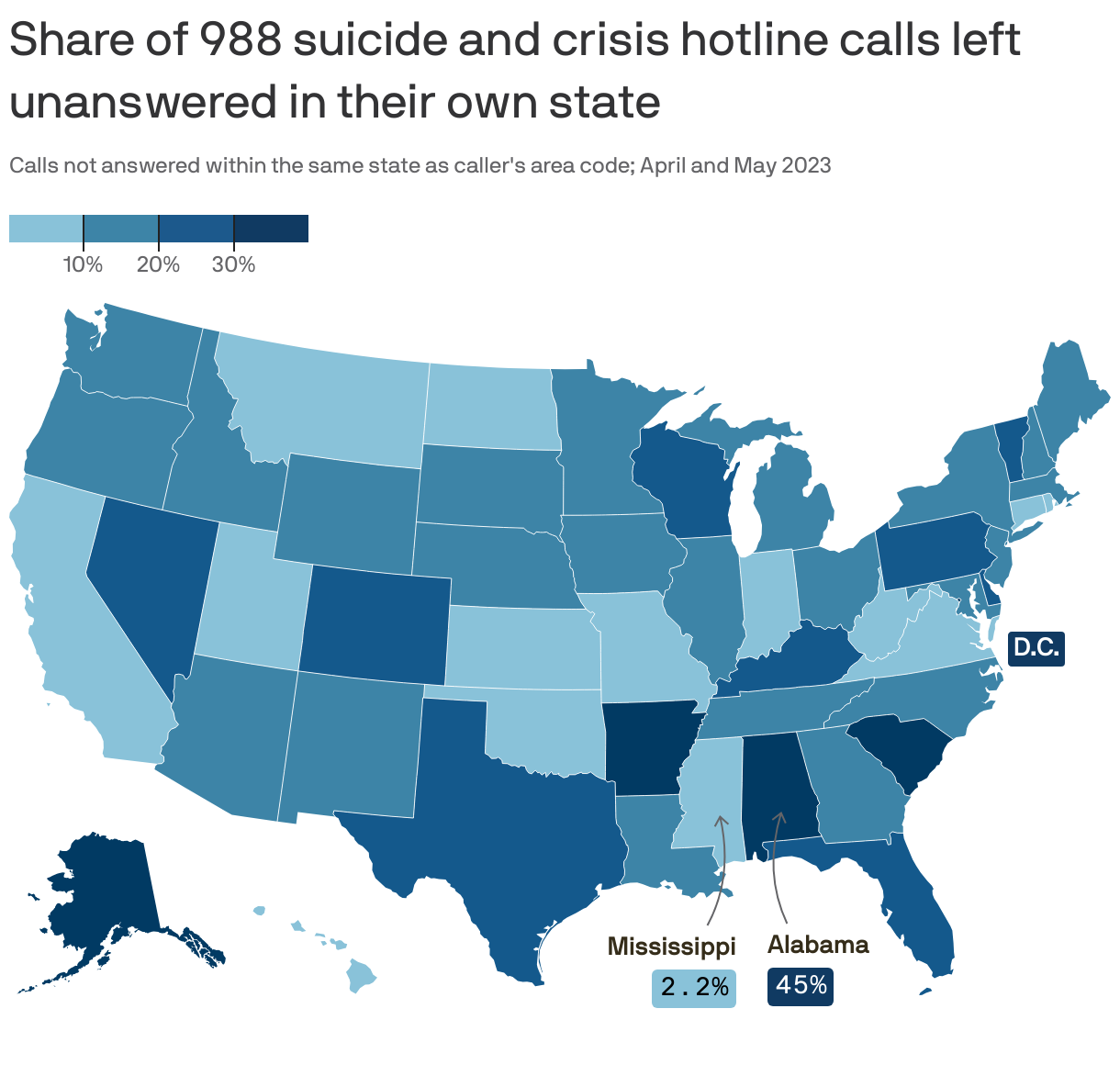
Still, since the National Suicide Prevention Lifeline was replaced last year with an easier-to-remember number, 988 has been contacted nearly 5 million times nationwide — a number officials, mental health advocates and call center leaders say they’re pleased with.
Zoom out: Plans to use some of the nearly $1 billion in federal funding for a nationwide public service campaign haven't materialized, partly due to early concerns that marketing 988 could overwhelm the lifeline past capacity.
- Ahead of its launch, fewer than half of public health officials charged with deploying 988 said they were confident they had the necessary staff to field the expected surge in calls.