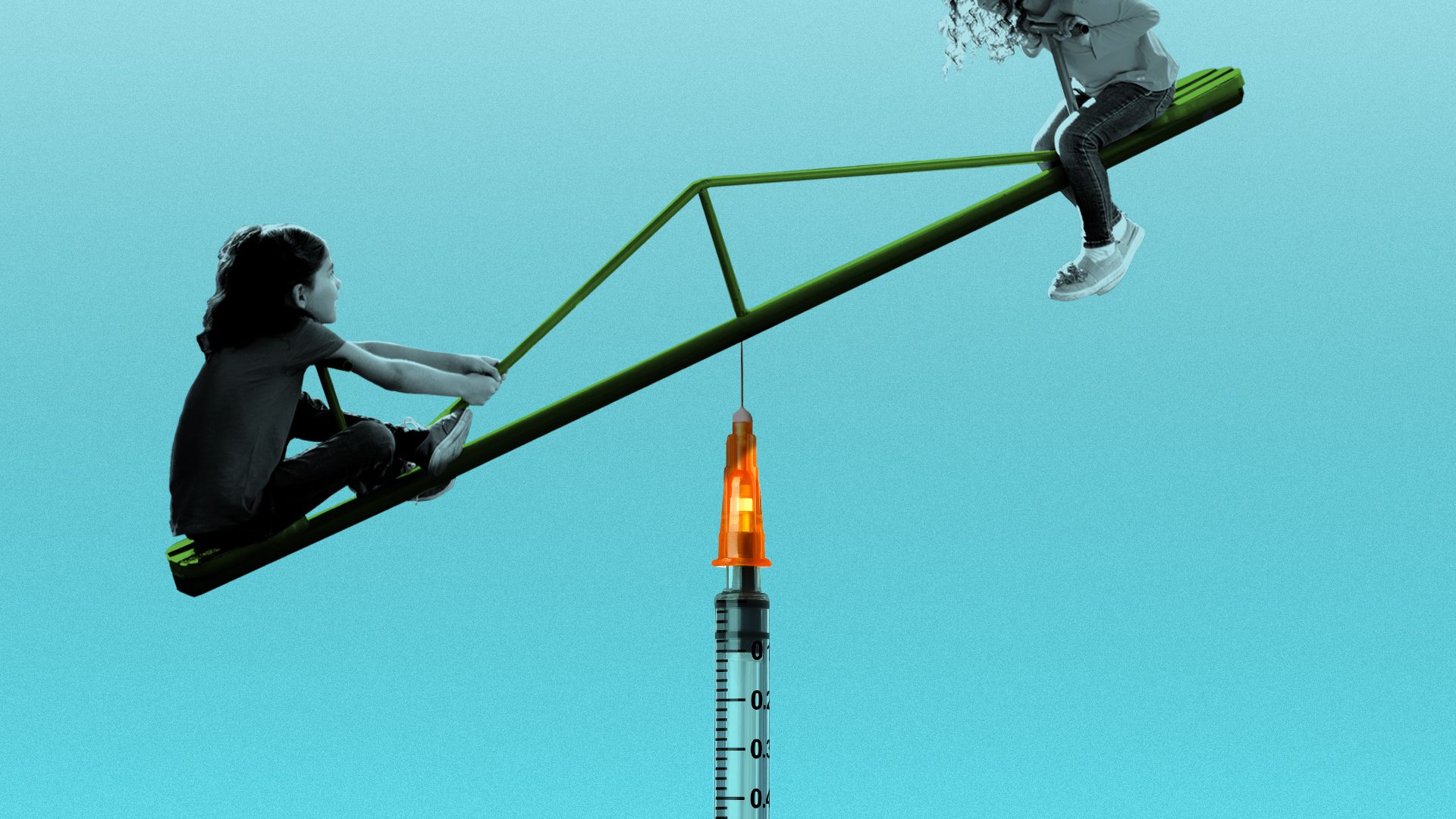
Vaccination rates among American kindergartners decreased during the 2025–2026 school year for all tracked vaccines, the Centers for Disease Control and Prevention reported on Monday.
Exemptions from getting one or more vaccines increased in 41 states and the District of Columbia, growing to 4.2% from 3.6% the year before.
The early days of the cyclospora outbreak were dominated by uncertainty about what was safe to eat and what wasn't, with both social and traditional media filled with speculation and panic-inducing headlines.
Why it matters: Today's media ecosystem abhors a vacuum. Whenever there's a lack of official, verifiable information, speculation and disinformation will rush in.
Young people raised on swiping, DMing and streaming are doing something bold: going out.
Why it matters: Amid a loneliness epidemic, millennials and Gen Zers are craving IRL connection — enough to show up for meetups built around activities once considered solitary, or "grandma hobbies."
America is experiencing its biggest prescription drug price deflation in generations.
Why it matters: By one important measure, there is a striking reversal underway for one of health care's most stubbornly expensive necessities amid a major Washington push to lower drug costs.
One of health care's biggest administrative hassles — waiting for an insurer's approval for doctor-ordered care — is on the verge of getting a technological fix.
Why it matters: The federal government's long-promised effort to modernize prior authorization is beginning to show up in the software doctors use every day.
New York Rep. Alexandria Ocasio-Cortez is laughing off "Woke 1." But she's carrying baggage from the 2020 era of cultural progressivism that some Democrats say is an obstacle to a future presidential run.
Why it matters: AOC's pivot to the cultural center — which she began to roll out last week in a high-profile ABC interview by saying, "Woke 1 was crazy" — is potential damage control for her past remarks about law enforcement, immigration and a range of social issues.
My wife, Autumn, has spent nearly a quarter of the past four years in ERs and hospitals, untangling and battling three chronic conditions — and a shamefully broken U.S. medical system.
We live in Washington, D.C., with top-rated hospitals in our backyard. Yet her experience has been eye-opening and often horrifying, especially for a nation that spends twice as much on medical care as our rivals.
What it's like: ERs so hauntingly jammed she's often stacked like cargo in hallways, on a stretcher, waiting double-digit hours for care.