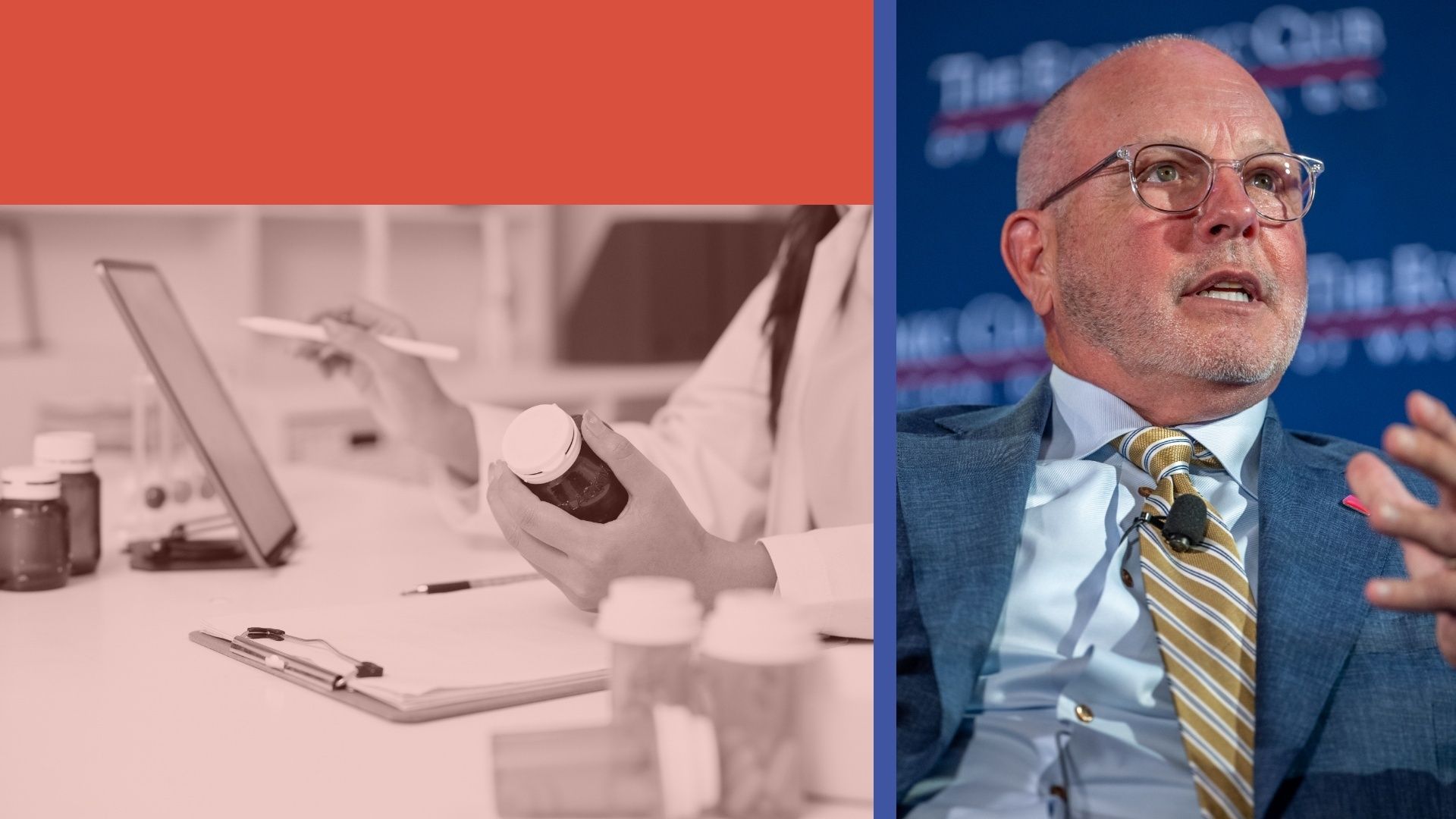
Sweeping changes in Affordable Care Act and Medicaid markets are hitting the balance sheets of some of America's largest health care companies, based on quarterly earnings issued this week.
Why it matters: Insurers and health systems already are feeling the effects of significant enrollment drops and changes in who's paying for care.
Toronto pedestrians walk as wildfire smoke turns the skies orange. Photo: Cole Burston/AFP via Getty Images
The wildfire smoke drifting into the eyes, throats and lungs of millions of Americans and Canadians this week is a stark reminder that the planet is changing in unsettling ways.
The smoke, from wildfires raging in northern Minnesota and Canada, is causing dangerously bad air across the Midwest and Northeast — and could soon waft elsewhere.
Air quality alerts have been issued in New York, Chicago, Toronto and more, with officials urging folks to stay inside.

In the 1980s, when my father was diagnosed with cancer, he did something that surprised everyone who knew him: He joined a support group.
This was out of character. He certainly was not, as I remember him, a man who would naturally seek comfort in a room full of strangers.
But the people in that room must have offered what the rest of us could not.
The big picture: According to the Mayo Clinic, the benefits of support groups can include feeling less lonely, less judged and less distressed, and gaining a sense of empowerment, control or hope.
Wildfire smoke is degrading air quality across the United States, exposing millions to short- and long-term health risks.
Why it matters: Tiny particles in wildfire smoke can increase the risk of heart and lung disease, worsen chronic conditions and contribute to long-term health problems.
The U.S. moved closer to making daylight saving time permanent this week — but the potential side effects are prompting renewed debate.
Why it matters: Permanent daylight saving time would affect far more than clocks, possibly impacting sleep, commuting, school schedules and religious observance.
CVS Health is betting it can drive customer engagement with an AI assistant it developed with Google to help schedule checkups, fill prescriptions and check what insurance covers.
Why it matters: As the biggest names in health care rush to build AI agents to serve as trusted guides to an increasingly fragmented system, CEO David Joyner is betting the new Health100 platform can become the industry standard, regardless of where people get their care.