Tuesday's health stories

Axios Live: North Carolina faces health care funding, staffing gaps
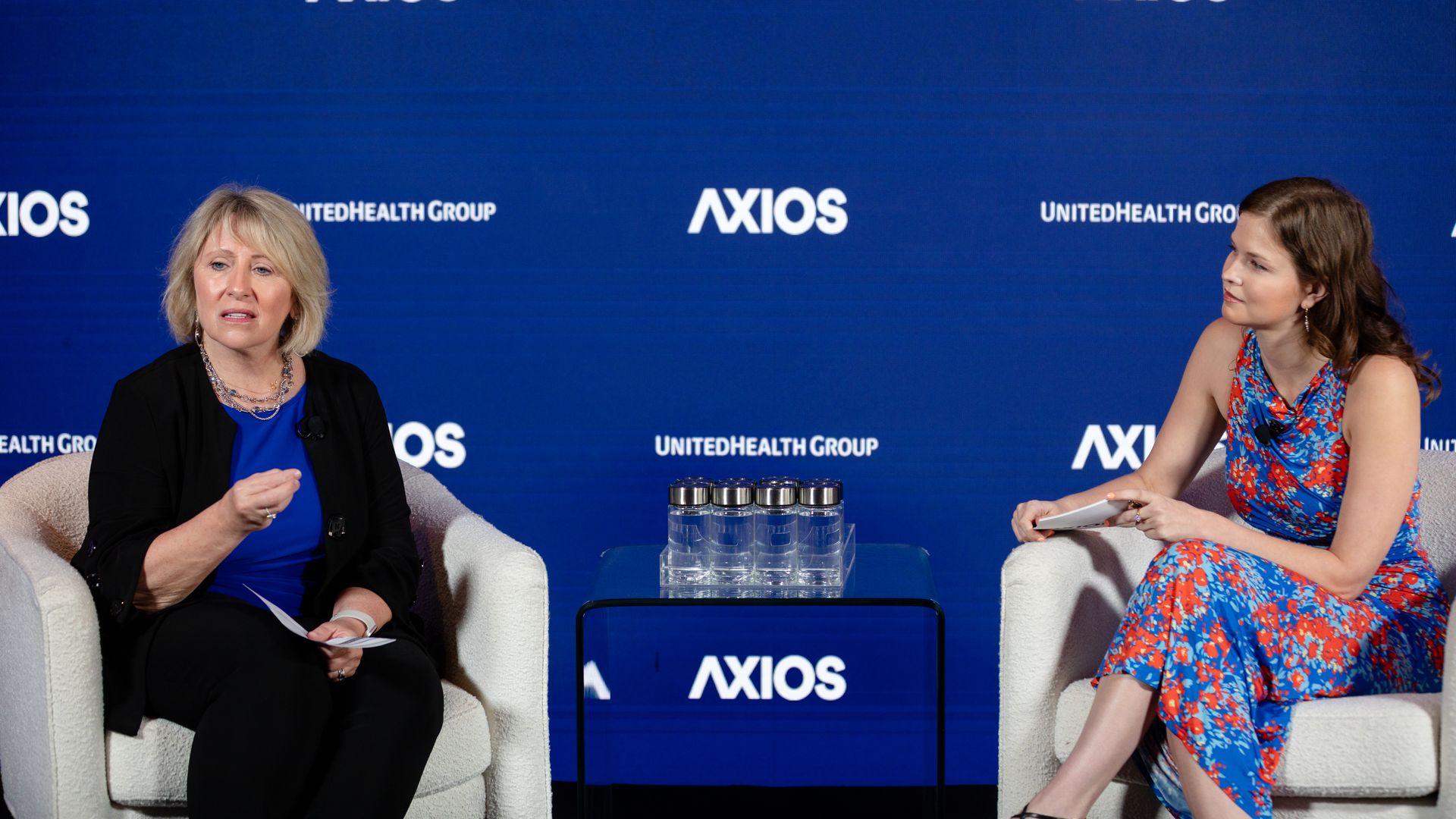
RALEIGH, N.C. — Health leaders at an April 16 Axios event warned that funding uncertainty and workforce shortages are colliding in the state.
Why it matters: An inability to pay providers, augment care centers, and train new staff threatens the quality of care for residents across North Carolina.
Axios' Mary Helen Moore and Caitlin Owens moderated conversations with North Carolina Healthcare Association CEO Josh Dobson, North Carolina Nurses Association CEO Tina C. Gordon and the North Carolina Office of Rural Health director Margaret Sauer. The event was sponsored by UnitedHealth Group.
Driving the news: The North Carolina General Assembly convenes Tuesday to pass an overdue state budget that will determine Medicaid funding.
By the numbers: North Carolina is projected to face $40 billion in budget cuts over the next 10 years.
- 3.1 million North Carolinians rely on Medicaid coverage.
The staffing bottleneck is real, with 80,000 qualified nursing applicants turned away in 2024 due to limited school capacity, according to Gordon.
What they're saying: "There's a false narrative … that all hospitals and all providers are flush with cash and there's all this money. That's just not the case," Dobson said.
- "We have a lot of burnout in the workplace for all clinicians. … We have a lot of retirements from an aging workforce, and we have a significant increase in need," Gordon said.
Threat level: If the current conditions aren't addressed, "hospitals close, patients don't have places to go for care," Gordon said.
The bottom line: Providers "want to be able to take care of their patients," Sauer said. "We just want to do the best thing, and sometimes we can't if we don't have the money."
Content from the sponsor's segment:
In a sponsored View From the Top conversation, Danielle Gray, UnitedHealth Group executive vice president of corporate and external affairs, and Meg Zomorodi, University of North Carolina at Chapel Hill professor and senior associate provost for academic excellence, spoke to Axios publisher Nicholas Johnston.
- The organization announced a $3 million grant to UNC's Robert A. Ingram Institute for Healthcare Access.
- "Our community investment strategy is part and parcel of our mission … to help people live healthier lives and to help make the health system work better for everyone," Gray said.
- "Ingram's mission really centers around explore, employ and empower," Zomorodi said. "We can't be gap-filling. We need to actually be team building."

Steak n Shake goes full MAHA

Steak n Shake — the chain that proudly cooks its french fries in "100% beef tallow" — has just named a chief "Make America Healthy Again" officer.
Why it matters: It's the latest sign of how Robert F. Kennedy Jr.'s movement is influencing major food brands.

More than half of states now cover doulas under Medicaid
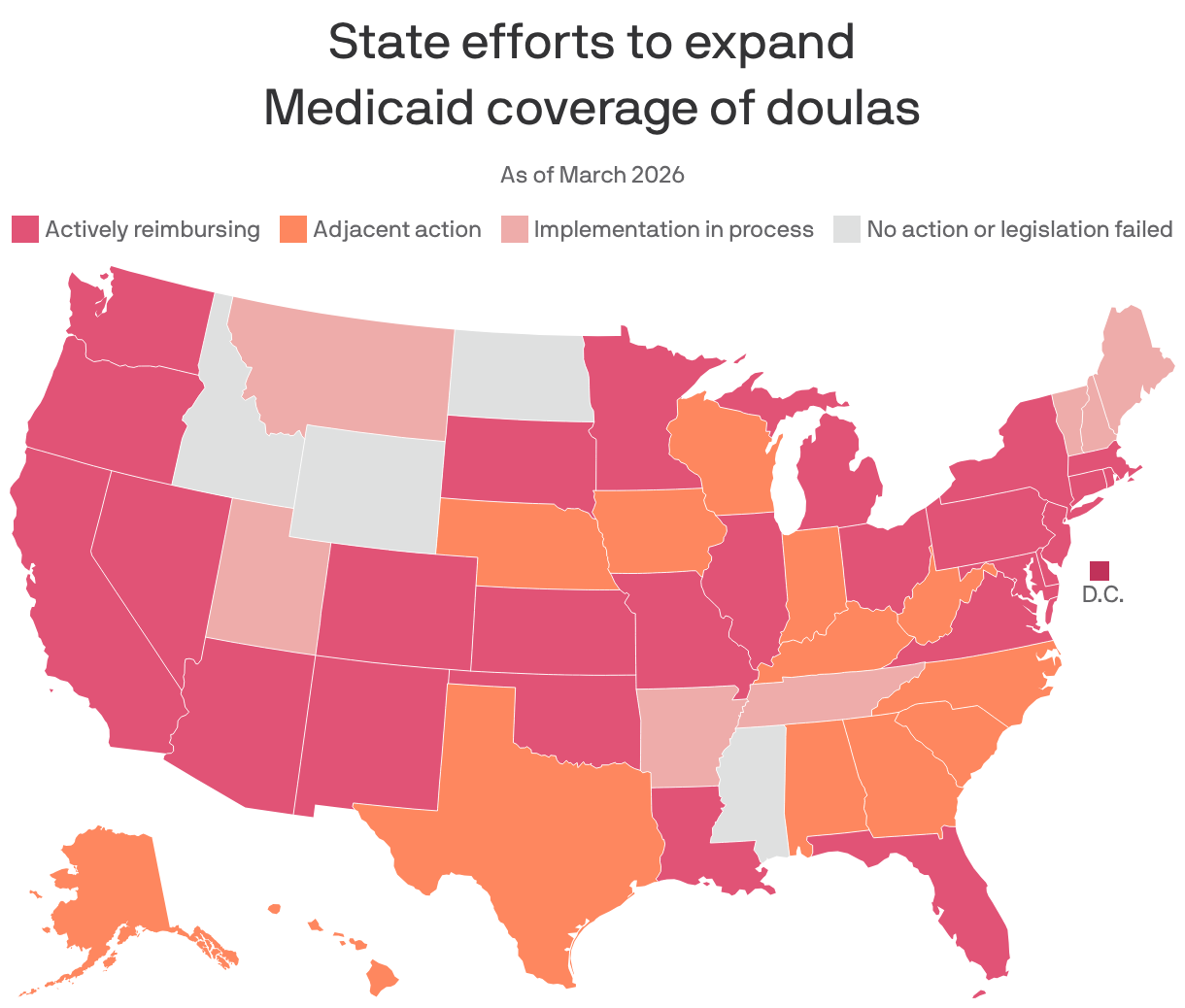
Doula care has gone from a niche birth option to a Medicaid-covered benefit in more than half of U.S. states.
Why it matters: Research has linked doula support to lower cesarean rates and fewer preterm births.
- And a new review of clinical trials published Tuesday in JAMA Network Open found doula support was most consistently associated with lower maternal anxiety, higher breastfeeding initiation and better postpartum follow-up care.

Amazon launches GLP-1 program as gaps in care emerge

Amazon's One Medical is rolling out a national GLP-1 program as demand for weight-loss drugs surges, the company announced Tuesday.
Why it matters: The boom in drugs like Ozempic and Wegovy is reshaping obesity care — but also exposing gaps in how patients are treated.
FBI's No. 2 calls on hospitals to share cyberthreat info

The FBI's No. 2 official told hospital executives Tuesday they need to step up information-sharing on cyberthreats as the agency works to disrupt attacks earlier.
Why it matters: Health care was the top target for ransomware and other cyberthreats last year, according to FBI statistics. Data breaches and attacks on hospitals shut down operations, delay time-sensitive treatment and risk harm to patients, and also cost health systems millions per incident.
Driving the news: FBI deputy director Andrew Bailey, a former Missouri attorney general, framed the threat through a law enforcement lens, emphasizing the disruption of criminal networks, "not just arrests and indictments."
- "We have to go on offense and disrupt the ecosystem that allows perpetrators to exist," Bailey told the American Hospital Association meeting in Washington, D.C.
- Bailey emphasized the need for close coordination with hospitals, including sharing threat intelligence to identify attacks earlier.
Between the lines: He pointed specifically to the threat of attacks by Russian-speaking "ransomware as a service" groups that operate with safe harbor from the Russian government.
- "We're at a point where they're attacking a hospital system and it's just normal, everyday routine transactions for these groups," he said. "For the hospital on the receiving end ... it's anything but."
- Major cyberattacks in 2025 hit Yale New Haven Health System and kidney care giant DaVita, among other providers.

Exclusive: Dems call for details on Trump drug price deals

Calls for more details about President Trump's drug pricing deals are intensifying, with Senate Democrats set to unveil legislation Tuesday as part of a push questioning whether the arrangements really help consumers.
Why it matters: The "most favored nation" deals with 16 pharmaceutical companies are a signature health policy accomplishment the administration is already touting ahead of the midterm elections.
Axios Live: AI could support child mental health — with the right guardrails
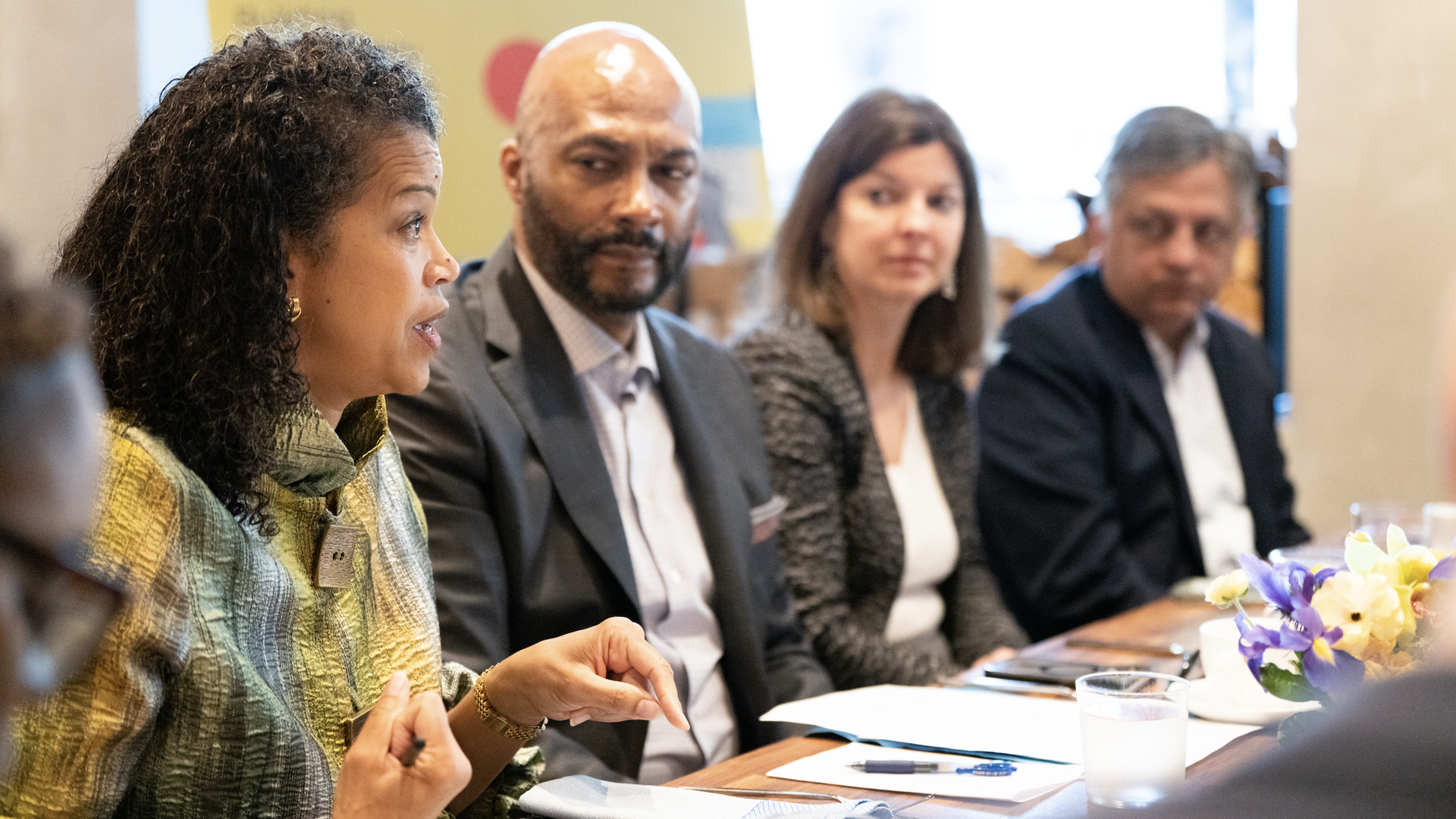
WASHINGTON, D.C. — AI tools like chatbots and agents could expand access to mental health support for children, as long as protections are put into place, public health, advocacy, and technology leaders said at an April 15 Axios event.
Why it matters: Youth and adolescent mental health is a worsening crisis in the United States, and AI could augment care for a struggling population.
Axios' Maria Curi and Megan Morrone moderated the Expert Voices roundtable, which was sponsored by Roblox.
Driving the news: Courts are holding some tech giants accountable for how their platforms influence young users at the same time as AI is introducing rapidly changing, largely unregulated products into children's lives.
By the numbers: More than 50% of people who reach out to Crisis Text Line, a free text-based mental health support service, are under the age of 18, according to the nonprofit's chief health officer Shairi Turner.
- In 2025, the number one topic of conversation for that age group was suicide.
- "One in three young people under the age of 14 who texted in" were doing so to talk about ending their lives by suicide, Turner said.
What they're saying: AI could help identify at-risk children and connect them with valuable resources.
- Sandy Hook Promise co-founder and co-CEO Nicole Hockley said her organization could use agents to scale the work they already do with local law enforcement and juvenile intervention to identify young people at risk for harming themselves and others.
- "I also think there is a way for us to teach the agents how to help recognize when someone needs help," she added.
Yes, but: "We've seen decades of regression when it comes to investments in mental health and youth," said Nicol Turner Lee, senior fellow and director of the Center for Technology Innovation at Brookings Institution.
- "We've sort of opened the door for certain companies to come in and to capture that attention," she warned.
- "The Silicon Valley Tech model doesn't apply to eight-year-olds," The Digital Economist CEO Navroop Kaur Sahdev added. "We're basically playing with their lives."
What's next: The industry needs to "get more stakeholders around the table and … figure out where everybody converges," Turner said.
Content from the sponsor's remarks:
"The world is increasingly complicated," Roblox CEO David Baszucki said, and "designing for the busy parent is really important" when it comes to keeping children safe online.
- "We're really excited [about] establishing what we call a global gold standard for healthy, safe, age-appropriate gaming," Baszucki added. "We continue to be optimistic about the future."
Drug ads face new scrutiny at FDA and on Hill
Prescription drug commercials are facing renewed scrutiny as the Trump administration and lawmakers from both parties seek new controls on ads that account for more than $10 billion in annual spending.
Why it matters: The U.S. and New Zealand are the only countries that allow direct-to-consumer pharmaceutical advertising, which critics blame for promoting unnecessary drug use and driving up health costs.