Tuesday's health stories

Medicaid effort to target undocumented immigrants may create enrollment hurdles
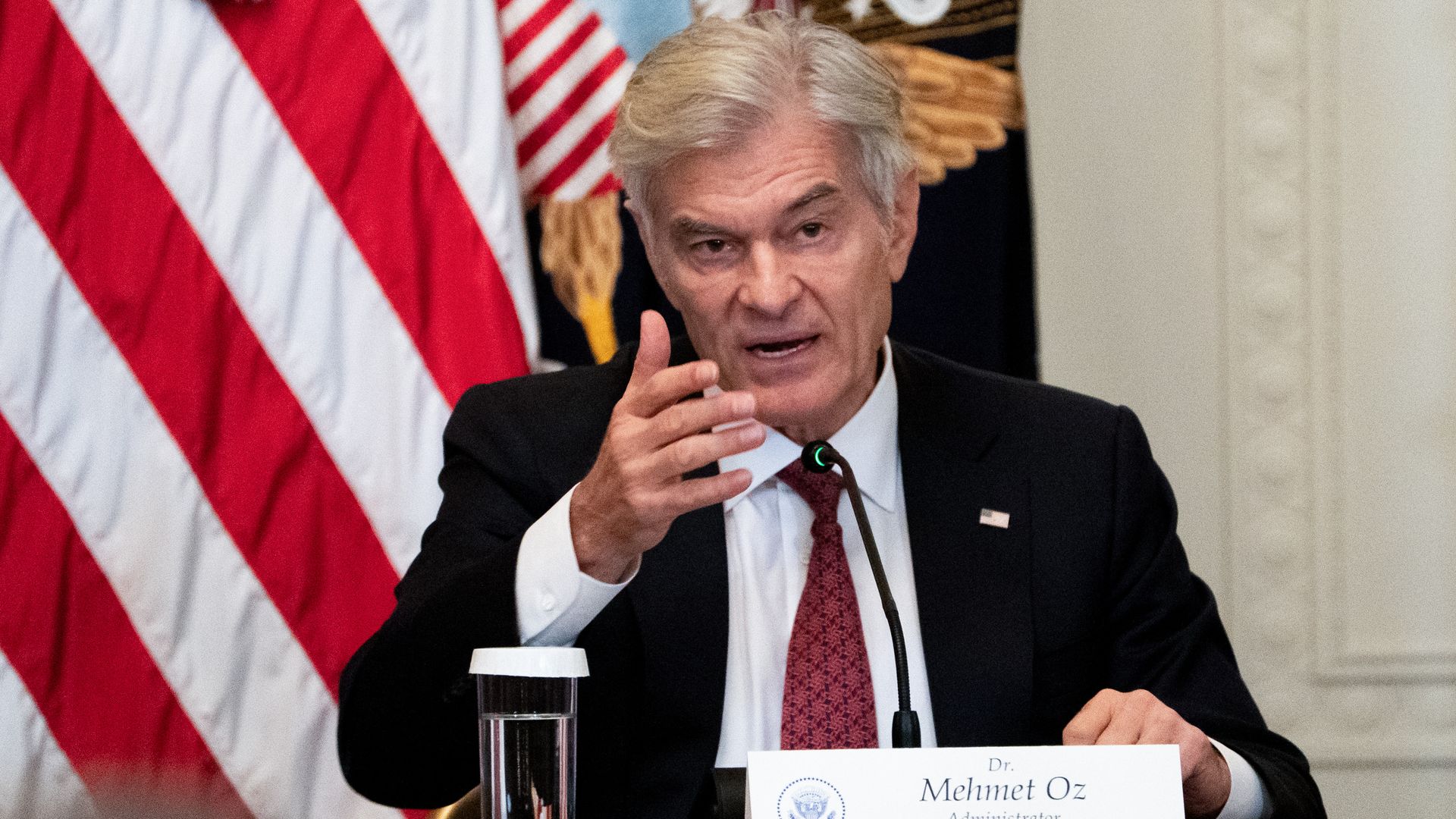
Federal health officials announced a new push on Tuesday to ensure that Medicaid and Children's Health Insurance Program (CHIP) enrollees are U.S. citizens or have a satisfactory immigration status.
Why it matters: The effort could create new administrative hoops for enrollees to jump through.
Driving the news: The Centers for Medicare and Medicaid Services will begin providing states with "monthly enrollment reports identifying individuals whose citizenship or immigration status could not be confirmed through federal databases," the Department of Health and Human Services said in a statement.
- The reports will draw on data from sources including the Department of Homeland Security's Systematic Alien Verification for Entitlements (SAVE) program.
- HHS emphasized that states are responsible for reviewing cases, verifying the immigration status of individuals on the CMS' reports, and "taking appropriate actions."
- All states will receive these reports within the next month, per the HHS.
Reality check: Traditional Medicaid coverage is not available to undocumented immigrants.
- "Undocumented immigrants are not eligible to enroll in federally funded coverage including Medicaid, CHIP, or Medicare or to purchase coverage through the ACA Marketplaces," per the non-partisan Kaiser Family Foundation.
- HHS did not respond to Axios' request for comment.
What they're saying: "Every dollar misspent is a dollar taken away from an eligible, vulnerable individual in need of Medicaid and CHIP," said CMS Administrator Dr. Mehmet Oz.
Between the lines: The change looks to put the burden of proof on the individuals whose immigration statuses the CMS cannot verify through the databases.
By the numbers: Despite the assertions of Oz — and other parts of President Trump's administration — there is not evidence that undocumented immigrants are broadly receiving Medicaid benefits they're not eligible for.
- Medicaid reimburses hospitals for emergency care provided to individuals who meet other eligibility requirements but lack eligible immigration status. Emergency spending rose less than 1% of total Medicaid spending between 2017 and 2023, according to KFF.
- Immigrants in the country legally may also qualify for Medicaid or CHIP, but face eligibility restrictions. There is a five-year waiting period for these modified forms of Medicaid and CHIP, which states can eliminate for children and pregnant people.
An early version of Republicans recently passed tax-and-spending bill would have cut federal payments to states that covered undocumented immigrants with their own funds.
- The provision was dropped after it was found to violate Senate rules.
- The White House claimed that the provision would "protect Medicaid for Americans by removing at least 1.4 million illegal immigrants from the program."
The other side: The 1.4 million figure "is unequivocally false," according to Georgetown University's Center for Families and Children.
- "The 1.4 million immigrants the White House presumably refers to are immigrants who will lose coverage due to reductions in state health care programs, funded by states and not by federal Medicaid dollars."

Eight Sleep raises $100 million, preps retail stores

Eight Sleep, a New York-based developer of smart sleep products, has raised $100m in Series D funding.
Why it matters: This comes just weeks after RFK Jr. said that the Department of Health and Human Services will launch a giant advertising campaign aimed at encouraging the use of wearables.

Abortion pill fight reaches pharmacy board rooms

A year after the Supreme Court preserved abortion pill access, the fight over dispensing mifepristone is shifting from courtrooms to boardrooms as anti-abortion forces press pharmacy chains not to sell the drugs.
The big picture: Costco last week said it won't stock mifepristone at its more than 500 pharmacies. Conservative groups are pushing other pharmacies — including Walgreens and CVS, which offer the pills in states where abortion is legal — to follow suit.

School reopenings bring more vaccine confusion

The new school year is bringing more ambivalence and confusion over children's vaccines, as shifting policies under HHS Secretary Robert F. Kennedy Jr. and lingering skepticism lead more parents to opt out.
Why it matters: The U.S. this year experienced the worst measles outbreak in 30 years, a large uptick in whooping cough and the highest number of pediatric flu deaths in more than a decade.

Trump's war on numbers

The Trump administration is undermining — or has stopped collecting — key, once-nonpartisan data that kept the public informed about the state of the nation.
Why it matters: From Congress to city halls to boardrooms, critical decisions rely on accurate government data and public trust in that data. Without it, leaders risk making costly mistakes that could affect millions.