Monday's health stories

Democrats unveil 2024 platform ahead of convention kickoff

The Democratic National Committee released its 2024 platform on the eve of the party's convention kicking off Monday in Chicago.
The big picture: The platform was written by the DNC's Platform Committee before President Biden bowed out of the 2024 race, and the document repeatedly references his successes and goals for a second term.

While you were weekending
💉 Pfizer's stumble on a combination flu and COVID shot is a plus for Moderna. (Barrons)
🧠 The CEO overseeing a closely watched psychedelic therapy spoke after her company was turned down by the FDA and had three published papers retracted. (Endpoints News)
📉 A data analytics firm that helps health insurers reduce reimbursements for medical bills is facing growing scrutiny from investors and in the courts. (NYT)

Odds of Alzheimer's diagnoses vary by region
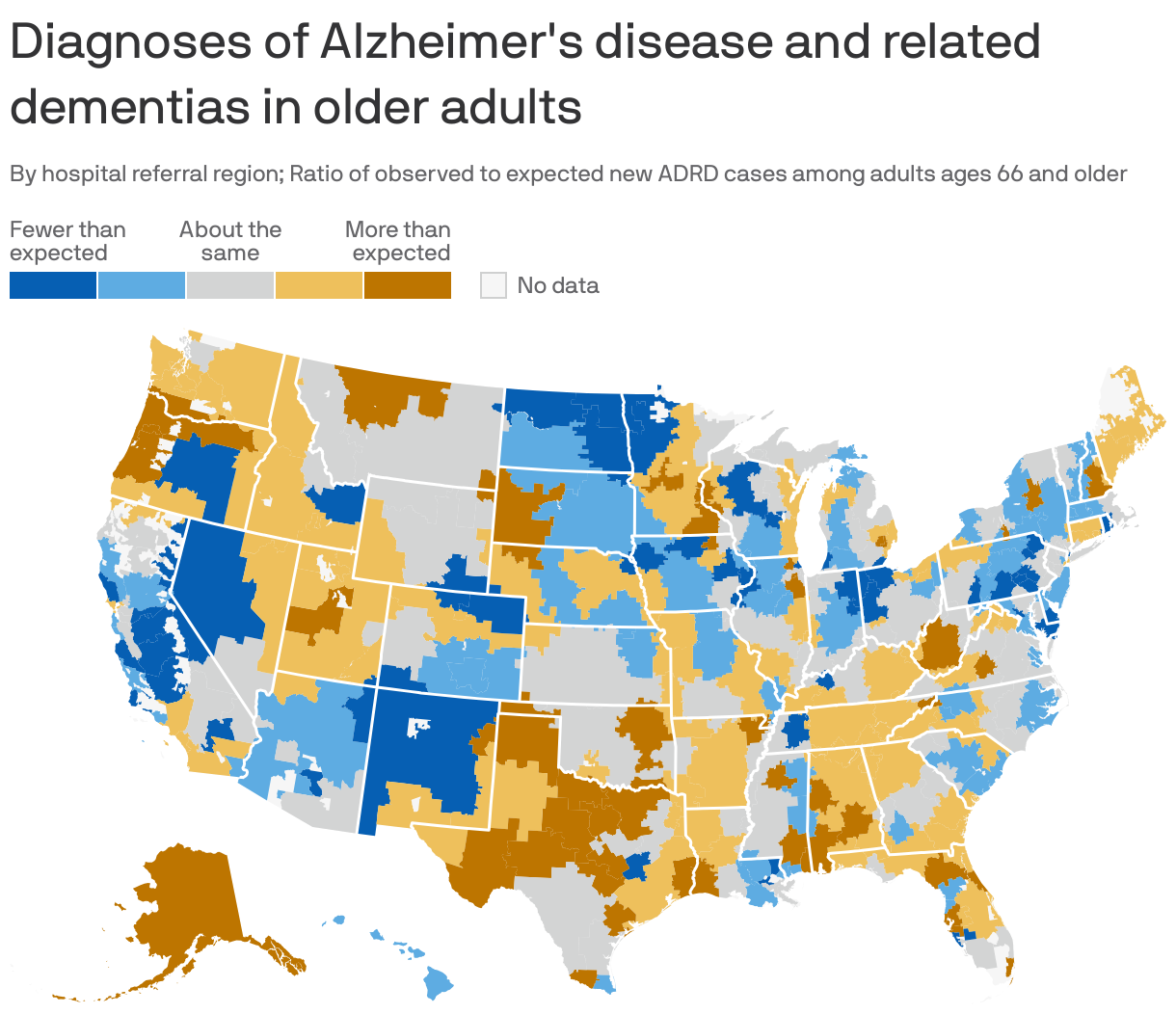
The odds of being diagnosed with Alzheimer's disease can vary widely depend on where you live, a new study finds.
Why it matters: Awareness of geographic variations is important for connecting patients with the services and care they need — and identifying possible shortcomings in diagnostic processes, researchers wrote in Alzheimer's & Dementia.
What they found: The University of Michigan-led study examined Medicare fee-for-service claims for roughly 4.8 million Americans who were 66 or older beginning in 2019.
- Researchers identified 419,646 beneficiaries with a dementia diagnoses, including 143,029 with a new diagnosis in 2019, and estimated "diagnosis intensity" — a ratio of expected cases compared to actual diagnoses — based on hospital referral regions.
- The highest difference between what was expected and diagnosed was in the South.
- Prior research showed the prevalence of dementia mirroring an area stretching from the Southeast to the Midwest known as the "stroke belt" where the population has higher cardiovascular risk factors and a greater proportion of Black residents.
- But adjusting for other factors, researchers found the South isn't a uniform risk zone and that there still are substantial geographic differences in Alzheimer's diagnoses.
- The variation in diagnosing intensity was especially pronounced among Medicare beneficiaries 66-74 years old and those who are Black and Hispanic.
The big picture: The number of Americans with Alzheimer's disease and related dementias is expected to jump from 6.7 million in 2023 to 13 million by 2060.
- Up to 60% of those living with dementia haven't been diagnosed, a problem that may be attributed to stigma or a belief that symptoms are part of normal aging.
- Variations in diagnoses partly hinge on the skill of clinicians making or communicating the diagnoses, the authors said.
Bottom line: Improving the ability to diagnose the disease early can provide more patients the opportunity for advance care planning, care coordination and access to new treatments.

More than 70 births came after uterus transplants
Women who received uterus transplants have delivered more than 70 infants worldwide since the first successful transplant in 2011, with 20 cases at a Texas medical center showing about the same success rate as with natural wombs, per new research in JAMA.
Why it matters: Uterine infertility affects about 1 in 500 women, typically leaving them with few options other than adoption or surrogacy where legally available.

Europe, China brace for new strain of mpox

Authorities in Europe and China are stepping up screening for the deadly new strain of mpox that's spread through parts of Africa and is showing signs of reaching beyond the continent.
Why it matters: Supplies of vaccines and tests could be quickly squeezed if there's a major outbreak, prompting appeals for donations — and for researchers to look for new countermeasures.