The official number of confirmed cases of the novel coronavirus in the U.S. just doubled — to 34 — but public health officials are pointing out that these are mostly people who've been repatriated.
Why it matters: As concerns grow about a global pandemic, officials from the Centers for Disease Control and Prevention want to make sure the message gets out: "We are not seeing community spread here in the United States," Nancy Messonnier says.
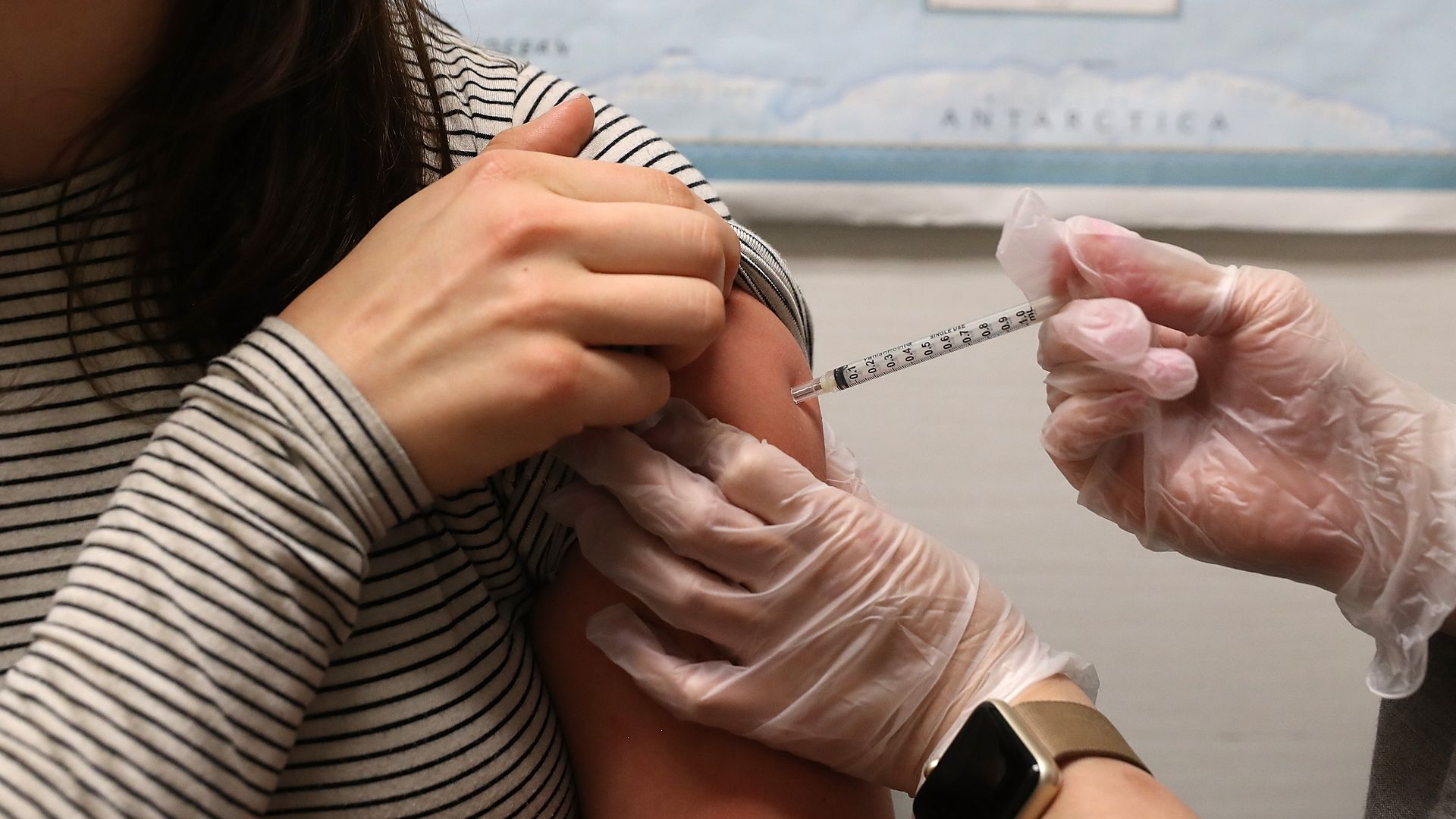
The big picture: Health officials typically treat a high rate of seniors, a vulnerable population during flu season, but this year, children and young adults have been more susceptible.
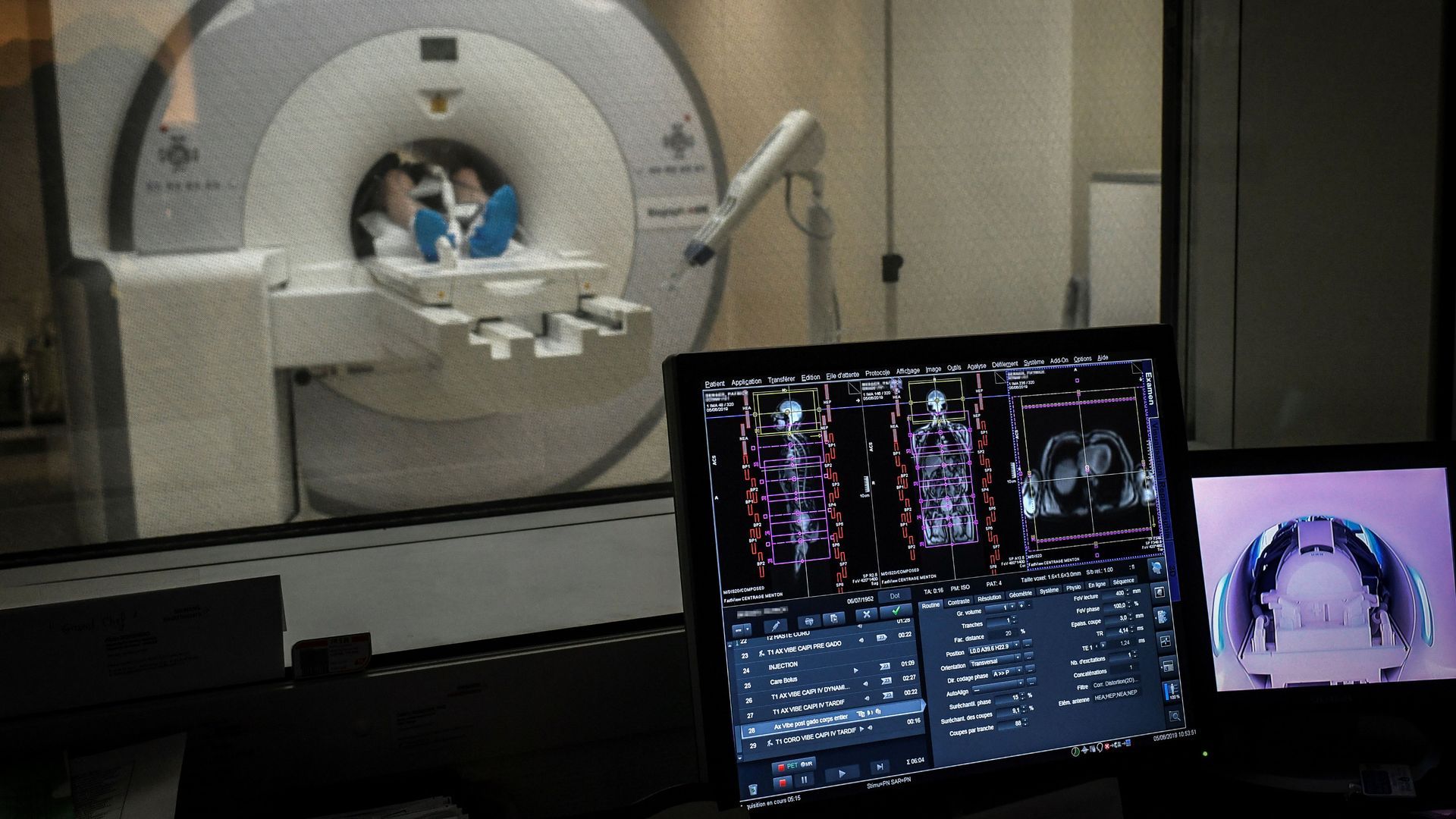
The novel coronavirus has put a halt to pretty much every health-related activity in parts of China, including elective surgeries like hip and knee replacements.
Between the lines: Medical device companies are starting to forecast large sales declines in their Chinese markets because people are staying at home.
A Silicon Valley startup is attempting to make executive physicals — which are frequently offered as part of C-suite compensation — available to a larger audience, STAT reports.
Between the lines: The $3,500 annual membership is cheaper than a $20,000 weekend at the Mayo Clinic, but is still expensive and still subject to the same criticism — mainly that it's unnecessary.
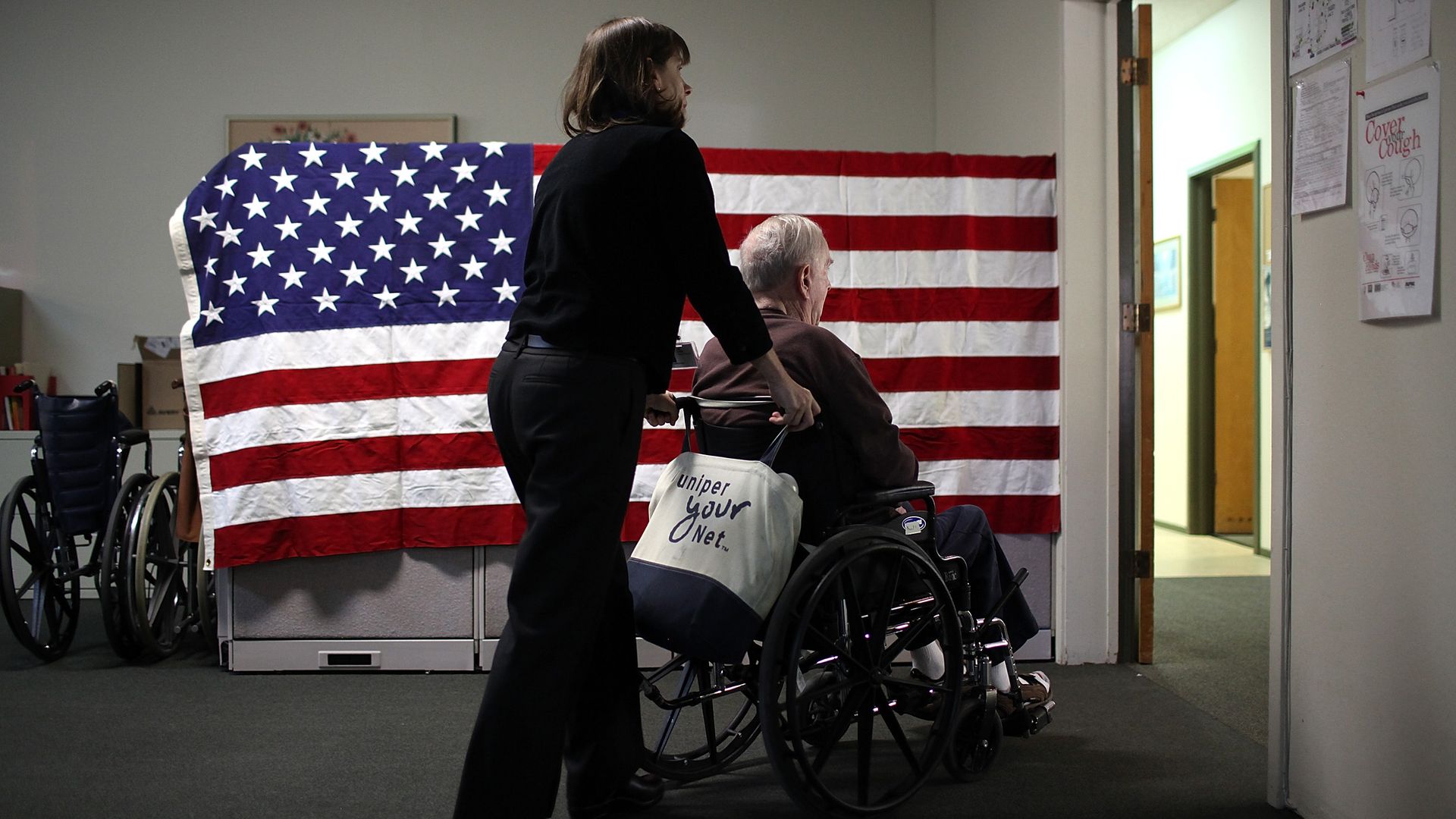
Why it matters: Unpaid caregiving can be physically, financially and emotionally draining, and the need is only increasing as Baby Boomers age. But caregivers who are themselves in poor health can only do so much, illustrating the limits of relying on unpaid, volunteer labor.
The problem of surprise medical billing — which Congress failed to solve last year — is about to get worse, thanks to a feud between an insurance giant and a company that employs thousands of doctors.
The big picture Parents who have babies in intensive care, women with high-risk pregnancies and people who need anesthesia could receive unexpected bills in the mail as a result of the fight between Mednax, the physician-staffing firm, and UnitedHealth Group.
UnitedHealth Group will be ending contracts with Mednax anesthesiologists, neonatologists and obstetricians in four states this year, affecting $70 million of revenue, Mednax said Thursday. Mednax and UnitedHealth did not immediately respond to questions.
Why it matters: If the two sides don't strike a new deal, Mednax doctors will be out-of-network for all people who have UnitedHealth insurance, regardless if those doctors work at in-network hospitals — putting patients at risk of receiving surprise medical bills from those Mednax doctors. Congress has not resolved surprise billing.
Having already turned 80 could be a huge deal for patients who have heart attacks, according to a new study in the New England Journal of Medicine and reported on by STAT.
Details: While 7% of Medicare enrollees who were a few weeks shy of their 80th birthday and who had been admitted to the hospital with heart attacks received bypass surgery, only 5.3% of patients who had just turned 80 did, the study found.
An estimated 50 million Americans have donated to crowdfunding campaigns for medical expenses, according to a new study.
The big picture: People without insurance often have to shoulder enormous bills all on their own, and out-of-pocket expenses are a burden even for people with insurance. Friends and family are a big part of the unofficial health care system.
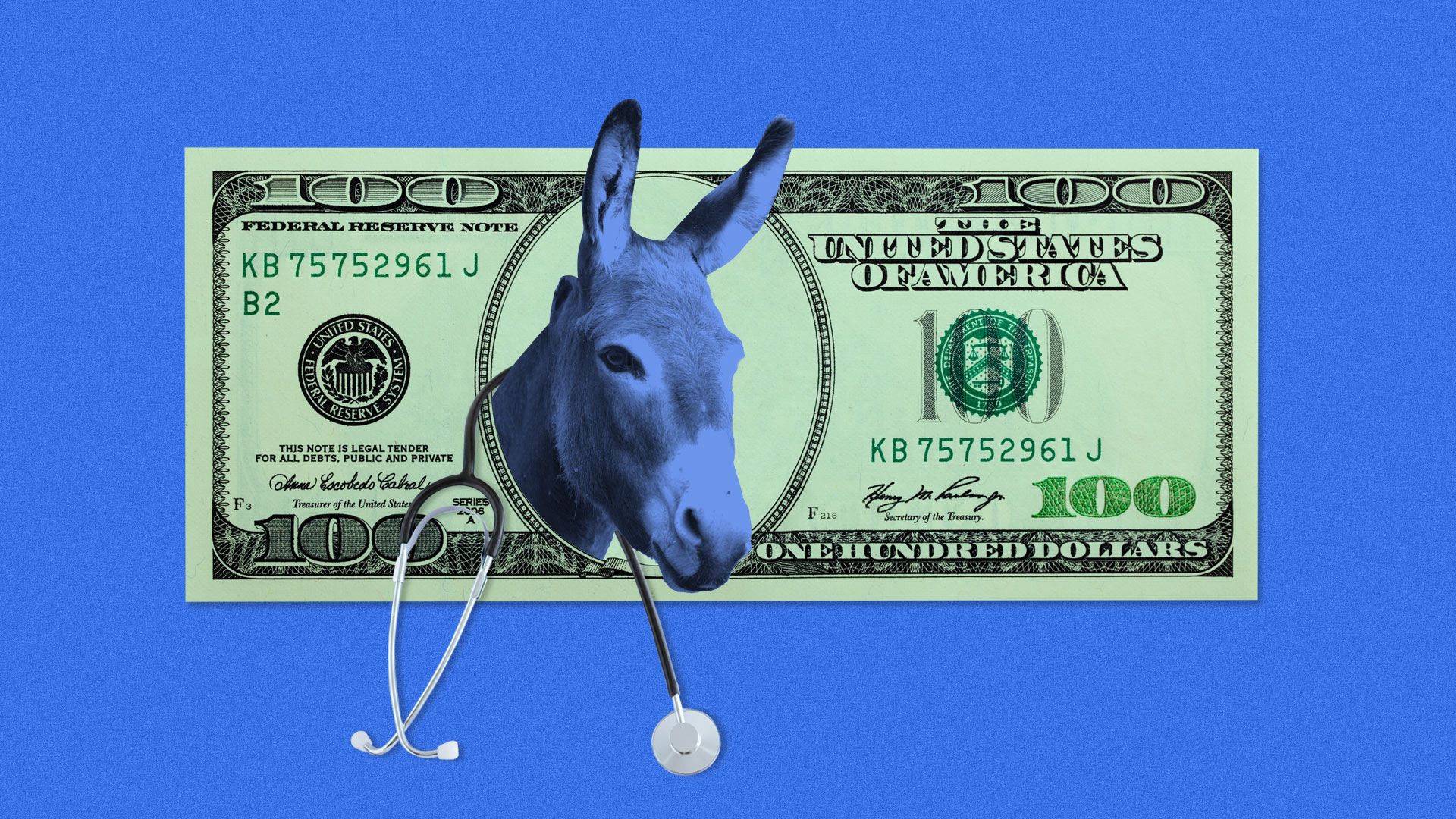
Yet again, the 2020 Democrats debated last night without devoting much attention to their very interesting ideas for controlling health care costs. But whether they talk about it or not, they've laid out a broad range of ideas for this incredibly pressing issue.
The big picture: Democrats' ideas run the gamut, from taking control over all health care purchasing to plans that would directly regulate a slice of the market, attempting to put pressure on the rest of it.